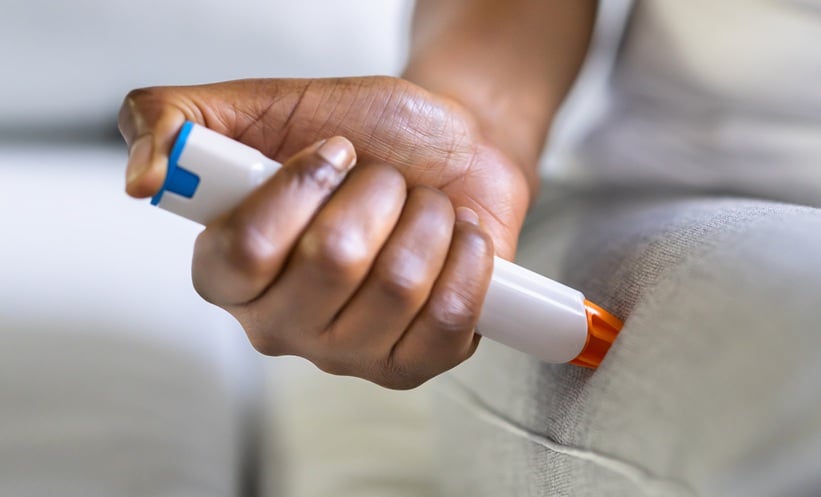
NEW RECOMMENDATIONS for administering epinephrine during acute allergic reactions (AAR) will enable patients, medical practitioners, and importantly non-medical personnel to improve AAR recognition, management, and ultimately improve patient outcomes.
The recommendations were developed through a 34-member international panel of anaphylaxis experts. Firstly, they defined levels of severity of AAR across multiple organ systems (cardiovascular/neurologic; respiratory; skin/mucosal; and gastrointestinal) using symptoms that would be easily identifiable by non-medical personnel.
The panel then generated 24 clinical scenarios, covering a broad combination of possible AARs, and determined whether epinephrine should be administered. The full set of guidelines is currently being converted into a smartphone app for use by both medical and non-medical personnel.
Inconsistencies in Acute Allergic Reaction Medical Practice
Foods, insect stings, medications, and unknown factors can trigger acute allergic reactions, which can vary in severity from localised skin inflammation to fatal anaphylaxis.
In community settings such as homes, schools, workplaces, restaurants, or on aeroplanes, when patients have acute allergic reactions, it is often non-medical personnel who must quickly evaluate their symptoms and decide whether to give epinephrine.
As a result, only 7% of adults and 21% of children receive pre-hospital epinephrine for anaphylaxis, resulting in preventable fatalities, biphasic reactions, and further complications.
While patients, known to be at risk of anaphylaxis, (and their caregivers) receive emergency action plans to help assess and treat reactions, including guidance on epinephrine administration, there has previously been no consensus on best practise.
Timothy Dribin, Associate Professor at Cincinnati Children’s Hospital Medical Center, Ohio, USA, and lead author of the paper, noted that the lack of widely accepted guidelines for non-healthcare professionals on when to administer epinephrine for acute allergic reactions has resulted in inconsistent practices, confusion among patients and caregivers, and both underuse and overuse of epinephrine.
Widescale Implementation
Going forward, Dribin suggests an open-access smartphone app would allow any user to input reaction observations and receive real-time treatment advice to optimise epinephrine use, and ensure patients who need emergency department care receive it.
Dribin added that, with funding from Cincinnati Children’s Hospital Medical Center, the team partnered with the Asthma and Allergy Foundation of America to develop the application and worked closely with patients, caregivers, and clinicians to design its functionality.
Reference
Dribin TE et al. Epinephrine and emergency medical services activation recommendations during acute allergic reactions in community settings: international consensus report. J Allergy Clin Immunol. 2025:S0091-6749(25)01180-7.
Author: Adam Michael, Director and Founder, 80th Atom, Greater Cambridge Area, UK