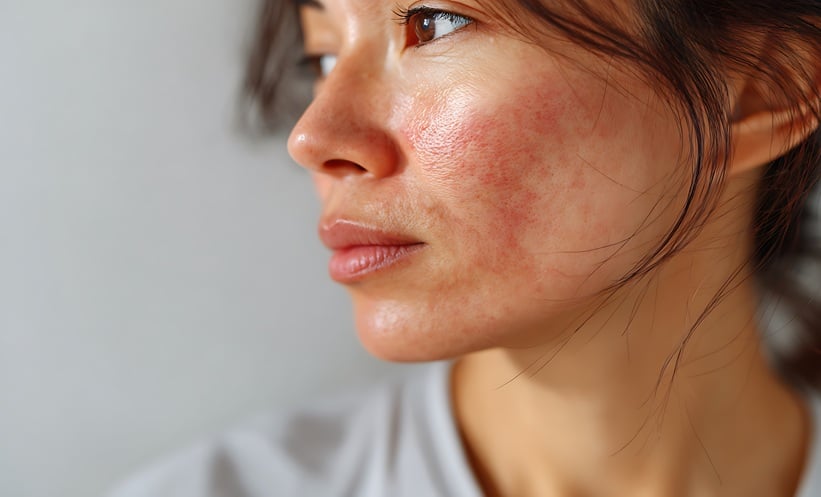
TYPE 1 mediated chronic inflammatory skin diseases (ISD) could soon have a new therapeutic target after researchers showed that RIPK1 inhibition prevented keratinocyte cell death and reduced skin inflammation in preclinical models of lichen planus (LP) and cutaneous lupus erythematosus (CLE).
LP and CLE are debilitating ISD that affect the skin, hair, nails, and mucosa, often severely impairing quality of life. Both conditions are driven by type 1 immune responses and are characterised by increased keratinocyte cell death, including apoptosis and necroptosis. Receptor-interacting serine/threonine-protein kinase 1 (RIPK1) is a central regulator of programmed cell death and inflammation, making it an attractive therapeutic target.
RIPK1 Inhibition Targets Inflammation and Cell Death
In this study, researchers performed RNA sequencing on 179 ISD samples and found that markers of apoptosis (caspase 8) and necroptosis (RIPK3, MLKL) were significantly upregulated in LP and CLE lesions. These findings supported the hypothesis that dysregulated cell death pathways contribute to disease pathogenesis.
The team then evaluated eclitasertib, a novel RIPK1 inhibitor, across several experimental systems. In a murine tumour necrosis factor-alpha (TNF-α)-induced systemic inflammatory response syndrome model, oral administration of eclitasertib 15 minutes after TNF-α injection restored body temperature, indicating protection against systemic inflammation.
In reconstructed human epidermis stimulated with T cell supernatants derived from LP and CLE, RIPK1 inhibition prevented keratinocyte cell death, normalised epidermal architecture, and significantly reduced the release of pro-inflammatory cytokines, including IL-1α, IL-1β, TNF-α, and CCL20. Furthermore, ex vivo cultures of LP and CLE skin biopsies treated with eclitasertib showed downregulation of disease-specific genes and inflammatory pathways.
A Promising Future Therapeutic Avenue
Together, these data suggested that RIPK1 inhibition simultaneously targeted two central pathological processes in type 1 mediated chronic inflammatory skin diseases: epidermal cell death and immune-driven inflammation.
However, the findings were limited to preclinical models, including murine systems, reconstructed human epidermis, and ex vivo biopsy cultures. Clinical trials will be required to determine safety, tolerability, and therapeutic efficacy in patients with LP or CLE.
If confirmed in humans, RIPK1 inhibition could represent a novel strategy for managing chronic inflammatory skin diseases by addressing both cell death and inflammatory signalling at their source.
Reference
Jargosch M et al. Inhibition of RIPK1 prevents keratinocyte cell death and reduces skin inflammation in type 1 mediated chronic inflammatory skin diseases. J Allergy Clin Immunol. 2026; DOI:10.1016/j.jaci.2026.02.006.