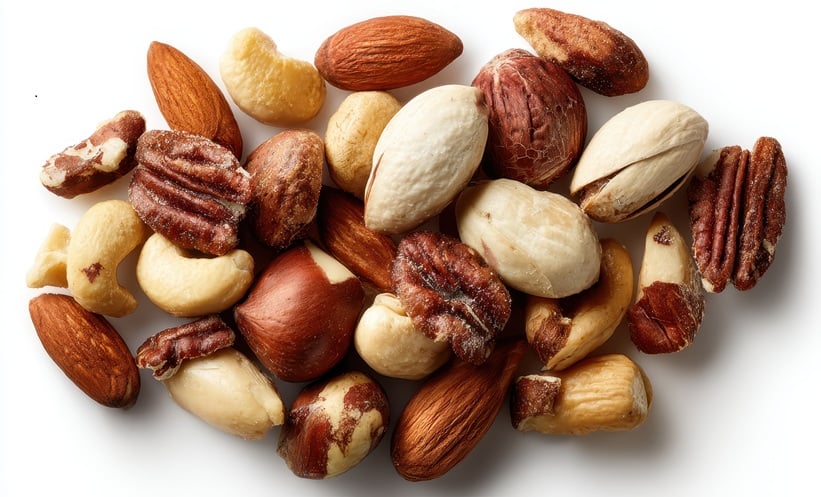
A NOVEL approach to oral immunotherapy (OIT) using very low maintenance doses may offer a safer and effective option for children with multiple nut allergies, according to new research. The study suggests that very low-dose oral immunotherapy (VLOIT) can significantly increase allergic tolerance while minimising treatment-related risks.
OIT is an established management strategy for food allergies, but it is typically delivered for one allergen at a time and requires relatively high maintenance doses, often ≥300 mg of protein. This poses challenges for the estimated 30% of allergic children who react to multiple foods, as higher doses are associated with increased adverse effects. The current study explored whether a multi-nut VLOIT strategy could improve safety without compromising efficacy.
The open-label clinical trial enrolled 18 children with confirmed allergies to between two and five nuts, including tree nuts and peanuts. Participants had oral food challenge (OFC)-confirmed reactions to each nut at doses of 444 mg protein or less. The median age at enrolment was 5 years. Following baseline OFCs, children began daily treatment with a mixed nut preparation containing just 4 mg protein per nut. Doses were escalated every two months until a maintenance dose of 30 mg protein per nut was reached.
Efficacy of Very Low-Dose Oral Immunotherapy in Children
After 18 months of therapy, participants underwent an exit OFC to assess changes in allergic threshold, with a maximum challenge dose of 2040 mg protein per nut. Fifteen of the 18 enrolled children were eligible for the exit OFC, following three withdrawals and one child not reaching target maintenance.
The results demonstrated a marked improvement in tolerance. The median tolerated dose increased from 10 mg protein per nut at baseline to 1000 mg at the exit OFC, a statistically significant change. Two-thirds of participants tolerated the maximum challenge dose. In an intention-to-treat analysis, 14 of 18 children met predefined efficacy criteria, defined as tolerating at least five times their baseline dose or a minimum of 300 mg protein.
Importantly, the safety profile was favourable. No participants required treatment with epinephrine during the study period, addressing a key concern associated with higher-dose OIT protocols.
Future Directions for Oral Immunotherapy in Paediatric Allergy
The authors conclude that VLOIT can significantly raise reaction thresholds to multiple nuts while maintaining a strong safety profile. If confirmed in larger, controlled studies, this approach could represent an important advance for children with complex, multi-food allergies and support broader adoption of safer, personalised immunotherapy strategies in paediatric allergy care.
Reference
Upton JEM et al. Safety and Efficacy of Very Low-Dose Multi-Nut Oral Immunotherapy in Children. Clin Transl Allergy. 2025; 15(12):e70125.