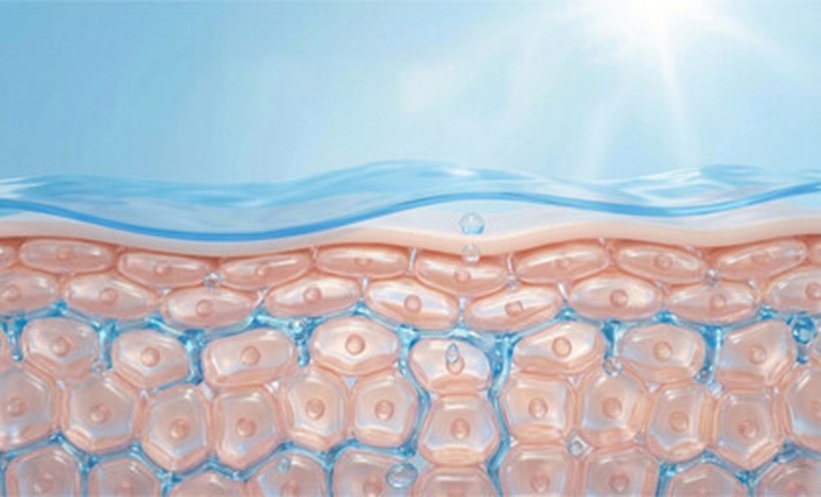
A NEW study has demonstrated that co-delivering retinol and niacinamide via a liposomal system significantly improves their stability, skin permeation, and biological efficacy, addressing long-standing limitations in topical skincare formulations.
Retinol and niacinamide are widely used for anti-ageing and skin-brightening purposes. However, retinol is highly unstable when exposed to light and oxygen, while niacinamide has relatively poor skin penetration. Researchers developed a liposomal co-delivery system (RN-Lip) to overcome these challenges and enhance their combined effects.
Liposomal System Improves Stability and Delivery
The optimized RN-Lip formulation had a particle size of approximately 147 nm, enabling efficient skin interaction. Encapsulation efficiencies reached 41.67% for retinol and 19.47% for niacinamide.
Notably, liposomal encapsulation improved retinol stability, achieving a sevenfold higher retention rate after 30 days compared with free retinol under protected conditions. Skin delivery was also enhanced, with retention of niacinamide and retinol increasing by 3.8-fold and 1.5-fold, respectively, compared with non-encapsulated compounds.
Enhanced Cellular Uptake and Biological Activity
In vitro studies showed improved cellular uptake of both compounds when delivered via liposomes. Functional assays demonstrated that the formulation reduced melanin content and tyrosinase activity in melanoma cells, suggesting enhanced skin-brightening potential.
Additionally, the liposomal system promoted collagen I synthesis in fibroblast cells, supporting anti-aging effects, and protected keratinocytes from oxidative stress-induced damage.
Potential Implications for Dermatology and Skincare
The findings suggest that liposomal co-delivery can overcome key formulation barriers associated with retinol and niacinamide, improving both stability and bioavailability. This approach may enhance the clinical and cosmetic performance of these widely used ingredients.
Future Directions
Further research is needed to confirm these findings in clinical settings and evaluate long-term safety and efficacy in human subjects. However, the study highlights the potential of advanced delivery systems to optimise topical therapies and next-generation skincare products.
Reference
Hou B et al. Co-delivering Retinol and Niacinamide via Liposomes: Enhanced Stability, Efficient Skin Permeation, and Improved Anti-Aging/Skin-Brightening Efficacy. J Pharm Innov. 2026;21:340.
Featured image: Jakkit Thonwirak