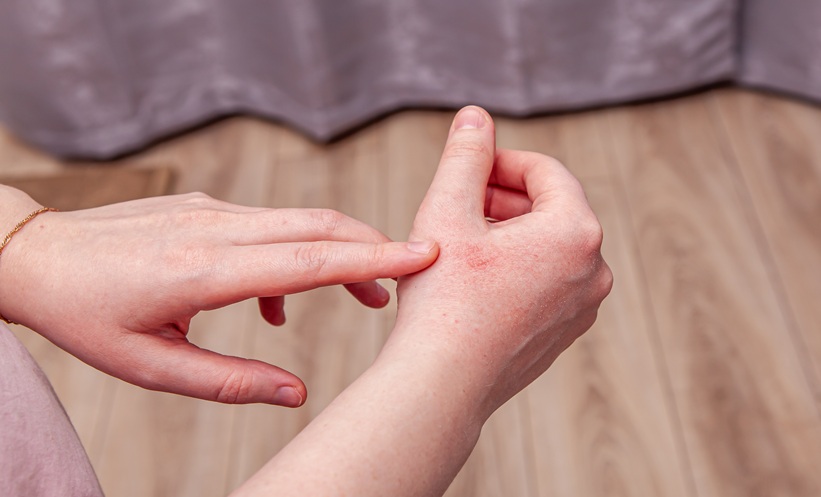
ACCURATELY distinguishing between hand eczema and psoriasis remains a major clinical challenge, as both conditions share overlapping clinical features but require different therapeutic strategies. A new cohort study highlights how molecular diagnostics can substantially improve diagnostic precision, guide targeted treatment decisions, and enhance patient quality of life over long-term follow-up.
The 3-year cohort study, initiated in November 2020, enrolled 287 patients with suspected occupational skin disease, a population in which hand eczema is particularly prevalent. Traditional diagnostic approaches, including clinical examination, patient history, allergy testing, and histopathology, were compared with molecular classification based on gene expression markers CCL27 and NOS2 obtained from skin biopsies.
Molecular Testing Clarifies Clinically Uncertain Cases
Among the 272 patients who underwent molecular diagnostics, nearly 39% had a clinically unclear diagnosis at baseline. Remarkably, molecular analysis was able to clarify the diagnosis in more than 95% of these ambiguous cases. Agreement between clinical and molecular diagnoses was low, underscoring the limitations of conventional diagnostic methods in complex hand dermatoses.
Over the 2-year follow-up period, disease outcomes improved significantly. Both disease severity and chronicity declined, as assessed by physician global assessment scores. Importantly, the study documented a shift in treatment patterns: use of systemic therapies increased, reflecting more confident and targeted therapeutic decision-making, while overall corticosteroid use decreased.
Patient-reported outcomes mirrored these clinical improvements. Health-related quality of life, measured using the Dermatology Life Quality Index (DLQI) and the Quality of Life in Hand Eczema Questionnaire (QOLHEQ), improved substantially. DLQI scores fell by approximately 50%, indicating a meaningful reduction in the daily burden of disease. These gains were sustained throughout the follow-up period, suggesting durable benefits from improved diagnostic accuracy and tailored therapy.
Personalised Treatment Strategies in Hand Dermatoses
The authors conclude that molecular diagnostics represent a valuable adjunct to standard clinical assessment in hand dermatoses, particularly in occupational dermatology. As highly specific systemic treatments continue to emerge, precise diagnostic tools will be increasingly critical to optimise patient outcomes, minimise unnecessary treatments, and reduce the long-term burden of occupational skin disease.
Reference
Bentz P et al. Molecular diagnostics in hand dermatoses: clinical findings and health-related quality of life in a 3-year follow-up cohort study. Dermatol Ther (Heidelb). 2026;doi: 10.1007/s13555-026-01663-8.