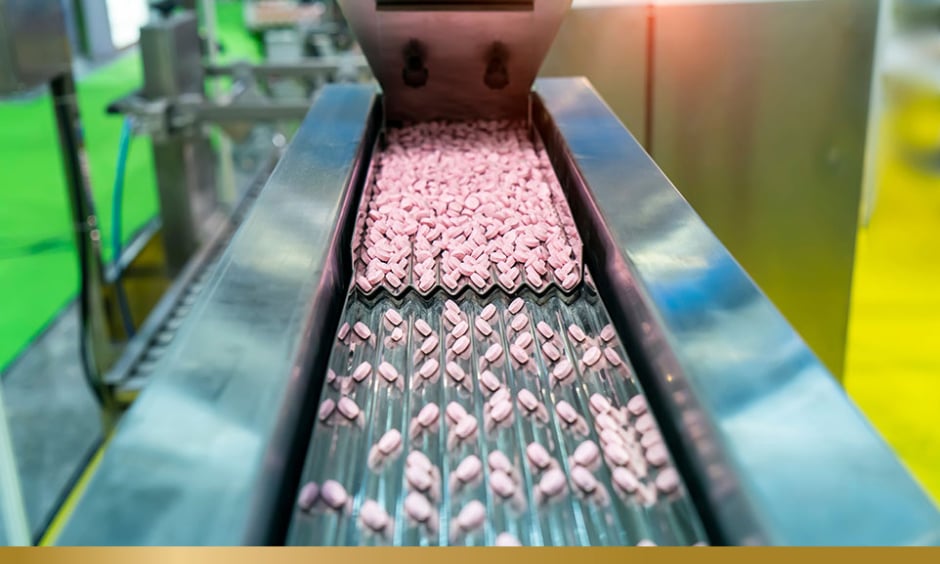
UCB is deepening its foothold in the US market, transforming 32 hectares of Georgia soil into a high-tech manufacturing hub for biologic medicines. The Brussels-based pharmaceutical leader has officially selected a complex in Gwinnett County for its new state-of-the-art facility, representing a $2bn investment to meet what it describes as a “growing demand” of its most innovative treatments.
Scaling biologics capacity
The new facility marks a major extension of UCB’s global manufacturing network and will be designed with the latest technologies in mind. By integrating AI, robotics and smart resource management, the plant can produce complex biologics, primarily immunology and neurology therapies, 24/7 on a large scale. This expansion is critical as the company continues to scale its portfolio following 15 FDA approvals or indication expansions in recent years.
“This decision reflects our confidence in UCB’s long-term growth and our deep-rooted commitment to the US,” explains Jean-Christophe Tellier, CEO, UCB. “By investing in Gwinnett County… we are strengthening our biologics manufacturing capabilities, supporting our innovation pipeline and creating high-quality jobs in a state that offers outstanding talent.”
Tapping into Georgia’s talent base
The chosen site for the new complex is the Rowen Development, an area situated between Georgia Institute of Technology and the University of Georgia, providing UCB with nearby access to a rich pipeline of engineering and scientific expertise. The project is expected to create 330 permanent, high-skilled jobs and more than 1,000 construction roles, generating an estimated $5bn in economic impact.
Jacques Marbehant, Head of Transformational Programs & Infrastructure, UCB, says: “The area’s scalable infrastructure, efficient permitting and thriving ecosystem made it a natural fit. We are building a campus which will become our future hub for US manufacturing and supply operations.”
Part of a wider US shift
UCB is the latest in a wave of global pharma players moving production to the US to mitigate supply chain risks. In early 2026, Eli Lilly began construction on a $6bn active pharmaceutical ingredient facility in Alabama, part of a broader $50bn US expansion.
Similarly, Amgen recently committed $900m to expand its Ohio biomanufacturing plant in 2025, while Novo Nordisk continues to funnel billions into US capacity to support its glucagon-like peptide-1 portfolio. This trend underscores a collective industry shift toward bolstering domestic production to ensure resilience and timely patient access.