NHS Introduces Routine Chickenpox Vaccination
FROM January 2026, hundreds of thousands of young children across England will receive routine protection against chickenpox, marking a major expansion of the NHS childhood vaccination programme. For the first time, the highly contagious viral illness, also known as varicella, will be prevented through universal immunisation rather than optional or private vaccination.
Under the new programme, GP practices will offer a combined measles, mumps, rubella, and varicella (MMRV) vaccine, replacing the standard MMR vaccine. This change follows a recommendation from the Joint Committee on Vaccination and Immunisation (JCVI) and aligns the UK with many other high-income countries that already vaccinate routinely against chickenpox.
Why Chickenpox Vaccination Matters
Chickenpox is often perceived as a mild childhood illness, but it can cause serious complications, particularly in babies, young children, and vulnerable groups. These include bacterial skin infections, pneumonia, seizures, and, in rare cases, death. NHS data show that around half of children contract chickenpox by the age of four, and 90% by the age of ten.
Beyond its health impact, chickenpox places a substantial burden on families and the wider economy. Children are typically required to stay home from nursery or school for around five days, while parents often need to take time off work to care for them. Research estimates that childhood chickenpox costs the UK around £24 million each year in lost productivity, alongside an additional £15 million in NHS treatment costs.
How the New MMRV Schedule Will Work
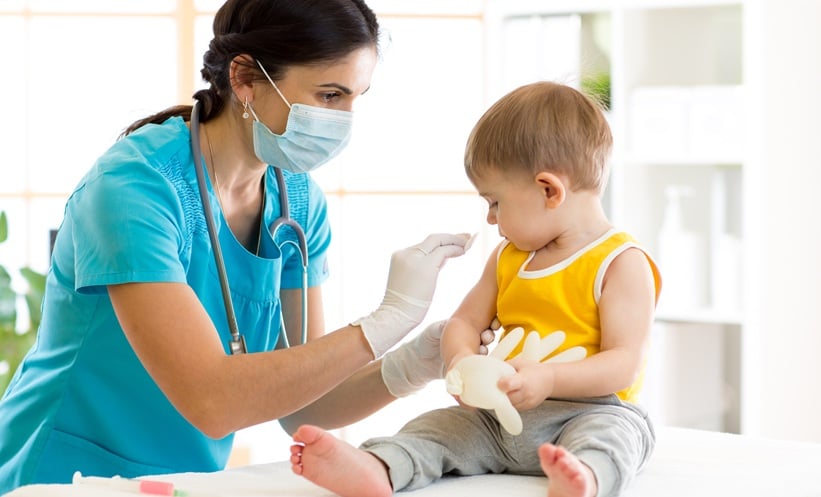
Children born on or after 1 January 2025 will be offered two doses of the MMRV vaccine at 12 months and 18 months of age, providing earlier and broader protection. Transitional arrangements are also in place for older children, including catch-up doses for those born between 2020 and 2024.
The second dose of the vaccine, previously given at 3 years and 4 months, has been brought forward to 18 months for younger cohorts. This adjustment is intended to ensure earlier immunity against measles, mumps, rubella, and now chickenpox, during a period when children are particularly vulnerable to infection.
Evidence, Safety, and Wider Benefits
The combined MMRV vaccine has been used safely for decades in countries such as the United States, Canada, Australia, and Germany. These countries have reported substantial reductions in chickenpox cases, hospital admissions, and related complications following the introduction of routine vaccination.
UK health leaders have welcomed the move as a shift towards prevention-focused care. NHS England and the UK Health Security Agency have emphasised the vaccine’s strong safety profile and its potential to reduce avoidable illness, hospitalisations, and school absences.
What Parents and Healthcare Professionals Should Know
Local GP surgeries will begin contacting families to invite eligible children for vaccination appointments. Healthcare professionals are being encouraged to support uptake by reassuring parents about vaccine safety and effectiveness, particularly as the jab offers protection against four serious viral diseases in a single injection.
Paediatric and public health experts have described the rollout as a landmark moment for child health in the UK, reinforcing the role of vaccination as one of the most effective tools for preventing infectious disease and safeguarding children’s long-term wellbeing.
Reference
NHS England. Hundreds of thousands of young children now to be protected against chickenpox. Available at: https://www.england.nhs.uk/2026/01/hundreds-of-thousands-of-young-children-now-to-be-protected-against-chickenpox/. Last accessed: 02 January 2026.