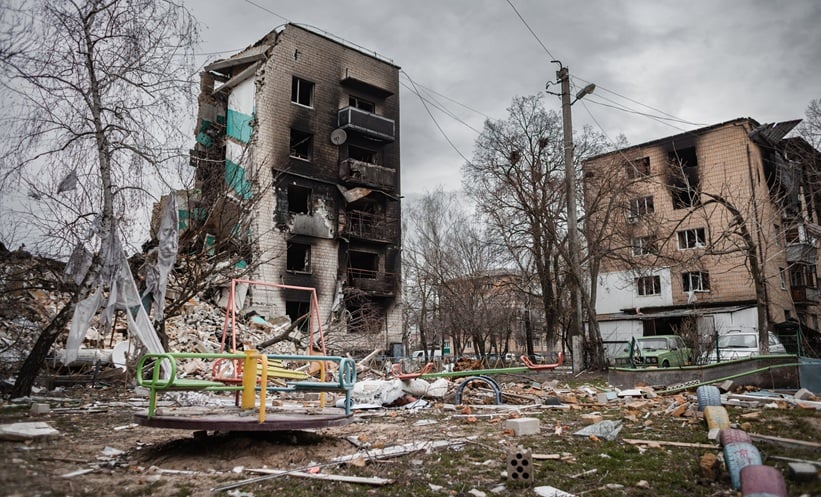
ATTACKS on Ukraine’s healthcare increased by nearly 20% in 2025 compared with 2024, according to WHO.
Since February 2022, at least 2,881 attacks affecting health workers, facilities, ambulances, and medical warehouses have been recorded by WHO, with 80% of Ukranians unable to access essential medicines.
This comes as Ukraine enters its fifth year of full-scale war.
Dr Tedros Adhanom Ghebreyesus, WHO Director-General, said: “After four years of war, health needs are increasing, but many people are unable to get the care they need, in part because hospitals and clinics are routinely attacked.
“WHO is working alongside Ukraine’s dedicated health workers to keep hospitals supplied with the means to stay warm, and the medicines people rely on the most.
“Ultimately, the best medicine is peace.”
Impact of Healthcare Attacks
Nearly 60% of people in frontline areas reported their health as poor or very poor, compared to approximately half in non-frontline areas, according to a December 2025 assessment.
Healthcare attacks peaked in the third quarter of 2025, when more than 180 attacks killed 12 people and injured 110 health workers and patients.
Dr Hans Henri P Kluge, WHO Regional Director for Europe, said: “Four years of war has created a serious health crisis in Ukraine.
“Mental health needs are staggering: 72% of people surveyed experienced anxiety or depression in the past year, yet only one in five sought help.
“Cardiovascular disease is surging, with one in four Ukranians experiencing dangerously high blood pressure.
“And eight out of 10 people report they can’t access the medicines they need.
“This is not abstract – it’s a heart patient who can’t find blood pressure medication, an amputee waiting months for a prosthetic, a teenager too afraid to leave the house.
“Ukraine’s health system needs our sustained support.”
Over the past 4 years, 233 health workers and patients have been killed and 930 injured in attacks on healthcare in Ukraine, constituting violations of international humanitarian law according to WHO.
Destruction of Essential Services
Attacks not only directly affect healthcare access and delivery, but can also damage power plants that underpin the country’s power grid through strikes on civilian infrastructure.
This has left millions without heating, electricity, and water.
An attack last month left nearly 6,000 buildings without heat in sub-zero conditions in Kyiv alone, prompting an estimated 600,000 to flee the capital.
Dr Jarno Habicht, WHO Representative to Ukraine, said: “Behind every one of these system breakdowns are healthcare workers who must keep saving lives while their own homes are without heat, water, or electricity.
“The burnout after four years of war is immense – and the demand for healthcare has never been higher.”
Patients recovering from, for example, childbirth, heart attacks, or critical cancer surgeries are returning home to apartments without heating, electricity, or running water.
WHO emphasised how care that begins in a functioning hospital can quickly turn into a struggle for survival.
Medical progress becomes undermined when patients must recover from care that began in a functioning hospital in freezing, dark homes.
Growing Demand for Healthcare
As a result of war-related trauma injuries, Ukraine is facing a surge in demand for surgery, blood products, infection prevention and control, prevention of antimicrobial resistance, mental health services, and rehabilitation.
Less than 5% of hospitals provide inpatient rehabilitation, and even fewer offer assistive technologies including prosthetics and corrective devices.
Closed pharmacies, security risks, and financial constraints make the situation in frontline regions particularly acute.
WHO has provided more than 280 generators to health facilities across 23 oblasts in Ukraine.
For 2026, it is appealing to raise 42 million USD to sustain its work in Ukraine and protect access to care for 700,000 people.
Featured image: Александр Микрюков on Adobe Stock