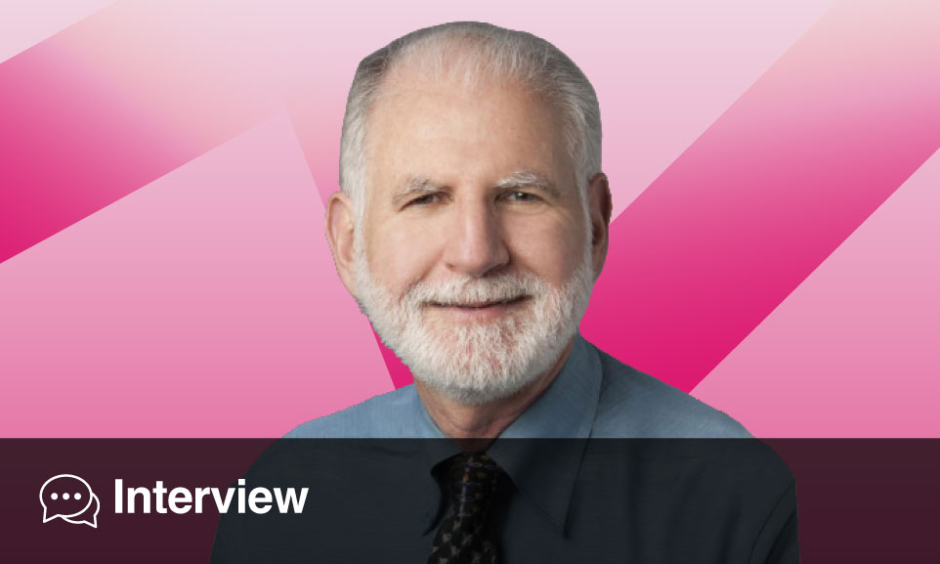
Robert Negrin | Professor of Medicine, Stanford University, California, USA; President, American Society of Hematology (ASH)
Citation: EMJ Hematol. 2026;14[1]: https://doi/org/10.33590/emjhematol/DKVT9894

What initially inspired you to pursue a career in haematology, and how have you seen the field evolve over the course of your career?
I first started out as a biochemist. I was interested in basic science, and I did some work as an undergraduate and then went off to graduate school. That was the moment when I realised that this just wasn’t for me. I think what I always tell students is you have to figure out what drives you as an individual, not what’s important, because there are so many things that are important. For me, it was clear that I needed something that was more aligned with people and the human condition. I was studying how bacteria generate energy, and quite honestly, I found it a bit dull. So, I went off to medical school and found myself, like many medical students, trying to figure out which direction to go. What influenced me a lot was that I wanted to find the area of medicine most closely aligned with science. I happened to meet a number of very important people at the right time who were incredible mentors for me. Several of them were haematologists, and I just really enjoyed how they thought, the questions they asked, and the passion they had for their profession and their patients. That’s what drew me to haematology, and I’ve been very happy there for the last 40 years.
As the 2026 President of the American Society of Hematology (ASH), what priorities or initiatives do you hope to advance during your term?
As I’m sure everyone is aware, we are in the middle of a very tumultuous time in science and medicine. There’s a lot of uncertainty and disorientation as our funding sources are challenged and scientific inquiry itself is being challenged. So, I think more than anything else, societies like ours have to reinforce our underlying mission. For ASH this has been encapsulated in a campaign called the @Fight4Hematology, which I think is really aptly named, and focuses on advocating for the field and telling stories about why is this important? How does this impact individual patients? How does this impact physicians and scientists? Why is it important for society? We aim to also raise money to support the most vulnerable members of our society, namely our youngest members. What many of us fear the most is that we will lose a generation of talented people pursuing science and medical research. For many of us who have been in this area for a long time, we realise that there are going to be ups and downs. We will get through it because our mission is solid. But younger people may be disillusioned by the challenges, and it’s vitally important that we do not lose them. Therefore, a major pillar of ASH is to continue this fight for haematology and to reach out to young and vulnerable members of our society and show them that we care, and that we’re there to help support them. I also really enjoy the fact that ASH is an international organisation. I’ve spent a lot of time overseas, and we just see incredible inequities; we need to do whatever we can to bring our science and medicine to a more global scale and reach those practitioners and patients in less advantaged areas.
The 67th ASH Annual Meeting in December 2025 drew more than 30,000 attendees. In your view, what makes the ASH Annual Meeting such a cornerstone event for the global haematology community?
The ASH Meeting in Orlando hit me in a different way last year, I suppose, because our world is being challenged, our institutions are being challenged, science itself is being challenged, and it just felt like we needed to be there. The community was just so important. We needed to be around each other, talk to each other, and learn from each other, and that’s something that I think the ASH Meeting does better than anything. It brings people from all over the world to present their best work. For example, in my laboratory, and I know many people’s laboratories, when we have something that we think is really important, we present it at ASH. So, it really is a global forum for our field, our world.
Many people describe ASH as their professional family, and I think those words are extremely important. I give a lot of credit to the leadership of ASH to foster that sense of family, that sense of belonging, that sense that we’re going to be there no matter what happens, because this Society is strong. Our values are about equity, inclusion, and excellence, about maintaining the science and the medicine, and those things will keep going. I thought that this was a great meeting to really demonstrate that community, not to mention the science was fantastic, but that’s always the case.
We worried a lot about attendance this year, for obvious reasons, but the attendance was pretty much the same as it’s always been, and the number of abstracts was more than it’s ever been, from all over the world. I think that is a testament to how important this meeting is and how important our field is.
For first-time attendees, can you give us an insight into what to expect from this year’s ASH Annual Meeting?
Prepare to be overwhelmed, but that’s okay. I think the first time one goes to an ASH Meeting, it’s just amazing to see all that’s going on. I think my advice is just to take it in. Talk to people, go to as many things as you can, hear how people are thinking about their fields, how people are organising their lives and their profession, and really meet people from other institutions and places around the world. That’s the great benefit of ASH: it really is a melting pot for people all over the world. Just strike up a conversation. I think people are very open to talking, and that’s what makes it great. I would say to first-time members, come and have fun, learn a lot, talk a lot, and interact as much as you can.
Looking ahead to the next 5 years, how do you envision ASH’s growth, and what challenges do you think the Society is still uniquely positioned to address?
I think that ASH is a mature organisation that has solidified its reputation and its purpose. So, I think, more than anything else, we need to reinforce that commitment to science, medicine, haematology, and to each other throughout the world. There are obviously many challenges, but ASH is in a very strong position, mainly because they built up this equity of people, ideas, and resources over decades. This is a time that we need to double down on that commitment. That’s something that’s very important to the Society. As a tangible example, we have doubled the amount of money that is being spent through ASH on awards and grants, dipping into reserves to help support science and medicine by funding more promising individuals over the entire spectrum of their careers, to over 20 million USD per year that goes into these programmes. This is something that ASH is uniquely positioned to do, to really help tell the stories, advocate, and support people through this fight for haematology. My expectation, my wish, my hope is that we’ll be in a more stable place in 5 years than we are now. But ASH is strong; it will maintain and thrive.
What emerging areas of research or clinical practice in haematology are you most excited about right now?
Being in this field for over 40 years, it’s amazing to me that it’s even more exciting now than it’s ever been. There are many different groups of physicians and scientists that are doing amazing things, but I’m most interested in transplantation and cell therapies. The idea of using cells as therapy is really something that I think is incredibly exciting. And how do we engineer those cells? How do we modify them? How do we give back the right cells and get a beneficial impact when treating patients with blood cancers (which is what I do)? We heard some incredibly exciting work regarding whether there are easier ways to do this. How do we make it more effective? How do we use AI to generate novel ideas and novel approaches? How do we make the benefits that we see more effective and avoid some of the complications? There are so many areas that are extraordinarily exciting right now. I think that’s what’s amazing about the ASH Meeting, is that you can wander into a different hall, where you may not know the area as well, and hear about amazing work that’s going on in different fields.
How is ASH working to support early-career haematologists and trainees in an increasingly complex scientific and healthcare landscape?
We put in a lot of effort in this area. I would say perhaps the most important thing that we do is how to reach young people. And it’s not just physicians and scientists. This is going back even earlier, to students in high school and college. How do we reach them, show them that this is an interesting field, and how do we support them through their journey? ASH has programmes at every step of the way that can provide resources, structure, and mentorship to help individuals who are interested in that journey. For example, we just had the 50th anniversary of the ASH Scholar Award, which is something that’s amazing to see, because many of these ASH scholars who were initially supported through ASH are now supporting others. There are generations of them, and it’s a web of scholars who influence so many. Our organisation is here to support young people. We have a track record of doing that, and this continues to be a major priority.
In an era of rapid scientific advancement, how does ASH balance innovation with ensuring equitable access to care and research opportunities worldwide?
I absolutely think that this is one of the most important things we have to focus on, because there are extraordinary inequities in our world that are intolerable. I’ve had the privilege to go to many places. I go to Cambodia just about every year to work with a group of doctors who provide free medical care. It’s just staggering to see. Why is it that somebody who happens to be born in that part of the world has so little, and we have so much? We need to do whatever we can to provide more balance. ASH has made enormous efforts in reaching out to different communities around the world. One thing that I would love to highlight that amazes me, amongst many programmes, is the newborn screening programme in Africa trying to identify children with sickle cell disease, and once those children are identified, to connect them to therapy. That is amazing work that exemplifies the commitment that ASH has to other communities, and the commitment that we have towards trying to address these inequities. And that’s just one programme. There are many others.
One of the great benefits of being the ASH president is that I get to go to many places and meet haematologists and scholars. For example, ASH has a number of training programmes throughout the Middle East, South America, and Asia, where we try to reach out to haematologists there, and bring the ASH Meeting to them, hear about their worlds, provide training to young people, and really demonstrate to people around the world that ASH is an international organisation that cares about all aspects of our world. Though we can’t solve all the problems, we can try to do whatever we can.