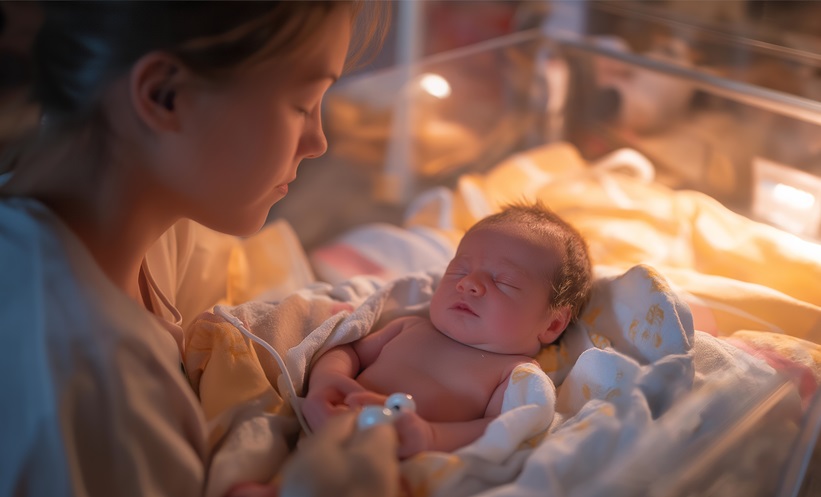
A NEONATAL warming device has been shown to rapidly restore normothermia while reducing neonatal intensive care unit (NICU) admissions, and therefore mother-infant separation, according to a multi-site quality improvement evaluation of the portable mOm Essential incubator.
Neonatal Warming Device Improves Family-Centred Care
Neonatal hypothermia remains a common challenge in delivery rooms and postnatal wards, even in high-income healthcare systems. Globally, between 32% and 85% of newborns present with suboptimal body temperature (< 36.5 °C), and in the UK, up to 30% of babies admitted to neonatal intensive care are reported to have suboptimal temperature at admission. Standard management often involves transfer to neonatal units, which increases family separation and healthcare costs. The neonatal warming device evaluated in this study was designed to provide effective thermal support without escalation of care, allowing infants to remain with their families during the immediate postnatal period.
The evaluation was conducted across five hospitals in England and Scotland, spanning a mix of neonatal units (Special Care Unit, Local Neonatal Unit, or Neonatal Intensive Care Unit). Eligible infants were late preterm or term neonates weighing under 6 kg who presented with axillary temperatures below 36.5 °C and did not require humidification. All infants received routine care supplemented by use of the neonatal warming device as part of a real-world quality improvement initiative.
Methods and Results of the Neonatal Warming Device Evaluation
Across the five sites, 107 infants were included. Median gestational age was 37 + 6 weeks, with a median birth weight of 2.74 kg. Mean starting temperature was 36.2 °C, and 94.4% of infants were mildly hypothermic at baseline. Within 60 minutes of use, 93.5% achieved normothermia defined as 36.5 to 37.5 °C, without escalation of care.
Use of the neonatal warming device was associated with reduced hypothermia related neonatal unit admissions, shorter warming times, and improved clinical workflows. Economic modelling using a cost consequence approach estimated annual savings of approximately £62,313 for a hospital delivering 5,000 infants per year, driven largely by avoided neonatal intensive care admissions.
Clinical Implications and Conclusions
This multi-site evaluation suggests that a portable neonatal warming device can provide an effective and family-centred option for managing mild to moderate neonatal hypothermia. By restoring thermal stability within one hour and reducing avoidable admissions, the device has the potential to complement existing thermal care protocols while supporting parental bonding and reducing healthcare costs.
Reference
Leigh S et al. Use of a novel infant warming device (mOm Essential) reduces neonatal unit admission and family separation. Biomed J Sci & Tech Res. 2026;64(4).