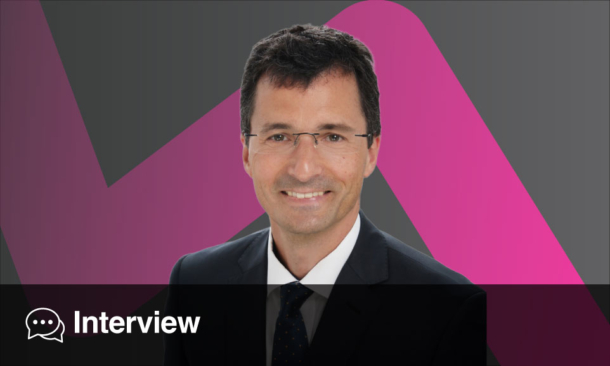
Dimitrios Kontoyiannis | Professor and Robert C. Hickey Chair in Clinical Care, Department of Infectious Diseases, The University of Texas MD Anderson Cancer Center, Houston, USA
Citation: EMJ Microbiol Infect Dis. 2026; https://doi.org/10.33590/emjmicrobiolinfectdis/443SKM47

You’ve had an extraordinary career spanning clinical care, research, and mentorship. Looking back, what first drew you to medical mycology?
From the very beginning of my career as a postdoctoral research fellow, studying fungal infections in patients who are immunosuppressed has been fascinating in many aspects: pathophysiology, epidemiology, and management are very nuanced in mycology. It is more ‘art’ than ‘science’, and having a translational/clinical, patient-centric research programme has been intellectually quite stimulating. Most importantly, helping patients with those severe infections to continue on their cancer journey has been very rewarding.
Many of your landmark studies have shaped our understanding of invasive fungal infections, including epidemiology, risk factors, and outcomes of mucormycosis. How have these insights influenced current approaches to diagnosis and treatment in high-risk patient populations?
I have been in the field for over a quarter of a century. The more I have been immersed in clinical care of patients with various opportunistic mycoses, an activity which has been coupled with translational research, the more it has become apparent to me how, based on the level and type of immunosuppression, diagnostic certainty of infection and extent and aetiology of fungal infections necessitate ‘personalised’ approaches to risk stratification and management. I think the epidemiological and autopsy studies at The University of Texas MD Anderson Cancer Center, Houston, USA, the risk factor analyses, the emphasis of timing of appropriate pre-emptive therapy on the outcome of specific mycoses, and our research on chronic toxicities of antifungals contributed to more patient-level decision making in clinical practice, both in the acute and longitudinal aspects of treatment.
Your work on the diagnosis and management of aspergillosis, including contributions to the Infectious Diseases Society of America (IDSA) practice guidelines, has been highly influential. How have these guidelines evolved over time, and what do you see as the next steps in improving care for patients with invasive aspergillosis?
With time, we came to appreciate the importance of guidelines in codifying standardised diagnostic and treatment approaches to management, yet the heterogeneity and complexity of such various mycoses is significant. I think the major changes have been a shift from empiric to diagnostic-driven therapy, the incorporation of biomarkers, and the role of mold-active triazoles as primary therapy for aspergillosis, but many gaps remain (e.g., breakthrough infections on mold-active prophylaxis, combination therapy evidence). We also have to acknowledge that many of the studies that lead to ‘A1-level recommendations’ are based on data from drug registration trials or studies that excluded more complicated patients, i.e., patients with multiple comorbidities, organ dysfunction, or drug interactions to reduce confounding factors, but we treat patients with ‘confounding’ conditions in real life, so, while I see the value of these guidelines, we also have to acknowledge their limitations when translated to practice in the real-world.
Antifungal resistance remains a major challenge. Drawing on your research, which emerging strategies, whether novel drugs, combination therapy, or immunotherapy, show the most promise in overcoming resistant fungal infections?
I think antifungal resistance can be attacked on many levels. On the policy level, the One Health approach is mindful of and curtails the indiscriminate use of antifungals in the environment. In the healthcare setting, thoughtful diagnostic and therapeutic stewardship are key. On the patient level, with a combination of risk stratification, earlier diagnosis based on fungal biomarkers, and innovative approaches, such as new in-class agents, immunotherapy, and perhaps anti-virulence strategies (e.g., monoclonal antibodies against fungal toxins), the right intervention is chosen, so the selection pressure with the use of antifungals is less. In fact, host-directed strategies with various cellular and non-cellular immunotherapies have become a major emphasis of our research efforts in the last decade.
Mucormycosis continues to pose a serious threat, particularly in immunocompromised patients and in the context of COVID-19. Based on your studies, what are the most critical factors that determine patient outcomes, and how can clinicians intervene effectively?
The foundations of optimal management in mucormycosis are: thinking of the disease early and starting effective pre-emptive anti-Mucorales therapy, early detection, staging of the disease, surgical resection of infected tissue, reversal of immunodeficiencies, and correction of metabolic abnormalities through multidisciplinary care. We have learned a lot about this devastating mycosis in the last 25 years: its evolving epidemiology, mortality trends, the fact that it is a common breakthrough infection to Aspergillus-active agents, the prognostic significance of neutrophil recovery, site and extent of infection as prognostic factors, the role of pre-emptive liposomal amphotericin B and its dosing, and the importance of glycemia control in patients with diabetes.
Your lab has pioneered innovative models, from mini-host flies to murine and in vitro systems, to study fungal pathogenesis. How have these models advanced our understanding of fungal diseases in ways that clinical observation alone cannot?
Fungi are known to infect and kill invertebrates, such as fruit flies, when they lack innate immune responses. I have been amazed by the high concordance we see in fungal pathogenesis between flies and mammalian models. This allows us to ask bold questions in our mini-host fly model and validate in mice. For example, we did in vitro studies on the synergistic activity of calcineurin inhibitors with posaconazole against Mucorales in vitro, validated those observations as a first step in flies, and ultimately in a mouse model of mucormycosis. Also, our experimentation with pathophysiologically relevant, acute, and subacute murine models allowed us to dissect the pharmacokinetic/pharmacodynamic behaviour of current antifungal drugs.
You’ve mentored many young investigators and shaped the next generation of mycologists. In such a highly specialised and rapidly evolving field, what qualities or approaches do you use?
I have no magic formula. I think a key ingredient is caring and adjusting to the individual’s specific skill sets, aspirations, and needs. For some, it is more technical, for others, it’s a bigger picture or life lessons. I like the ‘apprenticeship’ model of mentoring. Good mentors are mentors for life. They build communities of mentees and do not have difficulty admitting to and learning from their mistakes. Finally, as it is true for success everywhere, active listening, authenticity, humility, and leading by example are key ingredients to inspire people to do better.
Looking ahead, what developments in medical mycology, whether in diagnostics, therapeutics, or epidemiology, excite you most, and how do you envision their impact on patient care over the next decade?
I think mycology will be shaped by two opposing forces in the future. First, global warming will bring more fungal adaptation and more fungal cases, some in the context of epidemics post natural disasters, and, as COVID19-associated mucormycosis showed, in a complex context of geoclimatic and population-based risk. Second, in the cancer and chronic immunosuppression ecosystem, mycology will increasingly become a ‘niche’ area where immunosuppression will be harder to quantify, as less patients will receive cytotoxic chemotherapy and/or myeloablative transplants, but will have complex immunosuppression by drugs targeting specific immune pathways and cellular therapies. In addition, the era of ‘omics’, although somewhat overhyped to date, will mature and I hope to see these technologies better translated into clinical management of patients to improve risk stratification, better diagnostics, and allow for more precise assessments of effectiveness/toxicity of antifungals. Finally, a more in-depth understanding of fungal pathophysiology and fungal immune responses will bring multimodal strategies that comprise combinatorial new interventions, as well as anti-virulence therapies and immunotherapy, in addition to new and important ‘first-in-class’ drugs. I expect the future of mycology to be exciting, with further improvements in outcomes of those difficult-to-treat infections, all happening in the ever-changing and complex landscape of mycology research and clinical care.