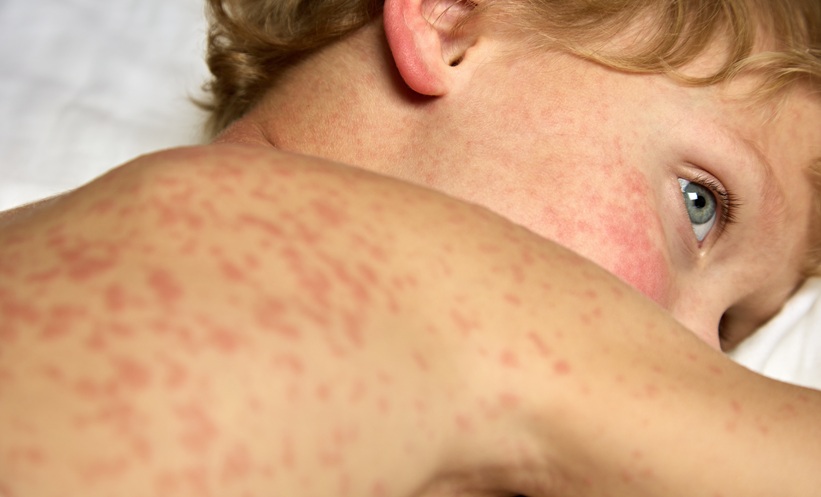
A RECENT measles outbreak in London, UK has prompted urgent calls for stronger, community-led vaccination efforts, as health leaders warn that low uptake rates are fuelling the spread of the disease.
In a letter to the Mayor of London and Secretary of State for Health and Social Care, the London Assembly Health Committee outlined concerns following a spike in cases, particularly in Enfield.
Measles Outbreak in London Linked to Low Vaccination Rates
The measles outbreak in London has seen 178 confirmed cases recorded in the capital so far in 2026, out of 299 cases across England. A significant proportion of infections have occurred in Enfield, where vaccination uptake is among the lowest in the country.
Vaccination coverage in London averages around 70%, compared with 84% across the rest of England. In Enfield, uptake is even lower, at approximately 64%. The outbreak has largely affected unvaccinated children, with around one in five cases requiring hospital treatment.
Coordinated Response but Long-Term Risks Remain
Local authorities and health agencies have implemented a coordinated response to contain the outbreak. Measures have included school engagement, community outreach, and the establishment of catch-up vaccination clinics.
Officials reported strong compliance with public health advice, particularly among schools, helping to limit disruption. However, experts emphasised that the outbreak was not unexpected and reflects persistent gaps in vaccination coverage.
Inequality and Access Barriers Driving Low Uptake
The Committee heard that deprivation and inequality are key contributors to low vaccination rates. Rather than being confined to specific communities, lower uptake is concentrated in more deprived areas.
Experts also highlighted the highly infectious nature of measles, noting that even small pockets of under-vaccinated populations can lead to rapid outbreaks, particularly in school settings.
To address this, health leaders called for more flexible vaccination services that better reflect London’s mobile and diverse population. Schools were identified as a critical setting to improve access and uptake.
Community Engagement Key to Improving Vaccination
Evidence presented to the Committee suggested that localised, community-led engagement is the most effective way to increase vaccination rates. Working with faith groups and community organisations was highlighted as particularly important for building trust and encouraging uptake.
The Committee urged policymakers to support sustained, tailored campaigns rather than relying on reactive catch-up programmes alone.
Data Gaps Hindering Response
Concerns were also raised about inconsistencies in vaccination data sharing across London. Areas with high numbers of private healthcare providers or international schools may not consistently report vaccination status, making it harder to identify gaps in coverage.
Improving data collection and sharing practices was identified as a key priority to better target interventions and monitor progress.
Call for Sustained Action
The Health Committee welcomed the rapid response to the current measles outbreak in London, but warned that without long-term action to improve vaccination rates, similar outbreaks are likely to continue.
It is now calling on national and city leaders to support boroughs with low uptake through sustained funding, improved data systems, and community-driven vaccination strategies aimed at closing the immunisation gap.
Reference
London Assembly. London Assembly Health Committee regarding the recent measles outbreak in London. 27 March 2026. Available at: https://www.london.gov.uk/who-we-are/what-london-assembly-does/london-assembly-work/london-assembly-publications/london-assembly-health-committee-regarding-recent-measles-outbreak-london. Last accessed: 31 March 2026.
Featured image: Aleksandr on Adobe Stock