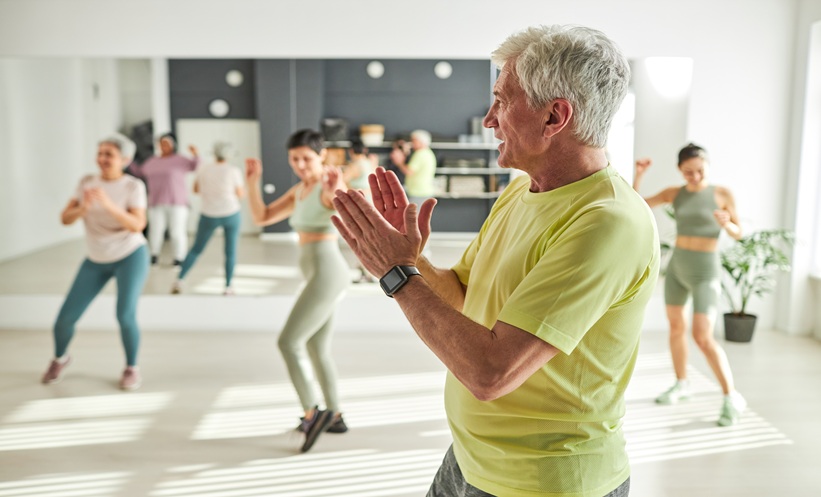
FREQUENT dancing was linked to substantially lower dementia risk in older adults followed for two decades.
Dancing Dementia Risk Findings in Long Follow-Up
A long-term observational study of community-dwelling adults aged 75–85 explored whether leisure activities were associated with later dementia outcomes. Participants completed neuropsychological testing and reported health and lifestyle habits, then were followed over many years to track cognitive changes and incident dementia.
Across cognitively challenging pursuits, greater engagement was associated with lower dementia risk, with each activity performed weekly linked to a modest reduction. When physical activities were evaluated while accounting for relevant health and lifestyle factors, one standout association emerged: those who danced frequently, defined as more than once per week, had a markedly lower risk of dementia compared with those who danced rarely.
The analysis suggested other common activities such as walking and swimming moved in a favorable direction, but the observed association with dancing was stronger. The study design also used extended follow up to help reduce the likelihood that early, subtle cognitive decline explained reduced participation in activities like dancing.
Why Dancing May Challenge the Aging Brain
Dancing may be distinct because it combines aerobic movement with cognitive and sensorimotor demands. Depending on style and setting, it can require learning and recalling steps, synchronizing to rhythm, navigating space, adapting to partners, and making rapid adjustments in real time. This type of multitasking could plausibly provide a broader cognitive stimulus than repetitive physical activity alone, while also reinforcing balance and coordination.
In addition to cognition, dance-based activity has been associated with improvements in balance and lower-body strength in older adults, outcomes that can be clinically relevant given the overlap between mobility, independence, and brain health.
Clinical Takeaway for Healthier Aging Conversations
While causality cannot be inferred from observational data, the findings support dancing as a potentially meaningful, enjoyable way to combine movement, cognitive challenge, and social connection. For clinicians discussing brain health with older patients, dancing may be a practical example of an activity that integrates multiple protective domains, especially when tailored to physical ability and personal preference.
Reference: The Washington Post. Dancing dementia prevention. 05 January 2026. Available at: https://www.washingtonpost.com/wellness/2026/01/05/dancing-dementia-prevention/. Last accessed: 24 February 2026.