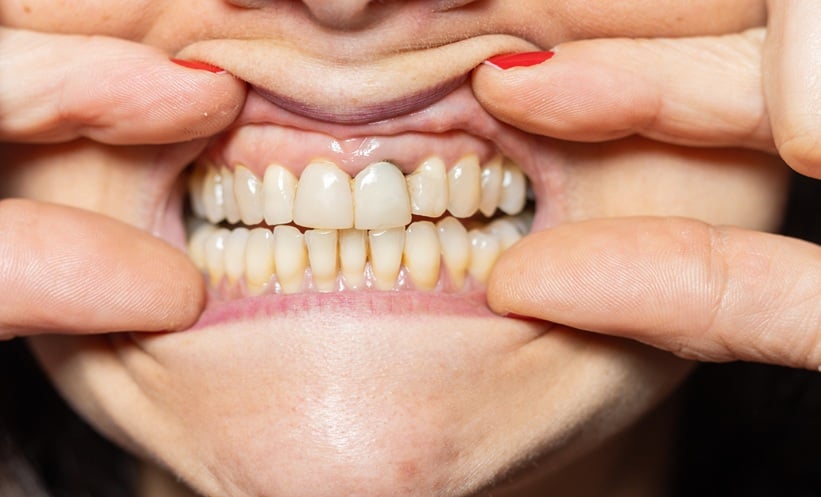
SEVERE gum disease was associated with mild cognitive impairment risk, in middle-aged periodontitis patients, researchers report.
Gum Disease and Mild Cognitive Impairment
Severe periodontitis has been linked to systemic inflammatory burden, and a new cross-sectional study suggests it may also track with subtle cognitive changes in midlife. Investigators evaluated 102 adults with periodontitis, comparing 71 with severe periodontitis to 31 with mild to moderate disease.
How the Study Assessed Gum Disease Severity
Participants were referred for a comprehensive periodontal examination that included plaque index, bleeding on probing, probing depth, gingival recession, clinical attachment level, and assessment of dental hard tissues. Researchers also captured medical history, oral hygiene habits, and oral health-related quality of life. The severe periodontitis group tended to be older, more often male, and had fewer teeth and a higher Decayed, Missing and Filled Teeth index than the milder periodontitis group.
Cognitive Testing Signals Subtle Differences
Cognition was assessed with a battery of six neuropsychological tests spanning memory, attention, mental flexibility, visuospatial orientation, and psychomotor speed. In regression analyses, lower performance on the Symbol Digit Modalities Test was associated with greater odds of severe periodontitis. The authors interpreted this as evidence of increased risk for mild cognitive impairment, even though mild cognitive impairment itself was not formally diagnosed in participants. They also reported that the odds for mild cognitive impairment were 1.29-fold higher among patients with severe periodontitis compared with those with mild to moderate disease.
Because the study was cross-sectional, it cannot determine whether severe periodontitis contributes to cognitive dysfunction, whether early cognitive changes influence oral health behaviors, or whether shared risk factors drive both. The findings add to growing interest in the oral brain connection and suggest that severe periodontitis may be a useful marker for identifying patients who report emerging cognitive symptoms over time.
Reference: Roguljić M et al. Increased risk of mild cognitive impairment is associated with severe periodontitis: A cross-sectional study. J Periodontol. 2025;doi:10.1002/jper.70042.