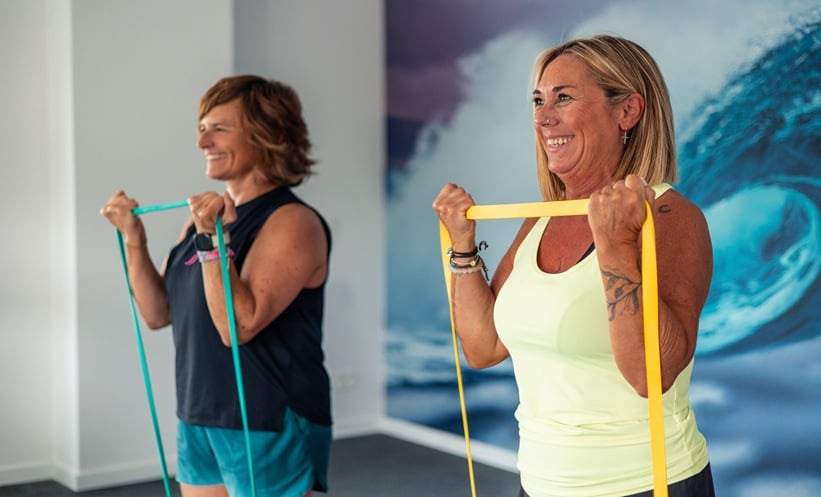
RESISTANCE exercise slowed brain aging clocks by up to 2.3 years using longitudinal rsfMRI neuroimaging data.
Resistance Exercise and Brain Aging Clocks in a Randomized Trial
Researchers tested whether resistance exercise could shift brain aging clocks, computational models that estimate “brain age” from neuroimaging, then compare it with chronological age. To build their brain aging clock, investigators first trained prediction models using resting state functional magnetic resonance imaging data from 2,433 healthy adults. They then applied these models to 309 participants enrolled in the Live Active Successful Aging randomized trial.
Participants were assigned to heavy resistance training, moderate intensity resistance training, or a non-exercise control group. Resting state functional magnetic resonance imaging and physical fitness assessments were repeated at baseline, then again at 1 and 2 years, enabling a longitudinal comparison of brain aging clocks over time.
Whole Brain Effects, Not Just One Network
Local connectivity analyses suggested increased prefrontal functional connectivity following heavy training. More notably, both moderate and heavy resistance exercise were associated with significantly reduced brain age, with reported reductions ranging from 1.4 to 2.3 years and meeting false discovery rate adjusted significance thresholds.
The pattern appeared to reflect distributed, network level shifts rather than changes confined to a single system. The authors reported that effects on brain aging clocks emerged at the whole brain level rather than within isolated networks such as the default mode, motor, or cerebellar systems. They interpret this as evidence that brain aging may be hierarchically organized, with global network changes expressed through more focal regional patterns.
Clinical Takeaway
For clinicians counseling older adults, the findings support resistance exercise as a potential preventive strategy for brain health, at least as indexed by neuroimaging-based brain aging clocks. However, the primary outcome here is a biomarker derived from resting state functional magnetic resonance imaging rather than clinical cognitive endpoints, and the sample was drawn from a trial population of older adults, which may affect generalizability.
Reference: Gonzalez-Gomez R et al. Randomized controlled trial of resistance exercise and brain aging clocks. Geroscience. 2026;doi:10.1007/s11357-026-02141-x.