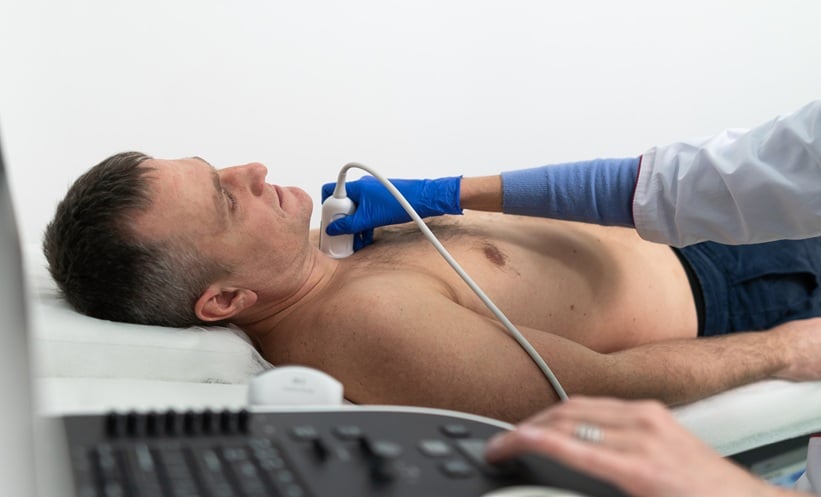
IN a U.S. emergency TIA observation cohort, transthoracic echocardiography found high-risk cardioembolic features in one in five.
Transthoracic Echocardiography Yield in ED Observation TIA
Transthoracic echocardiography is commonly used during transient ischemic attack evaluations to look for cardiac sources that could plausibly explain a neurologic event. However, its diagnostic yield in emergency department observation unit pathways is not always clear in day-to-day practice. Investigators analyzed a U.S. cohort of adults managed under an ED observation unit TIA protocol to quantify how often transthoracic echocardiography identifies higher risk findings that could indicate a cardioembolic mechanism.
This observational cohort study drew from the Wake Forest Emergency Medicine TIA Registry and included patients aged 18 years and older evaluated at a large academic tertiary care center between July 1, 2021, and December 1, 2023. The team reviewed transthoracic echocardiography reports for predefined high-risk cardioembolic features: patent foramen ovale, left ventricular ejection fraction at or below 40%, focal wall motion abnormalities, and ventricular thrombus. The primary outcome was diagnostic yield, defined as the proportion of patients with at least one of these high-risk features on transthoracic echocardiography.
What TTE Found Most Often
Among 686 patients in the cohort, 67.1% (460) underwent transthoracic echocardiography. High-risk cardioembolic features were identified in 19.4% of those imaged, corresponding to a number needed to test of 6. Within the findings, patent foramen ovale was most frequent, identified in 63 patients. Reduced left ventricular ejection fraction at or below 40% was observed in 26 patients, and focal wall motion abnormalities were seen in six. No ventricular thrombi were identified.
Why It Matters for EDOU Pathways
The authors concluded that transthoracic echocardiography was useful for detecting high-risk cardioembolic features among patients evaluated for transient ischemic attack in an emergency department observation unit, with the greatest yield coming from identification of patent foramen ovale and reduced left ventricular ejection fraction.
Reference: Iobst WH et al. Diagnostic Yield of Transthoracic Echocardiography Among US Emergency Department Observation Unit Patients Evaluated for Transient Ischemic Attack. Crit Pathw Cardiol. 2026; doi:10.1097/HPC.0000000000000416.