Scientists have created the most comprehensive map to date of telomere biology across hundreds of cancer cell lines, opening new possibilities for therapies that target one of cancer’s defining features: limitless replication.
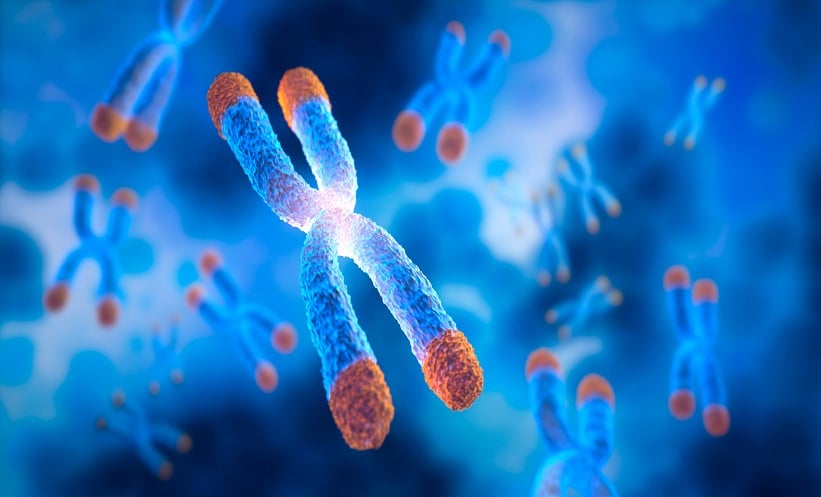
Researchers analysed 976 cancer cell lines spanning many tumour types, assembling a rich resource that links telomere maintenance with molecular characteristics, drug responses and genetic dependencies. Telomeres – protective DNA caps at the ends of chromosomes – normally shorten as cells divide, eventually limiting replication. Cancer cells bypass this barrier by activating telomere maintenance mechanisms, enabling uncontrolled growth.
Beyond a Binary Model
Traditionally, cancer cells have been thought to rely on one of two mutually exclusive strategies to maintain telomeres: telomerase activation or the Alternative Lengthening of Telomeres (ALT) mechanism. However, the new study reveals a much more complex and heterogeneous landscape.
By combining newly generated proteomic data, obtained using data-independent acquisition mass spectrometry, with existing genomic, transcriptomic and functional datasets, the researchers observed wide variation in telomere biology. Some cancers did not fit neatly into the classic telomerase-versus-ALT classification, suggesting intermediate or mixed states of telomere maintenance. This challenges long-held assumptions and highlights why previous attempts to therapeutically exploit telomere biology have been difficult.
Predicting Telomere Activity
Using the integrated dataset, the team identified proteomic and transcriptomic signatures that can predict levels of telomerase activity or the presence of ALT. These molecular predictors could eventually support the development of companion diagnostics, helping clinicians identify which tumours depend on specific telomere maintenance mechanisms.
The analysis also linked telomere biology to functional vulnerabilities. Cancers using the ALT mechanism showed particular dependencies on certain molecular pathways, revealed through CRISPR/Cas9 knock-out screening data. In parallel, telomerase activity levels correlated with sensitivity to specific drugs, suggesting that telomere status may influence treatment response.
Opportunities for New Therapies
Although replicative immortality is a recognised hallmark of cancer, it has remained largely untapped as a therapeutic target. This new resource aims to change that by providing a detailed framework for understanding how different cancers maintain their telomeres and where their weaknesses lie.
By making these data available to the research community, the study lays groundwork for the rational design of telomere-directed cancer therapies. Ultimately, exploiting the diversity of telomere maintenance strategies could lead to more precise treatments that limit cancer cells’ ability to divide indefinitely, while sparing normal tissues.
Reference
Wu Y et al. Large-scale drug sensitivity, gene dependency, and proteogenomic analyses of telomere maintenance mechanisms in cancer cells. Nature Communications. 2025;16:11337.