ROBOTIC secondary cytoreductive surgery enabled rapid complete removal of three extrapelvic ovarian cancer recurrences in one case.
Robotic Secondary Cytoreductive Surgery Across Three Sites
Secondary cytoreductive surgery (SCS) is increasingly considered for recurrent ovarian cancer when complete gross resection is achievable. In this video report, surgeons describe a personalized, robotic triple-site approach for SCS in a patient with oligometastatic, platinum-sensitive ovarian cancer recurrence. Preoperative imaging identified three extrapelvic targets: a right cardiophrenic lymph node, a lesion at the hepatic hilum located between the head of the pancreas and the hepatic artery, and interaortocaval lymphadenopathy below the left renal vein.
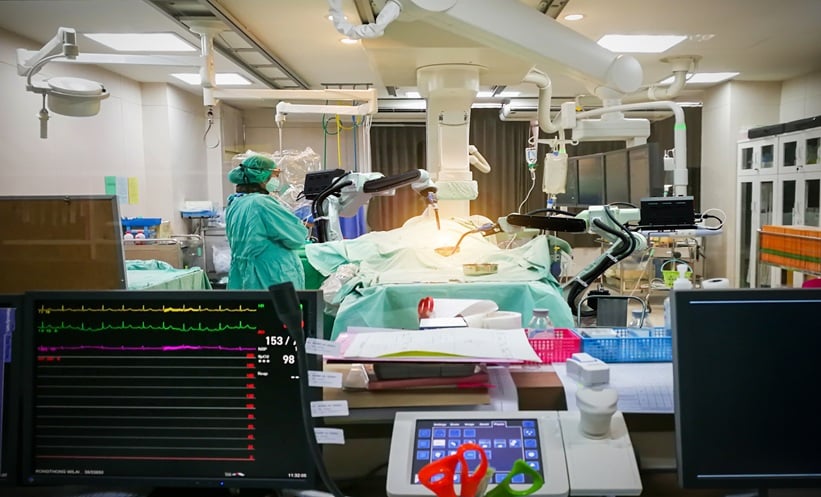
Following preoperative 3D reconstruction to support operative planning, the team performed robotic SCS spanning three distinct anatomical regions. The procedure required extensive adhesiolysis due to prior surgery, underscoring the technical demands of reoperative disease even when the metastatic burden is limited.
Operative Outcomes and Pathology
Complete cytoreduction was achieved, with an operative time of 200 minutes and estimated blood loss of 100 mL. No intraoperative complications were reported. Histology confirmed metastatic involvement in all three resected lesions, supporting the accuracy of preoperative localization and the oncologic intent of resection in this carefully selected scenario.
Clinical Takeaways for Practice
The authors conclude that a robotic approach may be appropriate for selected patients with extrapelvic ovarian cancer recurrence, even when disease spans different anatomical sites, provided the procedure is undertaken in oncologic centers with an experienced, multidisciplinary surgical team. They emphasize that patient selection and preoperative 3D reconstruction are key elements of surgical planning when pursuing complete gross resection using minimally invasive techniques.
The research team noted that outcomes depend on performing robotic secondary cytoreductive surgery in high-volume oncologic centers, where advanced imaging review, anesthetic support, and postoperative pathways can be coordinated to maximize the chance of complete cytoreduction while maintaining patient safety.
Reference: Certelli C et al. Robotic Secondary Cytoreductive Surgery: A Personalized Surgical Approach For a Triple-Site Ovarian Cancer Recurrence. Ann Surg Oncol. 2026;doi:10.1245/s10434-026-19120-3.