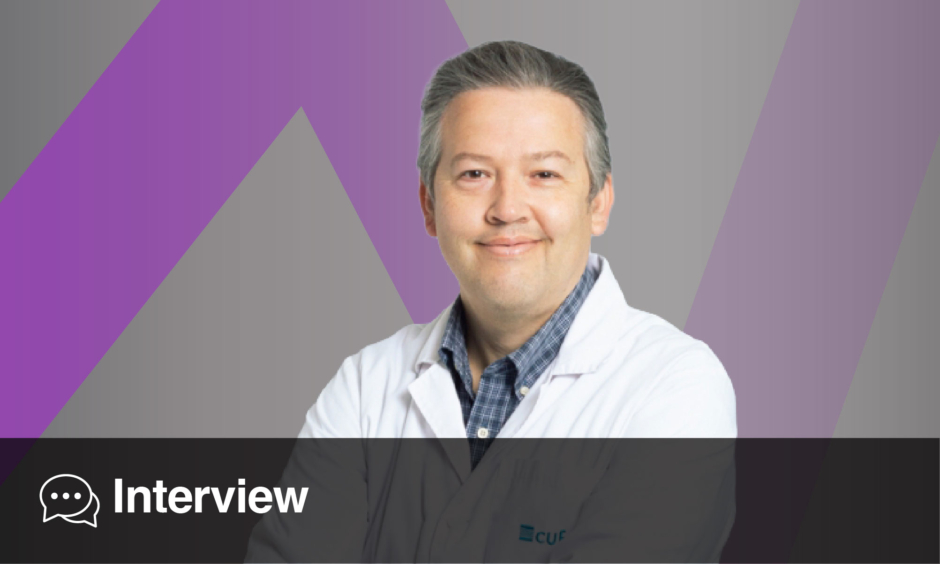
Luís Curvo Semedo Faculty of Medicine, University of Coimbra, Portugal; Department of Medical Sciences, University of Aveiro, Portugal; Chair, Imaging department, Local Health Unit – Aveiro Region, Portugal; National Societies Committee Chairperson, European Society of Radiology, Vienna, Austria
Citation: EMJ Radiol. 2026;https://doi.org/10.33590/emjradiol/R60815X0

What initially inspired you to pursue a career in radiology, and what in particular drew you to abdominal imaging?
Curiously, my interest in radiology appeared relatively late in my clinical career, despite having had the highest classification of my class in medical school. I was attracted to a more clinical subject, like orthopaedics or surgery, but suddenly I realised that radiology was a way to look inside the body in a way that connects anatomy, pathology, and clinical reasoning. I was particularly attracted to the intellectual challenge of interpreting images and translating them into information that directly helps clinicians and, of course, patients.
Abdominal imaging became a natural focus for me because of the complexity and diversity of diseases affecting the gastrointestinal and hepatobiliary systems. The former, particularly, constitutes an area where imaging plays a crucial role not only in diagnosis, but also in staging, treatment planning, and follow-up, especially in oncology.
Radiology has changed enormously over the past couple of decades. How have you seen the profession evolve during your career, and how has that influenced the way you practice medicine today?
Radiology has evolved dramatically since I started my career. The big developments in CT, MRI, and even ultrasound have transformed the level of information we can obtain from them. At the same time, the role of radiologists has expanded from simply interpreting images to becoming an integral member of multidisciplinary clinical teams.
Another major shift has been the developing level of sub-specialisation. Today, radiologists often focus on specific areas, such as abdominal imaging, which allows for deeper expertise and more accurate clinical contributions.
Of course, we are witnessing the surge of AI applied to imaging, which I consider to have the potential to be more helpful than harmful, if we know how to use it.
These changes have influenced my practice by reinforcing the importance of collaboration with clinicians and continuous education. Radiology is now more integrated into the entire patient pathway, and radiologists play a key role in guiding diagnosis and treatment decisions, as well as follow-up.
You combine clinical work, teaching, and leadership roles. How do these different responsibilities complement each other in your professional life, and how do you balance them?
For me, these roles are quite complementary. Clinical work keeps me closely connected to patients and to the real challenges we face in daily practice. Teaching allows me to share knowledge and contribute to the training of the next generation of doctors (particularly radiologists), which I find enormously gratifying.
Leadership roles in professional societies and scientific organisations offer an opportunity to contribute to the development of radiology at a wider level, through education, research, or professional standards.
Harmonising these responsibilities requires cautious time management and prioritisation. The experience gained in clinical practice updates my teaching and research, while academic and organisational work helps bring new viewpoints and innovations back into clinical care.
Your research focuses on abdominal and oncologic imaging. From your perspective, what are the most exciting developments currently emerging in these areas?
One of the most stimulating developments is the incorporation of advanced imaging techniques with data analysis methods, such as radiomics and AI. These have the potential to extract much more information from medical images than we customarily could.
In oncologic imaging, in particular, there is rising interest in imaging biomarkers that can help foresee treatment response and guide personalised treatment. Imaging is gradually moving beyond (simple) diagnosis toward supporting precision medicine.
Simultaneously, advances in MRI techniques, multiparametric imaging, and hybrid imaging are helping us better characterise tumours and assess therapy response, which is crucial for improving patient outcomes.
You did a talk on postoperative imaging of oesophageal cancer, specifically complications and surveillance. What were the key takeaways from this session?
First, it is pivotal to understand the expected postoperative anatomy after oesophageal cancer surgery, as it is the better way to discriminate between normal findings and true complications.
Radiologists should be aware of potential postoperative complications, such as anastomotic leaks, strictures, infections, or conduit-related problems. Prompt detection through imaging can significantly impact patient management and outcomes.
Another key point is the role of imaging in long-term follow-up, particularly in detecting recurrence or metastases. CT remains the basis of surveillance, but the interpretation should always be integrated with the clinical context.
The field of radiology is growing rapidly. In your view, what skills will future radiologists need that were not as essential a generation ago?
Future radiologists will need to be comfortable working with large volumes of digital data and more sophisticated technologies. Dominating AI tools and advanced image analysis will likely become a central part of practice.
Equally significant are communication and collaboration skills. Radiologists must cooperate closely with multidisciplinary teams and contribute dynamically to clinical decision-making.
Also, adaptability and lifelong learning are vital. Radiology is a field that advances very quickly, and professionals must be ready to continuously update their knowledge and skills.
Finally, radiologists will need to prioritise other skills that allow them to achieve a decent work-life balance. Burnout is increasing among radiology professionals and could be a major problem that negatively impacts the already depleted staff.
You are part of the Scientific Office for the European Congress of Radiology (ECR) 2026. What are your main responsibilities in this role, and what does your work involve in the months leading up to the congress?
Well, I wasn’t part of the Scientific Office, at least formally, even if I contributed to the development of the congress’ scientific programme by reviewing and evaluating abstracts.
However, being part of the Executive Council of the , I had the opportunity to happily perceive, during our regular meetings, that the programme covered the most relevant and innovative topics in radiology.
A balanced programme that combines cutting-edge research, educational content, and practical clinical insights was created. It was a challenging process, but also a very fulfilling one, as it helped shape one of the top scientific meetings in radiology.
The ECR brings together radiologists from all over the world. From your perspective, what makes this meeting unique compared with other medical conferences?
I guess that its combination of scale, diversity, and educational focus covering virtually every subspecialty within radiology is what makes it so special.
Another distinctive feature is its strong emphasis on education. ECR offers an eclectic choice of teaching sessions, hands-on workshops, and multidisciplinary discussions that are extremely valuable for both trainees and experienced radiologists.
ECR is a place for networking and collaboration, permitting professionals from different countries and healthcare systems to exchange experiences and ideas.
Also, it is the place to be aware of the technical innovations that come from all the vendors that participate in the event.
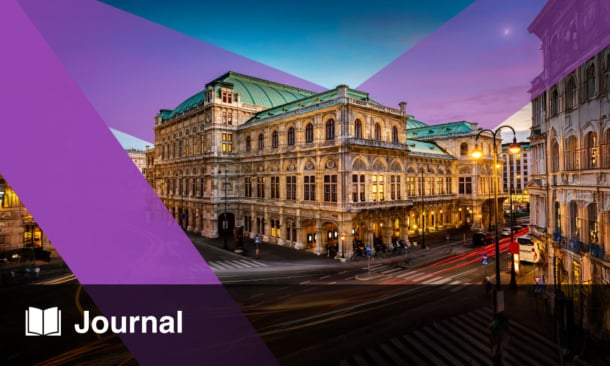
Let’s not forget that it takes place in one of the loveliest cities in Europe and the World, Vienna, making a return to the ECR a pleasure, year after year.
Finally, when participants leave the ECR, what do you hope they will take back with them to their hospitals and daily practice?
I hope the attendees leave with new knowledge, additional perspectives, and practical concepts that they can apply in their own departments.
Scientific meetings like this are not only about presenting research; they are also about sharing practices and learning from colleagues around the world. If participants return home with the ability to improve their practice, adopt new procedures, or reinforce collaboration within their teams, then the congress has achieved its purpose.
Ultimately, the goal is always the same: improving patient care through better imaging and stronger professional partnership.