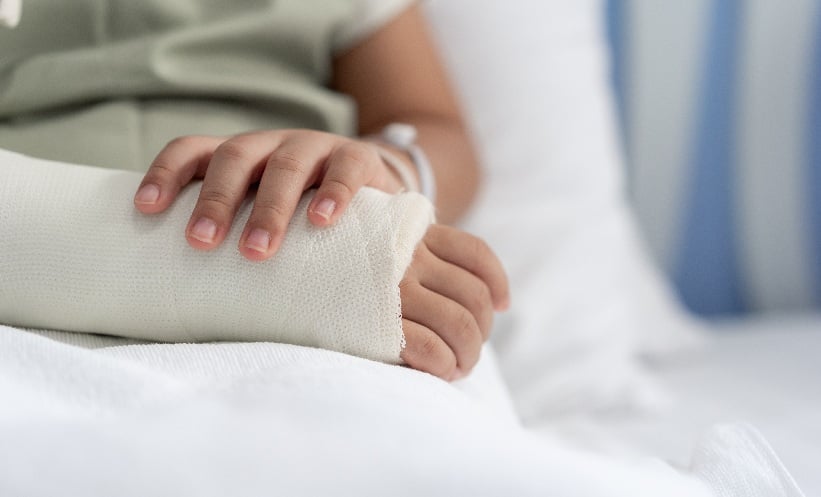
AI FRACTURE detection has shown modest early improvements in identifying fractures linked to physical abuse in young children, according to a UK-based pilot study.
Physical abuse affects approximately 6.9% of children in the UK, with fractures one of the common clinical indicators.
Missed fractures carry serious consequences, including recurrence and increased mortality, making accurate detection critical.
AI’s Role in Safeguarding Children
Double reporting of skeletal surveys remains a key safeguard in identifying inflicted injuries, yet not all departments have sufficient specialist expertise to support this approach. An automated system offering a reliable second opinion could therefore help bridge this gap. This may be particularly useful in high-demand or resource-limited settings.
The study assessed a deep learning-based tool, BoneView, designed to support AI fracture detection in suspected abuse cases. Researchers aimed to evaluate whether targeted retraining using relevant imaging data could improve diagnostic performance.
Modest Performance Gains After Targeted Training
This retrospective diagnostic accuracy study analysed radiographs from 1,740 children under five years old assessed for suspected physical abuse at a single tertiary centre between 2000 and 2023. The cohort had a mean age of 8.77 months.
Baseline sensitivity was 44% and specificity was61%, rising to 52% and 67% after retraining, showing modest improvement.
These findings indicate that retraining the model on relevant skeletal survey data can improve diagnostic accuracy, although overall performance remains below thresholds required for independent clinical use.
Clinical Insights and Limitations
Despite these gains, performance remained lower than that reported for artificial intelligence tools developed for paediatric accidental fracture detection. This difference may reflect the inherent challenges in this setting, as inflicted fractures are generally more subtle on radiographs compared to accidental fractures.
Sub-analysis also showed lower diagnostic performance for rib fractures compared with overall fracture detection. This may be due to the complexity of chest radiographs, where overlapping anatomical structures can obscure findings and increase the likelihood of false positives.
The study also has several limitations. Data were derived from a single tertiary centre, which may affect generalisability to other clinical settings. The model assessed represents a single deep learning approach and does not reflect the full capabilities of commercially available systems.
Future Directions for AI Use
Further work is needed to complete annotation of the dataset and expand model training. Increasing the volume and diversity of training data may be particularly important, given the subtle nature of inflicted fractures on imaging and the associated diagnostic challenges.
Multicentre collaboration may also help improve generalisability and model robustness across different healthcare settings. While the findings support continued development of AI fracture detection, current performance indicates that such tools should be used cautiously and only as an adjunct to expert radiological assessment, particularly given the potential for false positives in this sensitive clinical context.
Reference
Evans S et al. Developing an artificial intelligence tool for detecting fractures of child abuse: preliminary findings. Eur Radiol. 2026;DOI:10.1007/s00330-026-12513-8.
Featured image: Ronnachaipark on Adobe stock