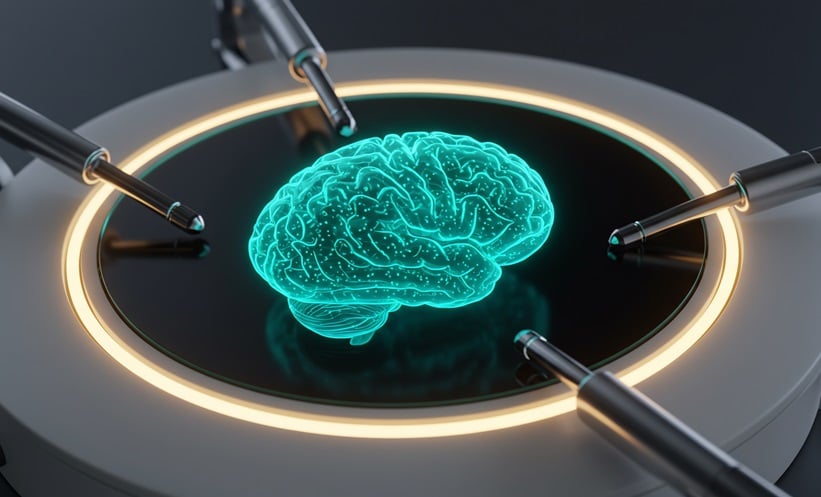
A BREAKTHROUGH in the development of neural probes could transform how clinicians and researchers access the human brain. Engineers have developed customisable stainless steel neural probes that allow deep brain sensing with reduced tissue damage, addressing long-standing safety and durability limitations of existing technologies.
Why Existing Neural Probes Fall Short in Practice
Modern neuroscience and neurosurgery depend heavily on neural probes to record electrical activity from the brain. These tools are essential for epilepsy localisation, deep brain stimulation planning, and fundamental brain research. However, most current neural probes are fabricated from silicon, a material that is inherently brittle and prone to fracture during insertion. Silicon-based neural probes perform well in shallow or small animal applications, but their fragility restricts their use in deeper brain regions and larger brains.
Stainless Steel Neural Probes Show Strong Performance
Researchers addressed these challenges by developing stainless steel neural probes using a multilayer microfabrication process. Unlike silicon, stainless steel offers high fracture toughness, resilience, and established biocompatibility through its widespread use in prosthetics and coronary stents. The resulting probes, known as steeltrodes, can reach lengths of up to 8 cm while remaining approximately 300 µm wide.
The neural probes support high-density, multilayer electrode integration and optional flexible cables, enabling precise recordings with minimal invasiveness. In vivo testing demonstrated successful implantation through intact dura in rats with minimal cortical damage. In macaques, the probes delivered high-fidelity recordings of single units and local field potentials from the auditory cortex, confirming their suitability for high-resolution electrophysiology. Importantly, the design reduces the risk of breakage during surgery, a critical safety improvement over conventional neural probes. The fabrication approach also supports scalable manufacturing, overcoming historical barriers associated with stainless steel microfabrication.
Clinical and Research Implications Moving Forward
These stainless-steel neural probes represent a significant step toward safer, more accessible brain monitoring in clinical environments. For clinicians, improved durability and reduced tissue trauma may expand the use of intraoperative neural recording and enhance outcomes in epilepsy surgery and deep brain stimulation procedures.
In research settings, the probes offer a cost-effective alternative to hand-built electrodes, enabling broader adoption of high-density brain recording across multiple regions. As development continues, neural probes built from robust, scalable materials may bridge the gap between experimental precision and real-world clinical deployment, accelerating progress in neurotherapeutics and brain disease diagnosis.
Reference
Ahmed Z et al. Robust minimally-invasive microfabricated stainless steel neural interfaces for high resolution recording. Nat Commun. 2026;DOI:10.1038/s41467-025-67681-w.