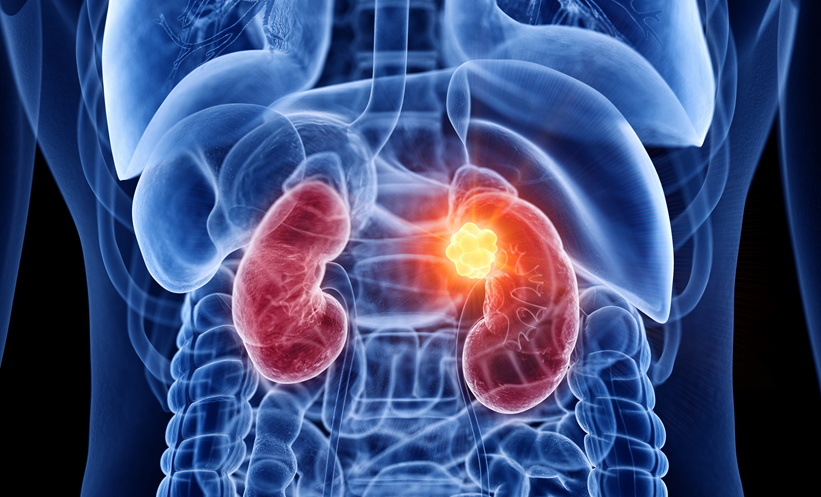
SEQUENTIAL transarterial embolisation followed by percutaneous renal cryoablation achieved high local tumour control with low rates of severe complications in patients with renal masses larger than 3 cm, according to new multicentre data.
Renal Cryoablation Addresses a Treatment Gap
Management of larger renal masses remains challenging, particularly for patients who are poor surgical candidates or wish to avoid nephrectomy. Percutaneous renal cryoablation is well established for small renal tumours, but efficacy declines as tumour size increases. Combining transarterial embolisation with renal cryoablation has been proposed to improve outcomes by reducing tumour vascularity and enhancing ablation effectiveness. A recent study evaluated this sequential approach in a real-world cohort treated at two tertiary academic centres over a decade, focusing on tumours exceeding 3 cm, including a substantial proportion classified as T1b.
Renal Cryoablation Trial Design and Outcomes
The retrospective analysis included 46 patients who underwent planned embolisation followed by percutaneous renal cryoablation between 2014 and 2024. Median tumour size was 4.5 cm, with 31 lesions larger than 4 cm. Primary efficacy was defined as complete absence of residual enhancement after the initial procedure, while secondary efficacy included successful repeat ablation for local tumour progression. Primary efficacy rates reached 93% for T1a lesions and 81% for T1b lesions, rising to 100% and 87%, respectively, after repeat treatment when required. Kaplan–Meier analysis showed progression-free survival rates of 94% at one year and 87% at two years, with a median imaging follow-up exceeding 1.6 years.
Renal Cryoablation Safety Profile Reassuring
Safety outcomes were favourable, with an overall adverse event rate of 13%. Severe adverse events occurred in 4% of patients and were limited to post-procedural haemorrhage. Events were classified using Society of Interventional Radiology criteria, supporting consistency and clinical relevance. The low rate of serious complications suggests that sequential embolisation and renal cryoablation can be delivered safely in experienced centres, even for larger tumours traditionally considered higher risk for percutaneous intervention.
These findings support sequential transarterial embolisation and renal cryoablation as a feasible and effective option for renal masses larger than 3 cm. Prospective studies with longer follow-up will be important to confirm durability and refine patient selection.
Reference
Hung ML et al. Efficacy and safety of sequential transarterial embolization and cryoablation of renal masses greater than 3 cm. Urol Oncol. 2025;S1078-1439(25)00481-8.