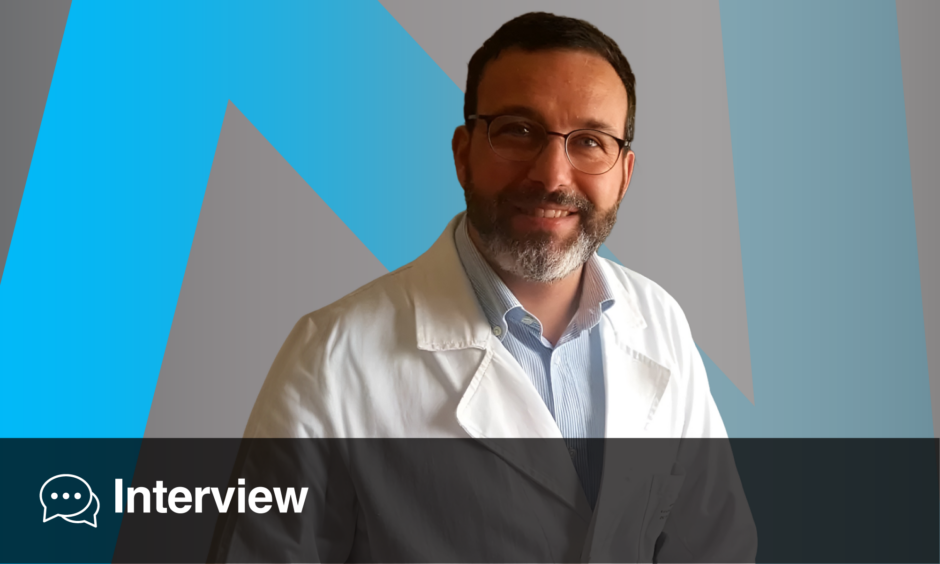
Tommaso Simoncini | Professor of Obstetrics and Gynaecology, University of Pisa; Head of the Obstetrics and Gynaecology Unit, University Hospital of Pisa, Italy; President, International Society of Gynaecological Endocrinology (ISGE)
Citation: EMJ Repro Health. 2026; https://doi.org/10.33590/emjreprohealth/OX5K9AOZ

Could you begin by outlining your professional journey and how your early scientific training shaped your focus on hormonal biology within obstetrics and gynaecology?
I started as a medical student and, as often happens, the early steps of your career are shaped by the people you meet, sometimes purely by chance. I happened to meet my mentor, Andrea Riccardo Genazzani, University of Pisa, Italy, who had just come to my university. He was an incredibly bright and inspiring person, and that encounter drew me into obstetrics and gynaecology, particularly gynaecological endocrinology.
From the beginning, I was very interested in research. I had the opportunity to spend a long period abroad studying the molecular actions of steroid receptors in vascular cells. At the time, researchers were beginning to investigate why hormonal therapies and the hormonal changes associated with menopause influence cardiovascular health and disease.
Those were really pioneering years. I was fortunate to work in a fantastic laboratory at Brigham and Women’s Hospital (BWH), as part of Harvard Medical School, Boston, Massachusetts, USA. I spent 2–3 years there doing basic research, essentially training as both a molecular biologist and a gynaecologist, while working closely with cardiologists in a multidisciplinary environment.
That experience shaped my professional trajectory. Later, I returned to Italy, joined the University of Pisa, and gradually developed my career there, first as a trainee and then as a practising physician and academic.
Did you enjoy combining scientific research with clinical practice?
Yes, very much. I think that combination was the real added value of my career.
Of course, as you move forward professionally and take on more responsibilities, administrative duties and leadership roles tend to take up more of your time, but, for nearly 20 years, I had the privilege of doing both basic research and clinical work simultaneously.
I established a research laboratory in my department that remains very active today, with technicians, students, and young investigators. I was constantly moving between the laboratory and the clinic, which created a very stimulating professional environment.
Over the years, how has your perspective on hormone therapy evolved, particularly regarding cardiovascular risk and endothelial function?
Interestingly, my perspective has not changed very much; what has changed is the general perception within the medical community.
The scientific evidence has been remarkably consistent. It is very clear that oestrogens have profound protective effects on the cardiovascular system. This applies to both men and women, although women experience a dramatic shift in oestrogen levels at a specific point in life: menopause.
From an evolutionary perspective, oestrogens developed to support the enormous cardiovascular adjustments required during pregnancy. Pregnancy demands substantial changes in blood flow and vascular function, and oestrogens play a central role in facilitating those changes.
When women lose oestrogen at menopause, the cardiovascular system is affected. Endothelial function changes significantly, and this contributes to the increase in cardiovascular disease risk observed after menopause, eventually reaching levels similar to those seen in men.
We now know that steroid receptors, including oestrogen, progesterone, and androgen receptors play key roles in cardiovascular biology. Endothelial cells are one of their most important targets, and the presence or absence of these hormones can substantially alter endothelial function.
Would you say that hormone replacement therapy reduces cardiovascular risk after menopause?
Yes, there is clear evidence that it does. This evidence comes not only from basic science and animal studies, but also from clinical research.
We have many biomarkers that allow us to assess vascular function, such as measures of vessel dilation, blood pressure regulation, and endothelial activity. These biomarkers consistently show that oestrogen replacement improves vascular function.
Even the clinical trials that generated controversy around hormone therapy show that, when used appropriately, oestrogen therapy reduces cardiovascular risk rather than increasing it.
However, that does not mean hormone therapy should automatically be used in every menopausal woman. Medicine requires clear therapeutic goals.
Cardiovascular risk is multifactorial. It depends on genetics, lifestyle, and comorbidities. Lifestyle interventions, such as maintaining a healthy weight, exercising regularly, and controlling blood pressure, remain the cornerstone of cardiovascular prevention.
Hormone therapy can play an important role, particularly for women who have symptoms or who may benefit from it, but it should not replace healthy lifestyle measures.
Translating laboratory findings into clinical practice is often challenging. What have been the key barriers in bringing mechanistic insights into routine patient care?
This is a complex issue. Interestingly, the main difficulty is not translating laboratory findings to patients, but rather translating them to other physicians.
Clinicians in fields such as cardiology or oncology are often well placed to understand molecular and biomarker data, but modern medicine tends to simplify information excessively. Many physicians simply do not have the time or energy to explore the underlying evidence in detail.
A good example is the reaction to the Women’s Health Initiative (WHI). When those results were published, many people focused on the headlines rather than the full data.
For more than 20 years, we have been discussing and clarifying the findings, pointing out that hormone therapy is not harmful for the heart when used appropriately. The evidence supporting this is extensive and entirely consistent with basic science research.
Another challenge is that women’s health has historically received less research investment compared with areas such as oncology, cardiology, or diabetes. These fields attract significant pharmaceutical investment, whereas preventive approaches in women’s health have often been neglected.
Yet hormone therapy is one of the few treatments shown to prevent cardiovascular events and Type 2 diabetes in healthy women. That is an incredibly powerful effect, but it remains underutilised.
As President of the International Society of Gynaecological Endocrinology (ISGE), what has stepping into this role meant to you personally, and what vision do you hope to advance during your tenure?
It has been a great honour. I have worked with this society for many years, and it has grown into a truly global organisation.
We now have around 40 national or regional societies affiliated with ISGE, which gives us a very broad international presence.
My vision is that education should be the central mission of the society. Around the world, there is still a tremendous need for education in gynaecological endocrinology, reproductive medicine, and menopause.
In many countries, physicians receive little or no formal training in these areas. Some regions lack even the most basic hormonal therapies. The educational needs vary widely across the world, and our responsibility is to help meet those needs by providing appropriate training and resources.
Do you think current training programmes adequately cover gynaecological endocrinology?
Training varies greatly between countries, but in many places it is insufficient.
In the USA, for example, it has been estimated that many obstetrics and gynaecology residents receive little or no formal teaching on menopause.
In general, training programmes focus heavily on obstetrics, while functional gynaecology receives less attention. Topics such as menopause or hormonal physiology are often covered only superficially.
There is an enormous need for better education in this field, and addressing that gap is one of our priorities.
Which emerging themes or research presented at the ISGE 2026 Congress do you believe will have the greatest impact on clinical practice in the coming years?
This is a very exciting time for the field.
For about two decades, there were relatively few major pharmacological innovations in reproductive endocrinology. Treatments for ovulation induction, contraception, and menopause were well established, but there were limited new developments.
Now, we are seeing renewed interest. New therapeutic approaches are being developed for conditions such as endometriosis and other functional disorders that significantly affect women’s quality of life.
We are also revisiting fundamental concepts, including the neuroendocrine control of reproduction and metabolism. Understanding how the brain regulates ovarian function is opening new possibilities for treatment.
Technological advances, including big data and AI, are also likely to transform the field. Although these approaches have already made major impacts in areas such as oncology, they are only beginning to influence reproductive medicine.
I am hopeful that, in the coming years, we will see significant innovations that improve women’s health globally, ideally with treatments that are accessible and affordable, rather than limited to high-income settings.