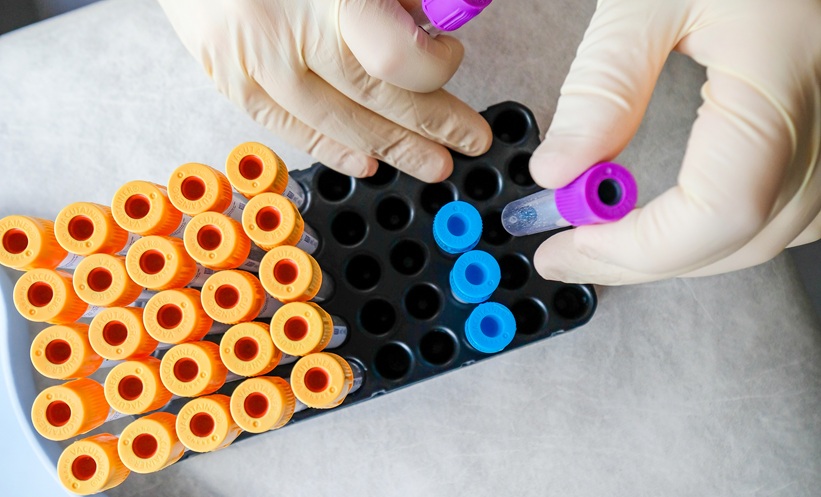
SCIENTISTS have developed a new highly accurate blood test that can detect endometriosis across menstrual cycle phases, catching cases missed by ultrasound and MRI.
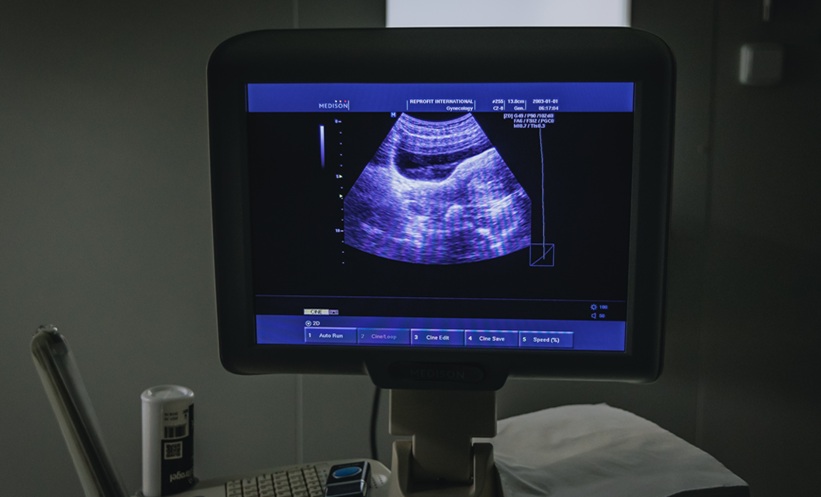
Compared with transvaginal ultrasound, MRI, or a combination of the two, the blood test identified more than 60% confirmed endometriosis cases that were missed by imaging.
Endometriosis
Endometriosis is a chronic disease of which symptoms include severe pain during menstruation, heavy menstrual bleeding, chronic pelvic pain, infertility, abdominal bloating and nausea.
It affects an estimated 10% of women of reproductive age worldwide and its causes are currently largely unknown.
Diagnosis is often difficult, as symptoms vary broadly between individuals and people with endometriosis may be unaware of the condition.
Access to diagnosis and effective treatment of endometriosis is limited in several settings, including low- and middle-income countries, with a current average diagnosis time of 4–12 years.
High Sensitivity and Specificity
Transvaginal ultrasound and MRI are currently the primary imaging modalities used for preoperative assessment and precise identification of endometriosis lesions.
The multi-centre case-control study included nearly 300 women of reproductive age.
The training cohort comprised 218 participants and an independent, retrospective validation cohort included 80 participants: 40 endometriosis-positive and 40 controls.
In the validation cohort, the blood test achieved an area under the curve of 0.944, a sensitivity of 0.80, and specificity of 0.975.
The blood test consistently performed across subgroup analyses in both proliferative-phase and secretory-phase samples.
Moreover, it identified 61.5% histologically confirmed endometriosis cases missed by transvaginal ultrasound and MRI.
Implications for Endometriosis Care
The blood test, integrating molecular biomarkers with machine learning, is valuable in accurately detecting endometriosis across menstrual cycle phases and holds diagnostic value, researchers reported.
They noted that implementation of the blood test into standard care has the potential to improve early detection of endometriosis and guide timely clinical intervention.
To further assess the use of the test in clinical settings, a prospective validation is currently analysing its impact in geographically and ethnically diverse populations.
References
Wong WH et al. Non-invasive blood-based detection of endometriosis can improve standard-of-care by facilitating early diagnosis and clinical management among symptomatic women. JMIG. 2026;DOI:10.1016/j.jmig.2026.02.042.
Riazi H et al. Clinical diagnosis of pelvic endometriosis: a scoping review. BMC Womens Health. 2015;15:39.
Guerriero S et al. Advances in imaging for assessing pelvic endometriosis. Diagnostics (Basel). 2022;12:2960.
World Health Organization. Endometriosis. 2025. Available at: https://www.who.int/news-room/fact-sheets/detail/endometriosis. Last accessed: 23 March 2026.
Featured image: Elena Loginova on Adobe Stock