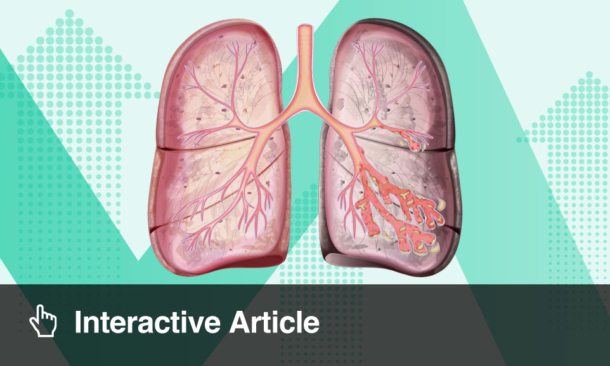
CT in alpha-1-antitrypsin deficiency (AATD) tied airway wall thickness to next-year exacerbations beyond emphysema severity alone overall.
Quantitative CT Highlights More Than Emphysema
AATD is a rare genetic condition that can lead to chronic obstructive pulmonary disease (COPD), with emphysema often considered the dominant CT abnormality. However, researchers reported that additional airway changes were highly prevalent and carried distinct clinical associations when assessed using quantitative CT.
In this retrospective analysis of consecutive AATD patients undergoing CT imaging at a single center between 2008 and 2022, structural abnormalities were evaluated using an artificial intelligence driven scoring approach designed to quantify emphysema alongside airway features, including bronchiectasis, airway wall thickening, and mucus plugs. Clinical outcomes included forced expiratory volume in 1 second (FEV1%), dyspnea severity using the modified Medical Research Council (mMRC) scale, and the occurrence of at least one exacerbation within the year after the CT scan.
Airway Abnormalities Were Common, With Lower-Lung Predominance
Among 52 included patients, bronchiectasis was identified in all cases, airway wall thickening was present in 94.2%, and mucus plugs were detected in 59%. These findings showed a lower versus upper lung predominance, suggesting a consistent regional pattern of disease expression beyond parenchymal destruction alone.
Distinct CT Patterns Mapped to Lung Function and Symptoms
Not all quantitative CT features aligned with the same clinical endpoints. Airway wall thickening and bronchiectasis correlated with FEV1%, supporting an association with airflow limitation. In contrast, mucus plugs did not show a significant relationship with FEV1%, but they correlated with mMRC dyspnea scores, indicating a closer link with symptom burden than spirometric impairment.
Emphysema remained strongly associated with both FEV1% and dyspnea severity, reinforcing its central role in AATD-related COPD. Yet, when predicting near-term clinical worsening, airway structure appeared to add important prognostic value.
Wall Thickness Best Predicted Next-Year Exacerbations
After adjustment for age, genotype, and tobacco exposure, airway wall thickening emerged as the most robust predictor of at least one exacerbation in the following year (OR=1.12). These findings suggest that quantitative CT assessment of airway wall thickening may help identify higher-risk AATD phenotypes that are not fully explained by emphysema burden.
Reference: Dournes G et al. Quantitative CT of emphysema, wall thickness and mucus plugs in alpha-1-antitrypsin deficiency: relationship to clinical outcomes. Eur Radiol. 2025;doi:10.1007/s00330-025-12188-7.