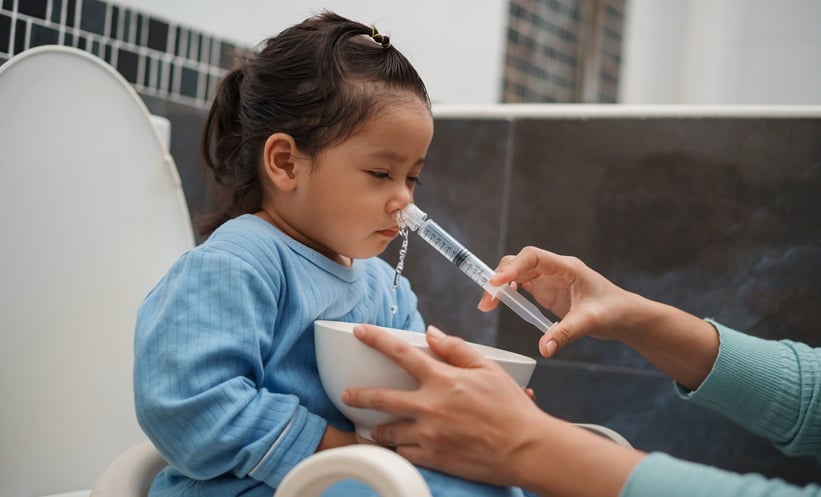
PHYSIOLOGIC sea saline nasal irrigation has emerged as a simple yet effective method to reduce acute upper respiratory tract infections (AURTIs) in children. In a recent study conducted at a public kindergarten from February to June 2023, healthy children were assigned either to an intervention group receiving twice-daily nasal irrigation or to a control group receiving standard care. The study aimed to assess whether regular sea saline nasal irrigation could limit bacterial colonisation in the pharynx and reduce the incidence of AURTIs during group care.
Study Design and Implementation
A total of 234 children were included, with 120 in the intervention group and 114 in the control group. Researchers collected swab samples at baseline and at the first AURTI occurrence after 48 hours. They tracked the incidence of infections throughout the semester and analysed changes in bacterial species, colony counts, and non-bacterial pathogen detection.
Saline Nasal Irrigation Effects on Bacterial Colonisation
Children receiving sea saline nasal irrigation had significantly fewer AURTIs (45.8%) compared with the control group (71.1%; P<0.001). The timing of first infections was also more dispersed in the intervention group. Throat swabs showed that bacterial species and colony counts were lower in the intervention group following infection, whereas bacterial numbers increased in the control group. The intervention did not significantly alter viral or mycoplasma detection, indicating a specific effect on bacterial colonisation.
Practical Implications for Childcare Settings
These findings suggest that sea saline nasal irrigation may be a useful, non-invasive strategy to reduce bacterial loads and lower infection rates among children in kindergarten or group care environments. While it does not prevent viral infections, it can help maintain respiratory health, reduce illness clustering, and lessen the burden on caregivers and healthcare services during high-risk periods.
Reference
Luo C et al. One prospective study of physiologic sea saline nasal care on the incidence of acute upper respiratory tract infections and changes of pharyngeal pathogens in children during kindergarten daycare. BMC Pediatr. 2025; DOI:10.1186/s12887-025-06424-8.