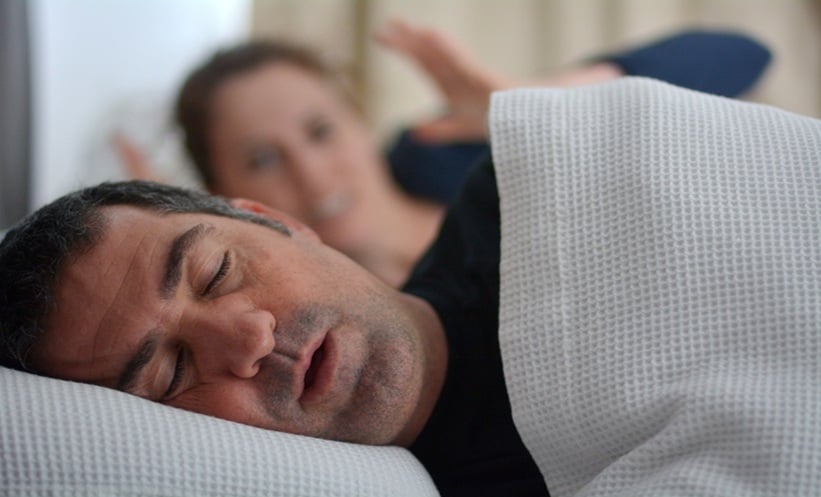
A NEW analysis suggests that obstructive sleep apnoea is far more common and costly than many employers and policymakers realise. The breathing disorder, in which the upper airway repeatedly narrows or closes during sleep, causing pauses in breathing and fragmented rest, was estimated to affect 22.8% of adults in the USA and 19.5% in the UK. Using self-reported breathing pauses and excessive daytime sleepiness as a proxy, the study links untreated obstructive sleep apnoea to substantial workplace productivity losses.
The Economic Toll of Obstructive Sleep Apnoea
By combining census-based symptom data with measures of absenteeism (time off work) and presenteeism (reduced performance while at work) in 18–64yearolds, the researchers estimated annual productivity losses of around 180.2 billion USD in the USA and 4.22 billion GBP in the UK. On a per-worker basis, this equated to 3,727 USD lost output per affected USA worker and about 1,840 GBP per affected UK worker each year, expressed in terms of gross domestic product.
Treatment Costs Lower Than Productivity Losses
The study compared these losses with the cost of continuous positive airway pressure (CPAP) treatment, a standard therapy for moderate to severe obstructive sleep apnoea. CPAP uses a mask and air pressure to keep the airway open overnight. The estimated annual cost of CPAP in the USA was 1,661 USD per patient, and 1,363 GBP per patient in the UK, including associated health care and support. In both countries, the productivity losses per untreated worker exceeded these treatment costs, suggesting that better identification, access, and adherence could deliver net economic gains.
The authors note that their figures are likely conservative, as they do not account for increased healthcare spending linked to cardiovascular disease, diabetes, dementia, or the costs of road traffic and workplace accidents associated with sleepiness. They also stress that apnoea was inferred from symptoms rather than objective sleep studies, limiting assessment of severity and the ability to exclude other causes of fatigue.
Is It Time for Workplace Screening?
A linked editorial highlights that an estimated 80–85% of people with obstructive sleep apnoea remain undiagnosed and that those with daytime sleepiness are about twice as likely to be injured at work.
The commentators argue that several developments now make workplace screening worth testing in high-risk occupations. These include better risk algorithms to flag safety-critical roles such as lorry drivers, construction workers, train drivers, pilots, heavy machinery operators, surgeons and carers, along with low-cost home sleep testing and a wider range of treatment options beyond CPAP, such as weight-loss drugs, airway surgery, hypoglossal nerve stimulation, mandibular advancement devices and positional therapies. However, they also caution that any screening programme would need to address fears of job loss or penalties, potential insurance implications, driving restrictions and privacy concerns.
The editorial concludes that the next step should be a trial of workplace screening in a clearly high-risk group, such as professional drivers, to test whether identifying and treating obstructive sleep apnoea can meaningfully reduce accidents and absenteeism compared with standard care.
Reference
Rehman U et al. Neglected burden of obstructive sleep apnoea: workplace productivity loss in the USA and UK. Thorax. 2026; DOI:10.1136/thorax-2025-223550.
Featured image: New Africa on Adobe Stock