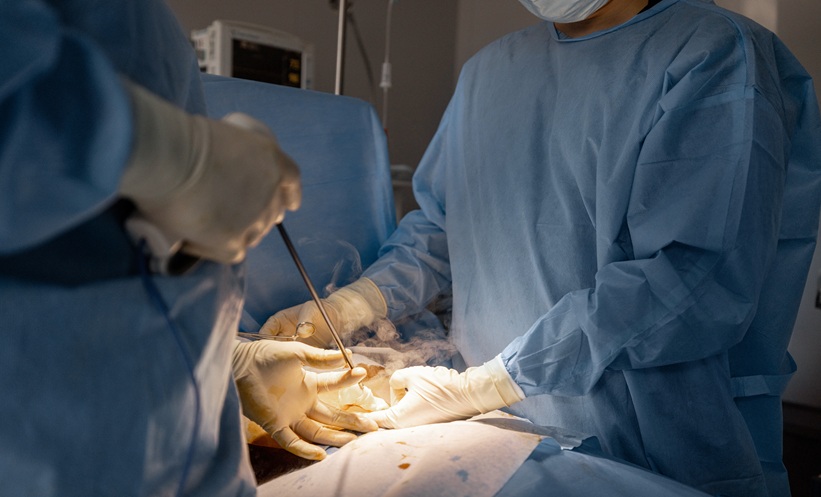
A NEW study reports that prostate-specific antigen (PSA) levels decline rapidly following surgery for benign prostate enlargement (BPE), even among patients with elevated baseline PSA levels.
Elevated PSA in Benign Prostate Enlargement
Elevated total PSA (tPSA) is commonly associated with prostate cancer but may also occur in benign conditions such as BPE, creating diagnostic and management challenges. To better understand PSA dynamics after treatment, researchers evaluated PSA clearance following surgical intervention in men with BPE and baseline tPSA levels above 4 ng/ml.
The study included 154 men with benign prostate enlargement confirmed by imaging and biopsy. Participants were divided into three groups: 77 patients received medical therapy with tamsulosin and dutasteride (TDT), 43 underwent transurethral resection of the prostate (TURP), and 34 underwent open simple prostatectomy (OSP). Patients with malignancy or chronic prostatitis were excluded.
At baseline, patients undergoing surgical treatment had significantly higher PSA levels and larger prostate volumes compared with those receiving medical therapy. Median PSA levels were 10.0 ng/ml in the TURP group and 15.8 ng/ml in the OSP group, compared with 5.6 ng/ml in the TDT group. Prostate volumes were also notably larger in surgical cohorts, particularly in the OSP group.
Exponential PSA Decline After Surgery
Following surgery, PSA levels declined in an exponential pattern, closely correlated with preoperative PSA values. By 6 weeks post-procedure, 45.5% of surgical patients had PSA levels below 4.0 ng/ml. This proportion increased markedly to 96.1% at 12 weeks, indicating near-complete normalisation in most cases.
The findings suggest that surgical removal of prostate tissue, via TURP or OSP, results in rapid and substantial reductions in circulating PSA levels in patients with BPE. In contrast, medical therapy was associated with lower baseline PSA but did not demonstrate the same rapid clearance pattern.
Clinical Implications for PSA Monitoring
The authors conclude that in patients with BPE and elevated PSA (≥1.5 ng/ml), surgical intervention leads to predictable and exponential PSA decline. These results may help clinicians interpret post-treatment PSA levels more accurately and avoid unnecessary concern about persistent PSA elevation in the absence of malignancy.
Reference
Nwosu EO et al. Prostate-specific antigen clearance after surgery for benign prostate enlargement in a cohort with median prostate-specific antigen greater than 4ng/ml. BMC Urol. 2026;DOI: 10.1186/s12894-026-02121-5
Featured image: ArLawKa on Adobe Stock