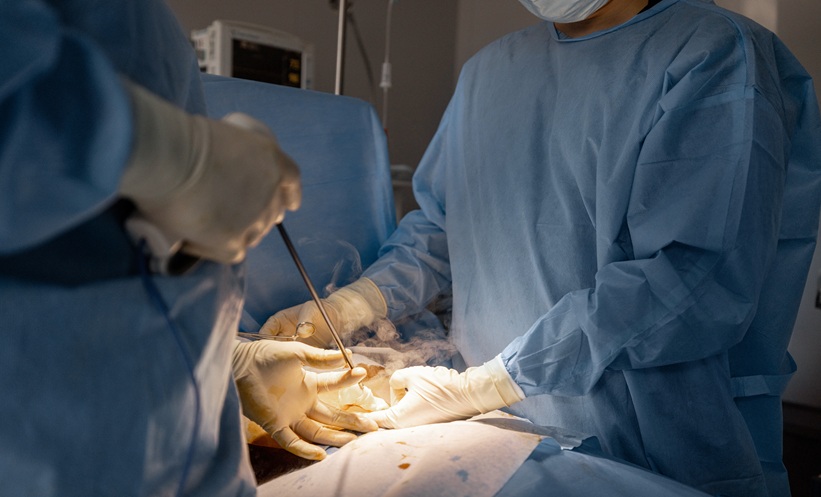
CONCERNS about the potential spread of cancer during minimally invasive surgery may be unfounded, according to new research investigating surgical smoke generated during robot-assisted radical cystectomy (RARC) for bladder cancer.
RARC is widely used to treat bladder cancer, but rare cases of unusual recurrence patterns, such as port site metastases and peritoneal dissemination, have raised questions about whether surgical by-products, including smoke generated during electrocoagulation, could contribute to tumour spread.
To explore this possibility, researchers conducted a series of experiments to determine whether surgical smoke produced during RARC contains viable cancer cells, genetic mutations, or tumour-derived extracellular components. The study combined clinical sample analysis with laboratory-based modelling.
Digital PCR Analysis Finds No Evidence of Tumour DNA Dissemination
Initially, the team examined exhaust smoke filters collected during laparoscopic radical cystectomy procedures. Cytological analysis found no evidence of cancer cells. To further investigate, the researchers analysed surgical smoke captured during RARC using a water trap system and applied digital polymerase chain reaction (PCR) techniques to detect the presence of a known bladder cancer mutation, PIK3CA (E545K). No mutated DNA was identified in these samples.
The investigation was extended using an experimental model involving the T24 bladder cancer cell line. Researchers subjected tumour cell pellets to electrocoagulation to replicate surgical conditions and collected the resulting smoke via a vacuum system. Subsequent analysis again failed to detect cancer-associated mutations, including TERT (C228T), a common genetic alteration in bladder cancer.
Exosome Levels in Surgical Smoke Significantly Lower Than Controls
In addition to cellular and genetic material, the study also assessed the presence of exosomes, small extracellular vesicles implicated in cancer progression and intercellular communication. Exosome levels in surgical smoke were found to be significantly lower than those observed in control samples derived from tumour cell supernatants.
Taken together, the findings suggest that surgical smoke generated during RARC does not contain cancer cells, tumour DNA, or biologically relevant levels of exosomes. The authors conclude that the risk of cancer dissemination via surgical smoke is likely negligible.
These results provide reassurance regarding the oncological safety of robot-assisted bladder cancer surgery and may help address ongoing concerns about atypical recurrence patterns following minimally invasive procedures.
Reference
Shibamori K et al. Absence of bladder cancer cells in surgical smoke from robot-assisted radical cystectomy: a prospective study. Front Urol. 2026;6:1714844.
Featured image: rh2010 on Adobe Stock