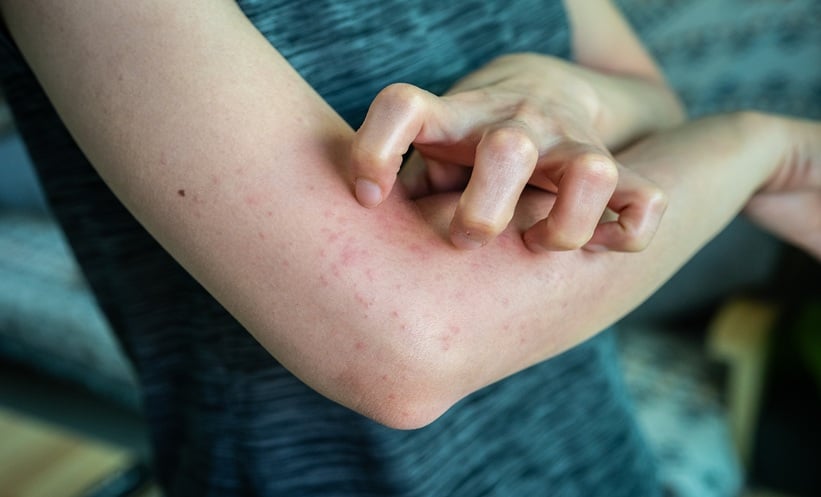
NEW translational research presented at EAACI 2026 challenges long-standing assumptions about allergic contact dermatitis (ACD), suggesting that B cells, traditionally considered scarce in healthy skin and largely irrelevant in type IV hypersensitivity, may in fact play a key role in shaping both cutaneous inflammation and tolerance to contact allergens.
B Cells Identified as Key Players in Allergic Contact Dermatitis
ACD is classically understood as a T-cell–driven delayed hypersensitivity reaction. However, the role of B cells in this process, particularly regulatory B-cell subsets, has remained poorly defined. This gap is especially relevant in real-world exposures such as p-phenylenediamine (PPD), a potent allergen found in hair dyes, where some repeatedly exposed individuals develop tolerance rather than sensitisation.
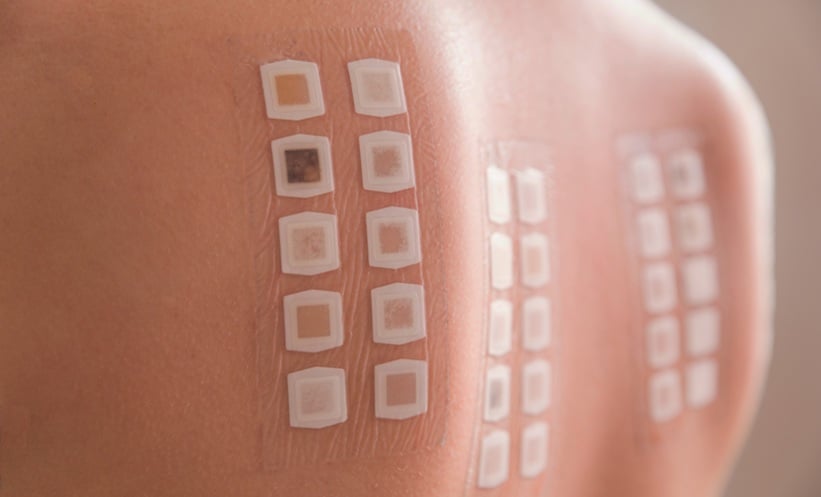
In this study, investigators analysed circulating B cells from healthy controls, PPD-allergic patients and PPD-tolerant individuals four days after standardised PPD patch testing. Using single-cell RNA sequencing, they identified cohort-specific differences in circulating B-cell subsets, with distinct transcriptional signatures emerging between allergic and tolerant individuals. Complementary in vitro stimulation of peripheral blood mononuclear cells with PPD revealed differential B-cell proliferation and cytokine responses across groups, suggesting functional reprogramming of B-cell activity depending on clinical phenotype.
A parallel murine model provided mechanistic insight. Mice were subjected to a PPD-induced ACD model, with or without tolerance induction using the vitamin D analogue MC903. The investigators observed that MC903-mediated tolerance was associated with the emergence of regulatory-like B-cell transcriptional states. In contrast, allergic responses were characterised by more inflammatory B-cell profiles. Importantly, B-cell depletion experiments demonstrated that the absence of B cells resulted in exaggerated and prolonged cutaneous inflammation, while MC903-driven tolerance promoted dermal infiltration of B cells with regulatory features.
New Insights into Immune Regulation in Allergic Contact Dermatitis
Taken together, the findings suggest that B cells are not passive bystanders in cutaneous immune responses but active contributors to the balance between inflammation and tolerance in ACD. The data further indicate that allergen exposure combined with immunomodulatory signals may reprogram B cells toward regulatory phenotypes capable of dampening skin inflammation.
These results challenge the traditional view of the skin as largely B-cell independent and open new avenues for understanding immune regulation in contact allergy. If confirmed in larger human cohorts, B-cell–targeted or B-cell–modulating strategies could represent a novel therapeutic approach for ACD and potentially other chronic inflammatory skin diseases where immune tolerance is disrupted.
Reference
Funch A et al. The role of B cells in allergic contact dermatitis and in tolerance to contact allergens. Abstract 000438. EAACI Congress, 12-15 June, 2026.
Featured image: boyloso on Adobe Stock
- Author: