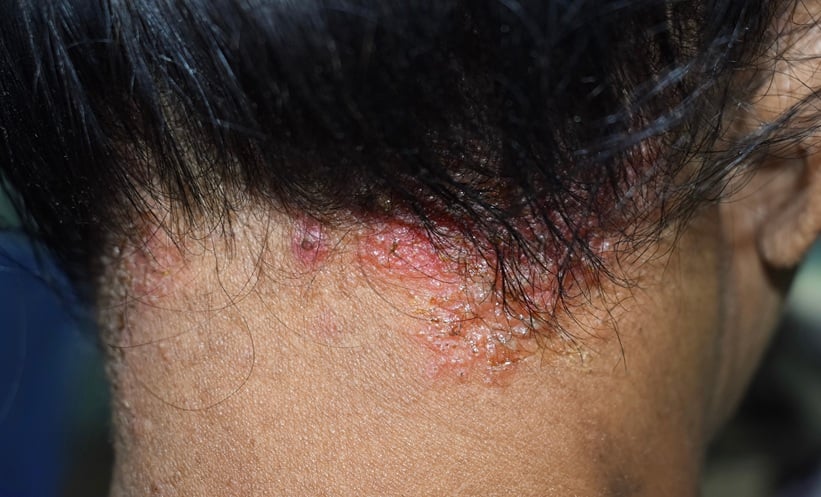
A NEW study has explored the relationship between contact sensitisation, skin barrier dysfunction, and scalp microbiome changes in patients with scalp seborrheic dermatitis (SSD), providing new insights into how allergic responses and microbial imbalance may contribute to disease severity.
SSD is a common chronic inflammatory scalp condition characterised by redness, scaling, itching, and altered skin barrier function. Patients often report intolerance to topical products, including hair care products, but the clinical significance of contact sensitisation and its relationship with scalp microorganisms remains unclear.
Researchers investigated allergen sensitisation patterns in patients with SSD and assessed whether specific allergens were associated with disease severity, barrier impairment, and changes in scalp microbiota.
Contact Sensitisation Patterns Identified in Scalp Seborrheic Dermatitis
The study included 63 participants who underwent patch testing for 62 potential allergens. Participants were assessed for clinical severity, transepidermal water loss (TEWL), and stratum corneum hydration, with additional bacterial and fungal microbiome analysis performed in a subset of 36 patients using 16S rRNA and ITS1 sequencing.
Although overall rates of allergen sensitisation were not significantly different between patients with SSD and control participants, several specific allergens were commonly identified among individuals with scalp involvement.
The most frequent sensitising agents included cobalt chloride, cetrimonium bromide, p-methylaminophenol, nickel sulfate, decyl glucoside, and minoxidil. These findings highlight that ingredients found in personal care products and topical treatments may contribute to symptoms in susceptible individuals.
Barrier Dysfunction and Microbiome Changes May Influence Disease Activity
The researchers found that specific allergen sensitivities were associated with clinical characteristics including age, sex, disease duration, and SSD severity. Increased transepidermal water loss, a marker of impaired skin barrier function, was particularly associated with sensitivity to fragrance and preservative allergens.
Microbiome analysis revealed potential links between allergen sensitisation and microbial composition. Minoxidil sensitisation was negatively associated with Malassezia, a fungus commonly implicated in seborrheic dermatitis. In contrast, several fragrance and preservative allergens were associated with increased detection of microorganisms including Candida, Staphylococcus, and Corynebacterium.
Study Highlights Importance of Personalised Assessment
The authors concluded that contact sensitisation in SSD should not be interpreted in isolation. Instead, patch test results should be considered alongside allergen exposure, skin barrier status, disease severity, and microbial changes.
The findings suggest that identifying relevant allergens and understanding their relationship with scalp microbiota may help clinicians develop more personalised management strategies for patients with scalp seborrheic dermatitis.
Reference
Cui C et al. Contact sensitization to hair care allergens in scalp seborrheic dermatitis: associations with disease severity and microbiota profiles. Front Allergy. 2026;7:1862176.
Featured image: ZAY WIN HTAI on Adobe Stock
- Author: