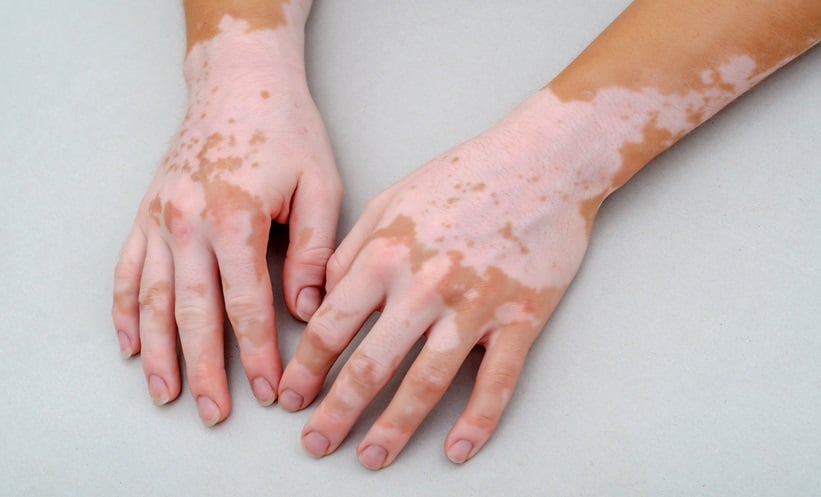
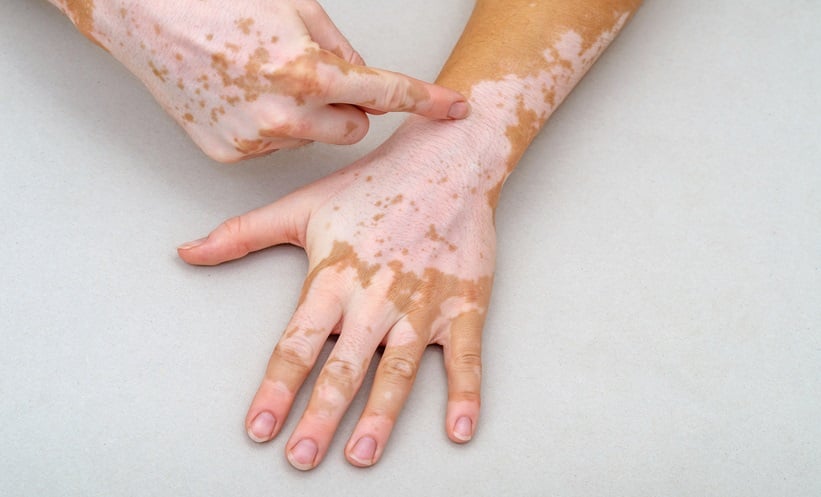
Topical ruxolitinib was associated with progressive repigmentation and improvements in mental health and quality of life among patients with non-segmental vitiligo in a large real-world study.
Progressive Repigmentation Observed
Vitiligo can have a substantial psychosocial impact, while evidence on topical ruxolitinib outside controlled clinical trials remains comparatively limited. Researchers therefore assessed treatment outcomes in a large and heterogeneous real-world population across 34 Italian dermatology centres.
The retrospective study included 860 patients aged 12 years and over with non-segmental vitiligo who received ruxolitinib 1.5% cream twice daily. Most patients had previously received treatment for their condition.
At 24 weeks, 18.5% of patients achieved at least 75% facial repigmentation, measured using F-VASI75. This increased to 38.4% among the 229 patients who had reached 52 weeks of treatment. The proportion achieving F-VASI90 similarly increased from 5.7% at 24 weeks to 25.8% at 52 weeks.
Treatment Response and Mental Health
The researchers also explored factors that could help predict treatment response. Initiating treatment during summer was associated with a substantially greater likelihood of achieving F-VASI75 at 24 weeks (adjusted odds ratio: 6.7; 95% CI: 2.7–16.8). The Koebner phenomenon was also independently associated with response (adjusted odds ratio: 1.6; 95% CI: 1.04–2.66).
Alongside improvements in pigmentation, the study identified changes in patients’ reported mental health. At baseline, 37% of patients had moderate-to-severe anxiety. This proportion fell to 11% at 24 weeks and 2% at 52 weeks.
Measures of vitiligo-related quality of life, dermatology-related quality of life, and depression also improved throughout follow-up.
Implications for Vitiligo Care
The treatment appeared to be well tolerated, with adverse events described as mild in 98.9% of patients. Treatment was discontinued by 1.5% of patients.
The findings provide real-world evidence that topical ruxolitinib may deliver progressively greater repigmentation with continued treatment. The association between treatment initiation during summer, the Koebner phenomenon, and earlier treatment response may also help inform discussions with patients.
The concurrent improvements in anxiety, depression, and quality of life highlight the broader impact of vitiligo treatment beyond repigmentation. The findings suggest that assessment of mental health could have a role alongside clinical evaluation when monitoring patients with vitiligo.
Reference
Marzano AV et al. Real-world effectiveness of topical ruxolitinib in non-segmental vitiligo: repigmentation, mental health, and quality-of-life outcomes in an 860-patient multicentre study. Br J Dermatol. 2026;DOI: 10.1093/bjd/ljag342.
Featured image: WHstudio Leushin N on Adobe Stock