Key Summary:
- Insulin requirements varied considerably among women with gestational diabetes.
- Weight and BMI were less predictive of maximum insulin doses.
- Rapid glucose-based titration may support individualised treatment.
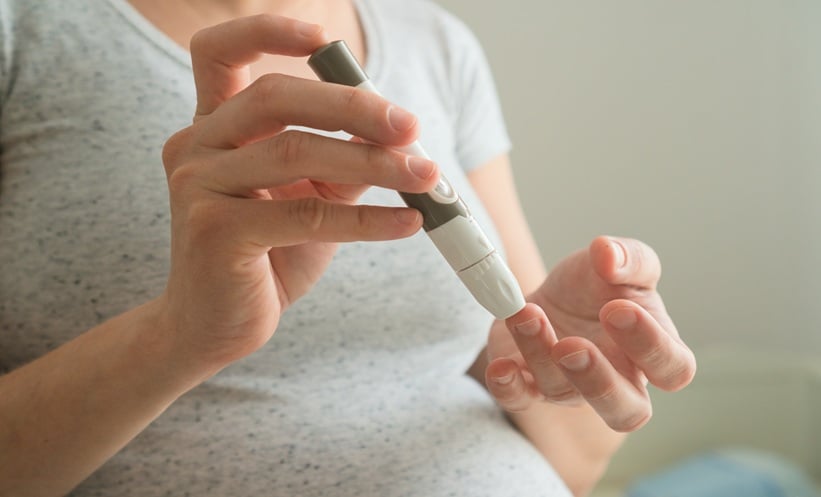
PRE-PREGNANCY weight and body mass index (BMI) may have limited value in predicting insulin requirements among women with gestational diabetes mellitus (GDM), according to findings from a retrospective cohort study.
Researchers identified substantial variation in the insulin doses required to achieve glycaemic targets, suggesting that conventional weight-based prescribing approaches may not adequately reflect individual treatment needs. The findings support further investigation of fixed starting doses followed by rapid glucose-guided titration as an alternative approach.
GDM is associated with adverse maternal and neonatal outcomes when adequate glycaemic control is not achieved. Insulin therapy is frequently required to manage fasting hyperglycaemia, but identifying an appropriate dose can be challenging given the relatively short treatment window during pregnancy.
Weight-based approaches are commonly used to guide insulin initiation. However, the extent to which pre-pregnancy weight and BMI accurately predict subsequent insulin requirements remains uncertain.
Researchers conducted a retrospective cohort study of women with GDM managed using a rapid insulin titration protocol between 2022 and 2023.
The analysis examined whether baseline characteristics, including pre-pregnancy weight, BMI, and oral glucose tolerance test results, could predict the initial insulin dose required to achieve glycaemic targets and the maximum dose needed during pregnancy.
A total of 58 women initiated insulin therapy and were included in the analysis.
Marked interindividual variability was observed in both the insulin dose needed to achieve glycaemic targets and the maximum insulin dose administered during pregnancy.
Regression analyses demonstrated that pre-pregnancy weight and BMI did not reliably predict insulin requirements across the cohort.
For the initial insulin dose required to achieve glycaemic targets, weight produced an R² value of 0.61, while BMI produced an R² value of 0.58.
Predictive performance was weaker for maximum insulin requirements, with R² values of 0.30 for pre-pregnancy weight and 0.36 for BMI.
These findings indicate that although weight and BMI explained some variation in initial insulin requirements, their ability to predict the maximum dose required during pregnancy was substantially more limited.
The findings highlight the challenges of relying on baseline body measurements to determine insulin requirements in GDM, particularly as treatment needs can vary considerably between individuals.
The researchers suggested that initiating treatment with a fixed insulin dose, followed by rapid titration based on blood glucose measurements, may offer a more robust approach to achieving individualised insulin requirements.
Such an approach could reduce reliance on baseline weight or BMI when selecting an initial dose, while allowing treatment adjustments to reflect each patient’s glycaemic response.
However, the study was retrospective and included only 58 women receiving insulin therapy. Furthermore, the analysis did not directly compare fixed-dose initiation with weight-based prescribing, meaning the relative effectiveness and safety of these strategies remain uncertain.
The researchers concluded that pre-pregnancy weight and BMI have limited utility for predicting insulin requirements in GDM, supporting further evaluation of rapid glucose-based titration strategies to optimise glycaemic management during pregnancy.
Reference
Turlea S et al. Association between weight/body mass index and insulin dose requirements in gestational diabetes: a retrospective cohort study. BMJ Open Diabetes Research & Care. 2026;14:e006285. https://doi.org/10.1136/bmjdrc-2026-006285
Adobe Stock
Each article is made available under the terms of the Creative Commons Attribution-Non Commercial 4.0 License.