Abstract
Background and objectives: Androgenetic alopecia (AGA) negatively impacts body image and psychosocial wellbeing, potentially contributing to sexual dysfunction. Yet, the direct relationship between AGA severity and sexual function remains underexplored. This exploratory study aimed to evaluate the association between clinical AGA severity and sexual dysfunction among treatment-naïve male and female patients attending a dermatology clinic.
AGA severity was graded using the Hamilton-Norwood Scale for males and the Ludwig Scale for females. Sexual function was evaluated using the Turkish versions of the International Index of Erectile Function (IIEF) for men and the Female Sexual Function Index (FSFI)
for women.
Results: 69 patients (41 males; 28 females) were included. Sexual dysfunction prevalence was 82.1% in females and significantly correlated with AGA severity (r=-0.635; p<0.01). FSFI scores were negatively predicted by the Ludwig grade (R²=0.404; p<0.001). In males, a moderate negative correlation existed between AGA severity and IIEF scores (r=-0.391; p=0.012), primarily affecting erectile function (p=0.002) and sexual desire (p=0.008).
Limitations: The small sample size is a limitation; further case-controlled studies are warranted to assess additional contributing factors and establish clinical relevance.
Conclusion: In this selected dermatology clinic sample, higher AGA severity was statistically associated with lower sexual function scores in both male and female patients. Given the small sample size, cross-sectional design, absence of a control group, and potential selection bias, these findings should be interpreted cautiously and considered hypothesis-generating.
Key Points
1. Androgenetic alopecia (AGA) may affect more than physical appearance, with potential implications for sexual health. However, the relationship between AGA severity and sexual function remains insufficiently explored. Understanding this association is clinically relevant, as it may highlight the need for a more holistic approach to patient care in dermatology practice.2. This exploratory cross-sectional study evaluates the association between AGA severity and sexual function in treatment-naïve male and female patients attending a dermatology clinic. Using validated scales, the study identifies statistically significant associations between increased AGA severity and lower sexual function scores in both sexes.
3. Clinicians should be aware that patients presenting with AGA may also experience sexual dysfunction, particularly in more severe cases. While findings are preliminary and require confirmation in larger controlled studies, incorporating a sensitive and holistic assessment of psychosocial and sexual wellbeing may improve patient-
centred care.
INTRODUCTION
Androgenetic alopecia (AGA) is a disease that can significantly change one’s body image. This may lead to psychosocial impairment and sexual dysfunction in men.1 Likewise, female pattern hair loss decreases self-esteem and quality of life, which in turn may lead to psychosocial impairment and sexual dysfunction. The effective treatment of female pattern hair loss has been proven to decrease sexual dysfunction.2 The role of androgens in the pathogenesis of AGA has been studied for a long time. An increase in the androgen receptors and 5-α reductase enzyme in the hair follicles has been linked to the miniaturisation of the hair follicle.3 As a result, 5-α reductase inhibitors were used in the treatment of AGA, revealing ‘post-finasteride syndrome’, which is a constellation of sexual dysfunction side effects.4-8 Nevertheless, the impact of androgen levels and AGA itself on sexual function have been seldom studied in the literature.1,9,10
AIMS
This exploratory cross-sectional study aimed to evaluate the association between clinical AGA severity and sexual function in treatment-naïve male and female patients attending a dermatology clinic.
METHODS
Study Design
A cross-sectional exploratory design was chosen for this study because it allows researchers to evaluate the relationship between AGA severity and sexual function at a single point in time in a relatively quick and cost-effective manner. This approach is beneficial for identifying potential associations and generating hypotheses for future larger longitudinal studies, although it cannot establish causality.
Setting
This study was conducted between 1st November 2024–1st March 2025 in İstanbul, Türkiye. The study was not performed across the entire city population. Participants were specifically recruited from the Dermatology Outpatient Clinic, Cerrahpaşa Medical Facuty Hospital, İstanbul University-Cerrahpaşa, Türkiye; meaning that the research took place in a hospital/clinical care setting rather than a community-based setting.
Participants
Sexually active male and female patients, aged between 18–40 years, who have been diagnosed with AGA by a dermatologist for the first time and are treatment-naïve were included in this study. Trichoscopic analysis was performed in all patients in order to support the diagnosis of AGA and exclude the differential diagnoses. Patients with marked anisotrichosis were included, whereas patients with perifollicular erythema, perifollicular scaling, and broken hairs were excluded.11 Thus, patients in whom a definitive diagnosis of AGA could not be made, and patients with diffuse alopecia areata, chronic telogen effluvium, fibrosing alopecia with pattern distribution, chemotherapy induced alopecia, or cicatricial alopecia were excluded from the study. Patients who were not sexually active or not willing to participate in the study were also excluded. Patients with a previous diagnosis of a psychiatric, urological, or obstetrical diseases were also excluded. It is important to note that the participants were recruited from a dermatology outpatient clinic. Therefore, the study population may not be representative of the general population with AGA, as individuals seeking dermatological care may have higher levels of cosmetic concern, psychosocial distress, or health-seeking behaviour.
Data Collection
Each patient was evaluated by a dermatologist and the stage of AGA was assessed according to the Hamilton-Norwood Scale12,13 in males and Ludwig Scale14 in females. The Hamilton-Norwood Scale grades male pattern baldness according to the severity of temporofrontal hairline recession and decrease in the vertex hair density; Grade 1 is the mildest, while Grade 7 is the most severe with the greatest recession and hair loss.12,13 The Ludwig Scale evaluates the severity of female pattern baldness according to the density of parietal hairs; Grade 1 is the mildest and Grade 3 is the most severe with intense loss of hairs.14
Thereafter, patients were asked to fill out the provided questionnaires evaluating sexual function. Male patients filled out the validated Turkish International Index of Erectile Function (IIEF) questionnaire7 and female patients filled out the validated Turkish Female Sexual Function Index (FSFI) questionnaire.2 The IIEF questionnaire evaluated erectile function, sexual desire, orgasmic function, intercourse satisfaction, and overall sexual function separately.15 An IIEF score ≤21 out of 25 and a FSFI score ≤26.55 out of 36 were categorised as sexual dysfunction.15,16
Data Analysis
The relationship between alopecia severity and sexual function was analysed using Pearson correlation, linear regression, and analysis of variance (ANOVA) in SPSS version 21 (IBM, Armonk, New York, USA). Due to the limited sample size, adjustment for potential confounding variables (such as comorbid conditions, lifestyle factors, and psychosocial variables) was not performed. Therefore, the analyses should be interpreted as unadjusted associations. Multiple statistical comparisons were conducted without formal correction (e.g., Bonferroni adjustment) due to the exploratory nature of the study; therefore, the findings may be subject to an increased risk of Type I error.
Ethical Approval
Ethical approval for the study was obtained from the relevant ethics committee before data collection and the study was conducted according to the Helsinki Declaration.
RESULTS
The study population consisted of 41 male and 28 female treatment-naïve patients with AGA.
Among female patients (n=28), the prevalence of sexual dysfunction (FSFI ≤26.55) was 82.1%. All participants without sexual dysfunction were classified as Ludwig Grade 1. Pearson correlation analysis suggested a negative association between FSFI scores and Ludwig grades (r=-0.635; p<0.01). Linear regression analysis indicated that Ludwig Grade was negatively associated with FSFI scores (B=-0.140; p<0.001), with 40.4% of the variance explained (R²=0.404). ANOVA results supported the overall model significance (F=17.61; p<0.001). Table 1 summarises the correlation between the FSFI score and AGA in female patients. Given the small sample size, particularly in the female subgroup, these findings should be interpreted with caution.
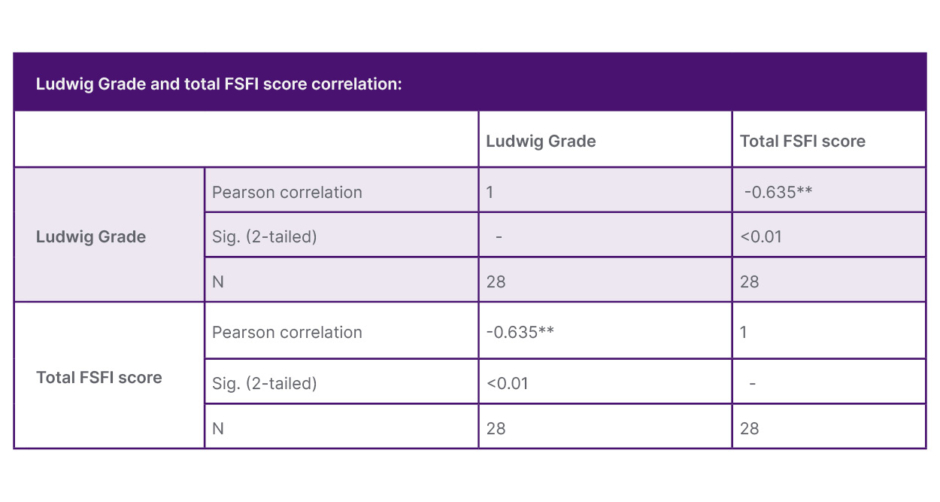
Table 1: The correlation between Ludwig Grade and total FSFI score.
**Correlation is significant at the 0.01 level (2-tailed).
FSFI: Female Sexual Function Index.
Among male patients (n=41), the prevalence of sexual dysfunction (IIEF ≤21) was 48.7%. Pearson correlation analysis suggested a moderate negative association between AGA severity (Hamilton–Norwood grade) and IIEF scores (r=-0.391; p=0.012). ANOVA analysis indicated a statistically significant relationship between AGA severity and overall sexual function scores (F[1.39]=7.033; p=0.012). Further analyses suggested that higher AGA severity was associated with lower erectile function (p=0.002) and reduced sexual desire (p=0.008), while no statistically significant associations were observed for orgasmic function, intercourse satisfaction, or overall sexual satisfaction (p>0.05). Tables 2 and 3 summarise the correlation between the IIEF score and AGA in male patients.
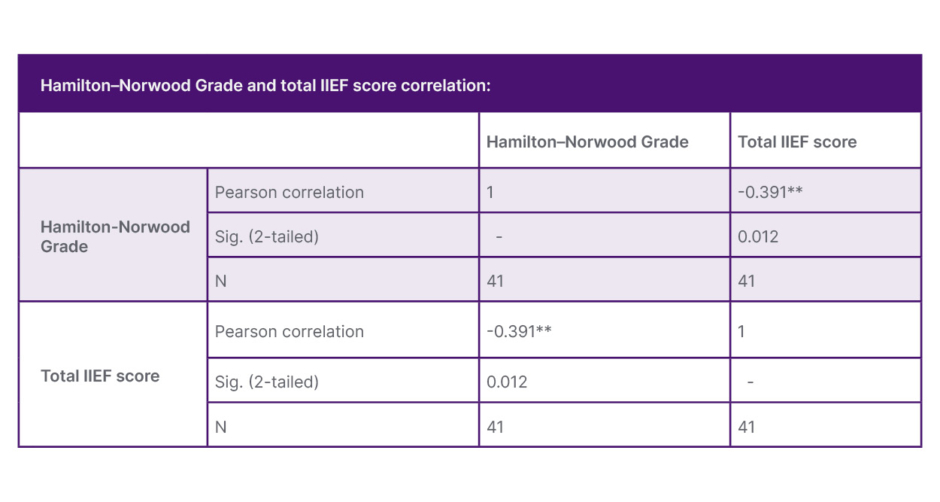
Table 2: The correlation between Hamilton–Norwood Grade and total IIEF score.
**Correlation is significant at the 0.01 level (2-tailed).
IIEF: International Index of Erectile Function.
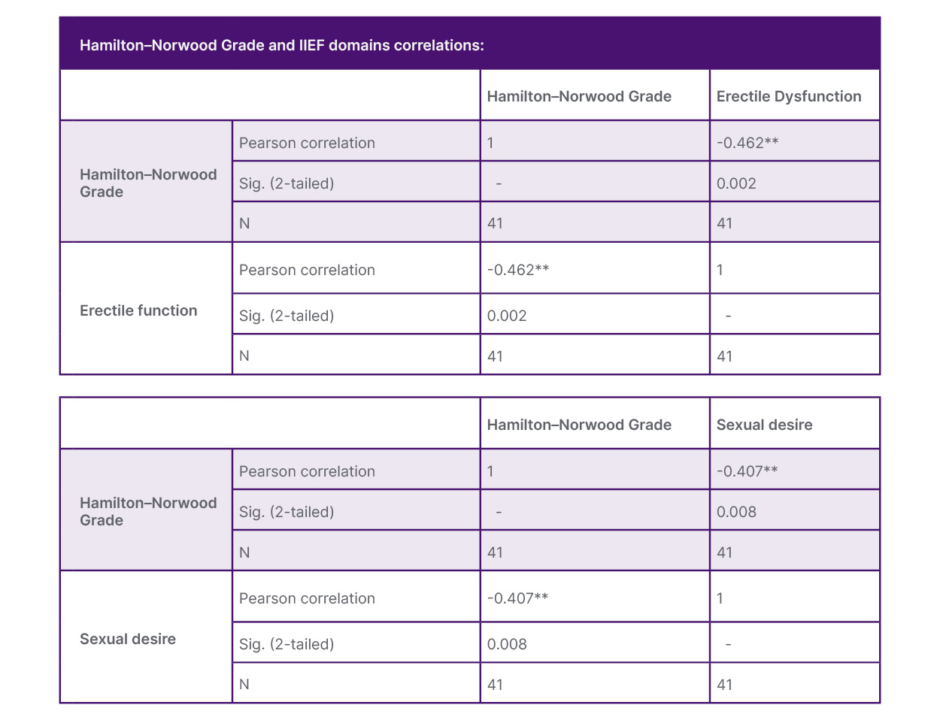
Table 3: The correlation between Hamilton–Norwood Grade and IIEF domains.
** Correlation is significant at the 0.01 level (2-tailed).
IIEF: International Index of Erectile Function.
It is important to once again note that these findings represent unadjusted associations derived from a small, clinic-based sample.
DISCUSSION
In female patients, a statistically significant negative association between AGA severity and FSFI scores was observed in this sample. The regression model suggested that higher Ludwig grades, indicating increased severity of AGA, were associated with lower FSFI scores and higher sexual dysfunction. There are two previous studies evaluating the impact of AGA on female sexual function in the literature. A case-controlled study by Sancak et al.9 evaluated 115 female patients and 97 healthy controls with the FFSI. Their study reported that sexual dysfunction was more common among patients with AGA compared to controls; desire and arousal disorders especially were more prevalent among patients with AGA.9 Another study by Taş et al.10 evaluated psychosocial disorders among patients with AGA using other scales: Self-Perception Scale (SPS), Rosenberg Self-Esteem Scale (RSES), Arizona Sexual Experience Scale (ASEX), Beck Depression Inventory (BDI), and Beck Anxiety Inventory (BAI). Authors concluded that both male and female patients with AGA have an increased prevalence of psychosocial disorders. Among the female patients, the ASEX and BDI scores increased with increasing AGA severity, suggesting that sexual dysfunction may increase with disease severity.10 Although different psychological scales have been used, the results of Taş et al.10 are broadly consistent with the authors’ findings, although direct comparison is limited due to differences in methodology and sample characteristics.
In male patients, increased disease severity was statistically associated with lower overall sexual function scores (β=-0.391; p=0.012). Erectile function and sexual desire were significantly lower in men with more severe AGA, while no significant changes were observed in orgasmic function, intercourse satisfaction, or overall sexual wellbeing. A previous study evaluating sexual function among male patients with AGA has shown that this population has an increased prevalence of psychosocial disorders. Furthermore, the SPS scores decreased as the severity of AGA (Hamilton stage) increased, indicating that the severity of psychosocial disorders among male patients with AGA increase as the disease severity increases,10 which is in line with the direction of the authors’ findings. The regression analysis revealed a 15.3% variance in sexual function (R²=0.153) explained by AGA severity, indicating that additional factors likely influence the outcomes as well. According to the previous literature, several factors can lead to male sexual dysfunction, including chronic diseases (diabetes, cardiovascular diseases, chronic kidney disease, and malignant neoplasms); lifestyle factors such as obesity, smoking, and alcohol use; environmental factors; and use of drugs.17 Specifically, erectile dysfunction has been previously linked to diabetes, hypertension, obesity, lack of physical exercise, and coronary artery disease.18 The incorporation of these factors into future controlled studies will be helpful to determine the clinical significance of this result in the future.
Implications for Practice
Clinicians should be aware that patients presenting with AGA may also experience sexual dysfunction, particularly in more severe cases. While findings are preliminary and require confirmation in larger controlled studies, incorporating a sensitive and holistic assessment of psychosocial and sexual wellbeing may improve patient-centred care.
Limitations
The strength of this study is the use of specific sexual dysfunction scales in evaluating the relationship of sexual function (IIEF and FSFI) to AGA severity, and that it evaluated both sexes separately. A limitation of this study is the lack of age- and sex-matched control groups. Another limitation of this study is its small sample size; other factors beyond alopecia severity may contribute to sexual dysfunction. Additionally, the cross-sectional design precludes any inference of causality. As shown in the literature, sexual dysfunction in females increases with increasing age, comorbid depression, history of physical and sexual abuse, comorbid voiding dysfunction, decreased frequency of intercourse, marital status (being separated or divorced), menopausal status, and decreased quality of life.19,20 Furthermore, this study was conducted in a country predominated by the Muslim culture in which verbalising sexuality among females is often stigmatised. The lack of adequate sexual education, negative cognitions regarding intercourse, and hesitancy to seek medical help for genital diseases also contribute to sexual dysfunction among women.21 Moreover, participants were recruited from a dermatology clinic, which may introduce selection bias and limit generalisability, as individuals seeking care may differ systematically from the general AGA population. This may also introduce collider bias, as both AGA severity and psychosocial distress could influence clinic attendance. Thus, further studies with larger sample sizes and adequately controlled and more representative populations are needed to determine clinical significance of this result.
CONCLUSION
This exploratory cross-sectional study suggests a possible statistical association between greater AGA severity and lower sexual function scores among treatment-naïve male and female patients attending a dermatology clinic. However, due to the small sample size, lack of a control group, cross-sectional design, and potential selection bias, these findings should be interpreted with caution. Larger, adequately powered, controlled, and longitudinal studies in more representative populations are needed to clarify the clinical relevance of this association.