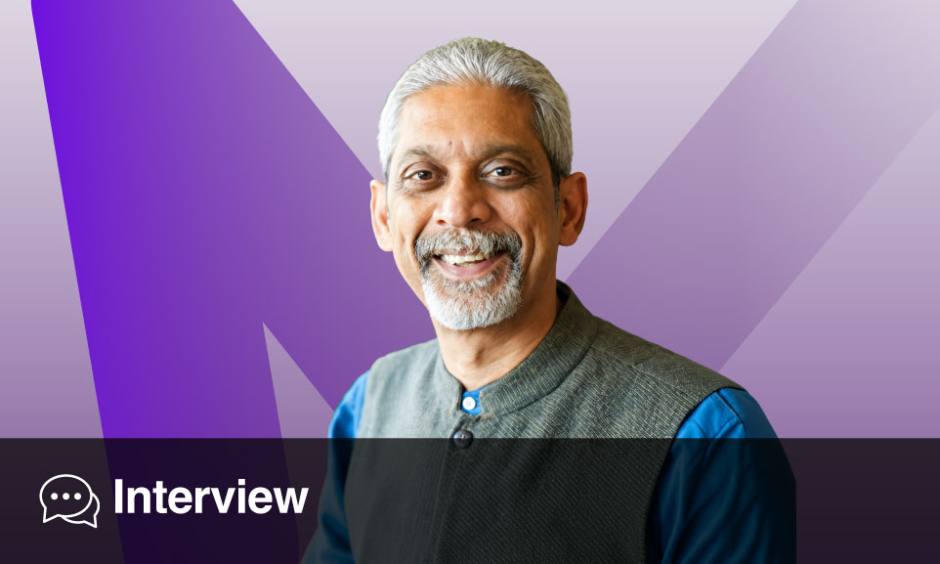
Vikram Patel | Paul Farmer Professor and Chair of Global Health and Social Medicine, Harvard Medical School; Professor, Department of Global Health and Population, Harvard T.H. Chan School of Public Health, Cambridge, Massachusetts, USA
Citation: EMJ. 2026;11[2]:31-37. https://doi.org/10.33590/emj/4J232E1F

Your work has focused on the burden of mental health problems across the life course, their association with social disadvantages, and the use of community resources for their prevention and treatment. What pivotal moments in your early career influenced your shift toward this field?
I think that the first such pivotal moment was when I started working in Zimbabwe after training in psychiatry in London, UK, at the Maudsley Hospital, which was then considered to be the mecca for psychiatric residencies, with a highly biomedical orientation on psychiatry which embraced a dominant role of psychiatrists in all aspects of mental health care. At the University of Zimbabwe Medical School, Harare, I began to see the vast differences between where I had been trained and where I was working, and I almost had to unlearn everything that I had been taught for many years and start from scratch. As an example of these differences, there were just about 10 psychiatrists in Zimbabwe at the time, serving a population of nearly 10 million. The majority of us were foreigners who didn’t speak any of the local languages. This was a complete contrast to the Maudsley Hospital, where there were more than 10 psychiatrists just in my corridor of the Institute of Psychiatry. The other big difference was, of course, that the illness narratives of people who were struggling with their mental health were completely different from those in London, primarily the absence of a biomedical framework; the ways people understood their suffering was through a social or spiritual lens, but rarely a biomedical lens. So, the bulk of the clinical work we did was for people with very serious forms of mental health problems, mainly psychoses. You rarely saw the mood, anxiety, trauma-related spectrum, because they were not very visible and did not cause behavioural difficulties that affected other people, and, therefore, you rarely ever saw them in the clinic. This was another contrast with my clinical experience in Britain. Moreover, you never saw any kids, because, in fact, there were no child mental health services at all. Another pivotal experience was related to the AIDS epidemic, which was decimating communities in Zimbabwe at that time. I began to observe how rights-based arguments and actions, for example, addressing issues around equity, the use of community resources, the empowerment of people living with HIV, and most importantly, the activism that people living with HIV were leading to make access to life-saving treatments available, which, at the time, were not available in Africa because these drugs were protected by patent laws. I witnessed the emergence of a rights and equity-focused global health movement around HIV/AIDS, and subsequently tuberculosis and malaria. I began to recognise that there were intersections with mental health problems, where very similar issues could be encountered, such as stigma, inequities, discrimination, and denial of basic care. These important historical processes inspired me to incorporate these strategies in my future work.
How was care delivery different through a ‘spiritual lens’, as you mentioned?
There was emerging epidemiological data that demonstrated a high prevalence of a whole range of mental health conditions, and yet the people we saw in our clinics were like the proverbial tip of the iceberg. The vast majority of care was being delivered by the traditional medical system, a system that predates biomedicine by centuries and is very deeply integrated with traditional religion. This is true in all parts of the world. In Europe, for example, it was the same until the Enlightenment and the arrival of a biomedical perspective on health. The original asylums in Europe were built around this emerging theory that people who were disturbed were not bewitched but victims of illnesses of the mind. Thus, I think one has to remember that this has been the history of how mental health problems were understood and cared for in all societies. The advent of biomedicine in Zimbabwe was a relatively recent product of colonial rule, and traditional belief systems remain a dominant way for people to understand and to address their problems. My own research at the time shifted in response to these observations. I worked very closely with traditional healers, for example, I used to sit in their healing areas and observe rituals, document them, ask questions to the healers, and then also to their patients, asking how they understood their suffering and the process of healing and so on. I incorporated those ideas as I developed my own understanding of how culture and context influence both the risk of mental health problems, but also how these are understood, acted upon, and how recovery takes place.
What parallels and key distinctions do you see between mental health disorders and other non-communicable diseases (NCD) in terms of prevention, management, and policy prioritisation?
A key area of similarity or overlap between mental health conditions and other NCDs is that they often have a chronic and or relapsing course. I’d say the majority of depressive episodes are acute, single episodes, but a significant proportion of people will have recurrent or chronic conditions. Some mental health conditions, for example, neurodevelopmental disorders, schizophrenia, and bipolar disorder, are almost always chronic, lifelong conditions. In that respect, I like to consider these as chronic diseases. Furthermore, there are a lot of comorbidities between these groups of conditions, for example, diabetes and schizophrenia or heart disease and depression. These tend to occur together in the same individual, much more often than by chance, and this is to do with a variety of factors. Most obviously, people with psychosis take medications that increase their metabolic risk, which in turn contributes to premature mortality, highlighting the need for integrated care. Another important similarity is that the diagnosis in itself doesn’t tell you exactly what a person needs for their care. In other words, two people with the same diagnosis may have completely different needs. Diabetes, of course, is a classic example that one cannot apply a one-size-fits-all approach. You can have very mild diabetes, where only lifestyle changes are needed for glycaemic control. At the other end of the spectrum, you can have very severe multi-organ diabetic syndromes which need dialysis, rehabilitation, and complex medication regimes. The same applies to mental illness. I think the whole notion of person-centred care comes from chronic disease care, in which ‘you are not treating the disease, but the person’. Where mental health conditions and NCDs fundamentally differ is that for many NCDs, for example, cancers, cardiometabolic, and autoimmune conditions, we have witnessed dramatic improvements in our understanding of the pathophysiology of these conditions. While mental health conditions and NCDs do share in common the fact that their aetiology is often the result of an interaction between genetic, environmental, and personal lifestyle factors, for NCDs, many of these factors are much better understood and elucidated. As a consequence of that, we have a number of transformative new therapeutics that have emerged. We have a much better understanding of very specific risk factors, such as smoking, which allows you to design prevention programmes that target those factors. This is much less the case for mental health conditions. I think this takes us to a very important question, that is, the reason for this disparity, which, in my reckoning, is the result of the diagnostic system we use to characterise and study mental health conditions, which relies on clusters of symptoms in patients seen in psychiatric clinics, unlike in NCDs, where we diagnose people according to biomarkers. Many scientists have called for a move away from the syndromic diagnostic approach, which, as well-intentioned as it was when it was invented 50 years ago, has really led us to a scientific cul-de-sac. We have not discovered any new disease pathways, prevention targets, or therapeutic targets, so we’ve got to reimagine how we study mental health problems.
How can healthcare systems better integrate mental health into chronic disease care pathways, particularly in primary care settings?
While there are some unique features about mental health care, there are also some shared principles with other chronic conditions. The most important issue about integrating mental health care within broader NCD care platforms is that this is the best strategy to both destigmatise mental health problems and to provide person-centred care. Instead of the classic specialist biomedical approach, where you have your blood sugar managed by one person, and you get your low mood managed by another person, and you often have to go to totally different places to get these different healthcare tasks done, integration means these health conditions are managed together in the same place, perhaps by different people, but in a coordinated way. So, there’s something important to be said about the integration of mental health care in all other platforms of health care and in all countries and contexts. In short, it’s a better quality of care when it’s integrated, the outcomes are better, and there is abundant evidence to demonstrate that.
Another critical issue is the assumption that mental health care needs mental health professionals. I think perhaps the single most important scientific advance in the field of psychiatry in the last two decades has been the demonstration that carefully designed brief interventions that target psychological or social mechanisms are effective and, moreover, can be delivered by non-specialist frontline providers, like community health workers, peer support workers, and even lay persons. This evidence converges on two distinct forms of science, one which is related to the design of targeted interventions based on mechanisms, and the other which is based on implementation or delivery science. When these two come together, the result is a demonstration of how making mental health care can be available for everyone with an NCD, no matter what mental health specialist resources are available, because you don’t need psychiatrists and psychologists, particularly for the first level of care. Moreover, delivering mental health care in this manner is far more acceptable to patients.
The majority of people with mood, anxiety, and trauma-related problems do not need complex interventions delivered by mental health professionals; person-centredness often implies incorporating models of care like stepped or stratified care to deliver different intensities of interventions and adopting a biopsychosocial model in defining the specific interventions for a particular patient. These models of care recognise that there is a great variation in the severity of conditions and that a range of personal characteristics can moderate the recovery process. Stepped and stratified models of care ensure that you allocate care according to need. The majority of people with depression, for example, are mild–moderate severity, and they can respond to these brief psychosocial interventions delivered by frontline workers. It’s much easier for a diabetes programme, for example, to identify, train, and sustain frontline workers, rather than refer to psychiatrists and psychologists.
What are the biggest barriers to scaling community-based mental health interventions in low-resource settings today?
I think the most important barrier is related to the political economy of scaling up this approach, because when you are going to allocate money and power to frontline workers, you’re taking some money and power away from other providers who have historically dominated the care pathways. This is why this kind of structural reform is much harder to do in wealthy countries, where the interests of mental health speciality services are much more entrenched and numerous. This is why you see some of the most remarkable examples of front-line provider care happening in the least resourced countries in the world, for example, in Africa and Asia, where community health workers are recognised as the major human resource to help improve access to care, not just for mental health problems, but also for maternal and newborn health, care of NCDs, and HIV care. They are widely accepted, and they’re fully integrated into health system design. For example, in India, we have more than one million community health workers who are engaged in a range of frontline healthcare tasks, some of whom are now being incorporated within mental healthcare delivery systems. That being said, the Improving Access to Psychological Therapies (IAPT) programme in the UK is actually an example I do consider to be very similar. For example, a significant number of providers are not clinical psychologists or psychiatrists, but graduates of psychology who undergo very specific training in brief cognitive behaviour therapy. I think in that respect, there is a great degree of similarity with task-sharing models in low-resource contexts. Essentially, what you need is a strong political will to be able to address the pushback you’re going to get. But beyond delivering psychological interventions, we also need to acknowledge that mental health problems cannot just be treated like any other medical diagnosis, because these conditions are deeply connected to our social worlds. So, addressing mental health problems without attending to a person’s social world is a little bit like attending to, for example, lung cancer without attending to a person’s smoking behaviour. It’s missing a hugely important influence, which is associated not only with the emergence of a mental health problem but also profoundly influences its outcome. This is yet another critical advantage that community health workers have over facility-based specialist providers.
Much of your research highlights the relationship between mental health and social disadvantages. What mechanisms most strongly link poverty and mental illness across different settings?
Our brain is constantly being modified and moderated by our social world, and this continues into our last days, but it’s especially so in childhood and adolescence, which is the reason for two other key observations: the strong association of adversities in childhood with the risk of mental health problems in later life and the observation that most mental health problems begin before adulthood. Amongst the key drivers of the association between social disadvantage and mental health problems is the effects of growing up in poverty, both due to direct mechanisms, for example, you’re more likely to be exposed to direct damage to your brain which in turn affects your mental health, such as nutritional deficiencies, environmental toxins and infections and because of the challenges faced by low-income parents to be able to provide a nurturing environment for their children. The early years of life are critically important because this is when your brain is most plastic, and nurturing environments catalyse healthy brain development. In environments of neglect or toxic stress, brain development is impaired, and the child’s resilience to deal with difficulties in later life will also be affected. This tells you something about the root causes of mental health problems, that they are developmental in origin. Therefore, if prevention is our goal, we’re going to have to look at the social world in particular, in the early years of life.
Another mechanism which operates in adulthood is the daily grind, the precarity, the uncertainty, and the insecurity that are associated with living in poverty. Think about the pandemic. The one defining feature of the pandemic was uncertainty, not knowing what tomorrow would bring, alongside precarity for those already on the margins. It is that uncertainty that acts as a kind of threat to our mental health, and when that uncertainty is unremitting, day after day, week after week, this is an incredibly toxic experience for our brains. The convergence of early childhood deprivation and later life precarity affects our mental health through different pathways and underpins the strong association between poverty and social disadvantage with poor mental health across the life course.
What are your thoughts on the concept of preventive medicine when it comes to mental health?
Preventive medicine is at the heart of reducing the burden of disease. Let us consider lung cancer, one of the great success stories of preventive medicine, through targeting the individual’s smoking behaviour in multiple ways, from making smoking more expensive to less socially acceptable. That fits very well with the biomedical model. There is a political economy of tobacco, of course, but prevention generally depoliticises the social determinants by focusing on an individual’s behavioural choices. However, prevention of mental health problems is profoundly political choices for the root causes are upstream determinants like poverty, gender, and inequality. Thus, prevention of mental health problems must typically address these determinants. For example, our work in Brazil is showing that when a government decides to tackle absolute poverty by using cash transfers, this leads to direct improvements in health and wellbeing, including dramatic reductions in suicide mortality. Indeed, addressing childhood poverty may be the equivalent of targeting tobacco for lung cancer prevention. As another example, precarity and uncertainty in life are becoming the lived experience for many young people. This is not an accidental occurrence. This is an intentional political choice that governments have made around the world, for example, privileging the rights of corporations to extract profits over the rights of citizens to secure employment and decent wages. No one across the ideological spectrum would disagree that tobacco is bad, but the role of government in progressive taxation, provision of social services, or universal basic income and health coverage is contested. This is the real challenge, and where mental health is different from NCDs.
In your critique of global mental health research funding, you described it as ‘too little, too inequitable, too skewed’. What structural changes are needed to correct these imbalances?
First of all, we definitely need more funding, but the funding now needs to follow the evidence-based scientific approaches to characterising mental health and the prevention and care of mental health problems. For example, funding should no longer be hooked onto diagnostic categories which lack any scientific validity; the National Institutes of Health (NIH) or the Wellcome Trust, two major examples of funders, no longer require mental health research to characterise mental health conditions through the application of the Diagnostic and Statistical Manual of Mental Disorders (DSM)/International Classification of Diseases (ICD) diagnostic systems. What they require is phenotypic characterisation along dimensions of the mental health experience. Secondly, the research needs to incorporate explicitly an equity dimension, quite simply because, as we discussed earlier, these conditions are not equitably distributed. Thirdly, there should be investment in scaling up science. We know what works; we have solutions. However, most of those solutions lie outside the hospital or clinic and outside a narrow biomedical framework. As long as mental health research is dominated by a narrow biomedical perspective, those resources are not going to be allocated to addressing questions about scaling up interventions for prevention and care. This is the political economy I was referring to earlier, so we have to make mental health research far more diverse in terms of the research actors, the research questions, and where the research is going to take place.
What does achieving universal health coverage for mental disorders realistically look like in the next decade?
This is very much linked to what we discussed earlier, that is, the integration of mental health care in NCD programmes, because health systems globally are gearing up to address chronic conditions, which have emerged as the leading causes of the burden of disease in most countries of the world. Fifty years ago, most countries were still dealing with infectious diseases, where the one-size-fits-all, diagnosis-driven model dominated, whereas most health systems are now dealing with chronic diseases for which a person-centred approach should be the rule. This offers an amazing opportunity for the full integration of mental health within chronic disease care, built upon the strong foundation of primary care, the heart of universal health coverage. Hospital specialist care is needed for those who are at the severe end of the spectrum of any health condition, while the majority of care, in particular continuing care, needs to be centred in primary care. The one exception I’ll make is for psychosis, which is a rarer condition. People with psychosis often have very complex needs, and I think that mental health specialist care is the right node for coordinating care, but that doesn’t mean that all care takes place in a hospital. A lot of the care itself is still delivered in the community, through frontline workers supporting people with psychosis. In contrast, for mood, anxiety, substance use, and trauma-related problems, primary health care should be the node for the coordination of care, so if you need specialist care, it’s the primary care provider who will refer you or seek a consultation.
What advice would you offer to early-career clinicians and researchers who want to contribute meaningfully to global mental health?
Do not be demoralised by the apparent lack of progress in the discovery of aetiology or transformative new therapeutic agents. There has, in fact, been huge progress, but it’s not within the narrow psychiatric clinical world. Scientific advances in developmental neuroscience and evolutionary science are helping to explain the early life and ancestral origins of mental health problems. The social and epidemiological sciences have characterised the exposome, the social environments that can either harm or protect mental health. Clinical and implementation science is demonstrating the effectiveness of brief interventions targeting psychological and social mechanisms which can be delivered by front-line providers with appropriate training and supervision. Knowledge from the lived experience is shedding light on what really matters to people living with mental health conditions. All these bodies of knowledge are pointing to a radically different way of thinking about how we can study mental health problems, identify novel preventive and therapeutic interventions, and deliver person-centred care.