Meeting Summary
This symposium review examines whether mimicking breastmilk lipid globule architecture in infant formula may influence health outcomes in early life. It summarises a scientific presentation and expert panel discussion focused on mimicking the size, structure, and composition of human milk fat globules (MFG) in concept infant formula, compared with standard formulas that contain smaller, protein-coated lipid droplets without a phospholipid membrane.
The article outlines how breastmilk lipids provide approximately half of an infant’s energy needs while also serving as structural components and signalling molecules essential for organ and brain development. It explains how lipids in human milk are naturally organised into large globules surrounded by a bioactive membrane rich in phospholipids and other MFG membrane (MFGM) components, while conventional processing of infant formula yields smaller droplets with different interfacial properties.
According to the in vitro digestion studies presented during the symposium, larger and more complex lipid droplets have been shown to remain longer in the stomach, resulting in slower gastric emptying and more gradual lipid bioaccessibility than smaller lipid droplets. Clinical findings from four studies indicate that the concept formula is safe and well tolerated, with the Mercurius trial and its 5-year follow-up supporting the hypothesis that mimicking MFG architecture may contribute to nutritional programming for growth (BMI), metabolic health (blood pressure), and cognition.
The panel discussion explored plausible mechanisms, including altered lipid utilisation, effects on body composition and neurodevelopment, and shifts in the gut microbiome and bile-acid profiles. Throughout, the speakers emphasised that the longer-term data are still emerging and should be interpreted with appropriate caution, underlining the need for replication and extended follow-up to confirm these early signals.
Introduction
The symposium opened with the premise that breastmilk remains the preferred source of infant nutrition and the reference standard against which formula innovations should be considered. Within that context, the session focused on milk lipids, emphasising that they provide a substantial share of infant energy intake, yet have historically received less attention than proteins or oligosaccharides in formula development, despite their physiological importance. A recurring theme was early-life nutritional programming, the idea that nutritional exposures in the first months of life can shape later trajectories for growth, metabolic health, and neurocognitive development, and that lipid quality and droplet architecture may be one such programming factor.
This article centres on the concept of early-life programming, whereby nutritional exposures during infancy may influence health trajectories that become apparent later in childhood.
Why Mimic Breastmilk Lipid Architecture?
Ingrid Renes, Danone Research & Innovation, Utrecht, the Netherlands, began by outlining the biological importance of lipids in breastmilk. As presented during this introductory session, breastmilk lipids contribute almost 50% of an infant’s energy intake and are especially important for growth and development.1
Human milk fat is naturally organised into large MFGs with diameters in the micrometre range, typically around 4 µm, each consisting of a triglyceride core surrounded by a complex triple-layer membrane. This membrane contains phospholipids and other MFGM components with bioactive functions, and the lipid globule’s size, structure, and composition arise from mammary gland secretion processes.1-3
Against this biological backdrop, the symposium introduced a concept infant formula designed to mimic the architecture of human MFGs compared to that of standard formula.
Conventional formula manufacturing produces small lipid droplets, largely due to high pressure processing and spray drying, and these droplets are coated mainly with milk proteins. Even when MFGM components are added to standard formula, the lipid droplets remain small and lack a continuous phospholipid membrane.
By contrast, the patented Nuturis® process (Danone Research & Innovation, Utrecht, the Netherlands), uses a gentler, low-pressure approach to generate larger lipid droplets with an average diameter close to that of breastmilk fat globules, coated with MFGM components (Figure 1).4
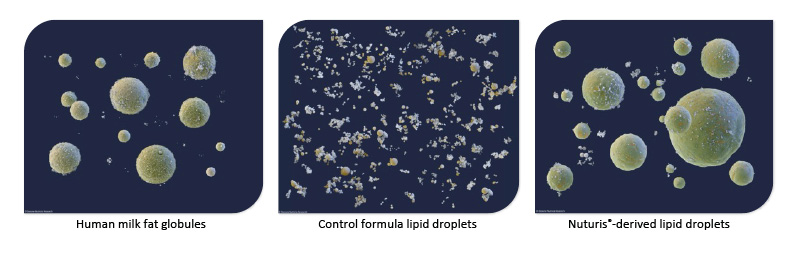
Figure 1: Schematic overview of lipid droplets in human milk, conventional infant formula, and concept infant formula.
Concept infant formula with lipid droplets derived via the patented Nuturis® process, closer in size to human milk fat globules.
Nuturis®: Danone Research & Innovation, Utrecht, the Netherlands.
Renes also stressed that the rationale for this design was not limited to structural resemblance. Rather, the goal was to test whether a formula that more closely mimics breastmilk lipid globule architecture could be digested in a more breastmilk-like manner and, in turn, might support health outcomes that are closer to those seen in breastfed infants.5-7 The symposium repeatedly framed these relationships within an early-life nutritional programming model. As shown in Figure 2 the proposed sequence links lipid droplet architecture to digestion and absorption kinetics, downstream lipid utilisation, and the exploratory longer-term outcomes discussed later in this review.
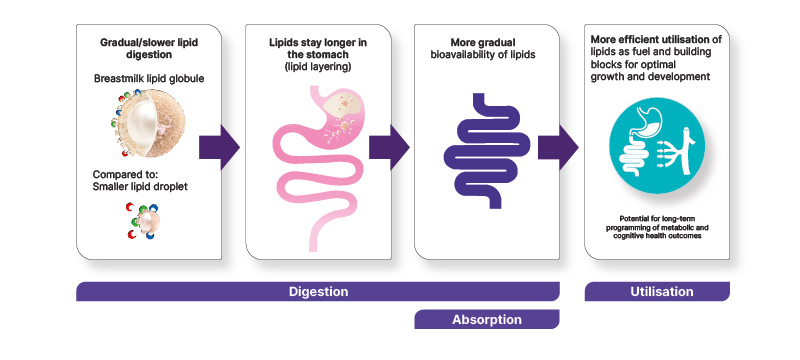
Figure 2: Hypothesised pathway linking infant formula lipid droplet architecture to early-life nutritional programming.
Compared to smaller lipid droplets, larger complex lipid droplets are digested and absorbed more gradually, impacting the use of lipids as energy and developmental building blocks rather than storage, with potential long-term effects on growth, metabolic health, and neurocognitive outcomes.5-9
Digestion and Bioaccessibility
A major theme of the presentation was that lipid droplet size and architecture may influence how lipids are processed in the gastrointestinal tract. The in vitro and preclinical work discussed in the symposium suggested that larger and more complex lipid droplets behave differently from smaller droplets during gastric digestion. According to the evidence presented, larger and more complex lipid droplets have been shown to remain longer in the stomach,6 by forming a lipid layer above the gastric contents, and are released more slowly than smaller lipid droplets. In addition, larger lipid droplets are broken down more slowly by digestive enzymes because they provide less surface area for lipase action. The speakers argued that, collectively, this results in more gradual lipid digestion and prolonged bioaccessibility, which may support more efficient lipid utilisation both as an energy source and as building blocks for developing tissues during periods of rapid infant growth.8,9
This point was important to the overall early-life programming hypothesis proposed during the symposium. The speakers framed these kinetic differences as a mechanistic basis for early-life nutritional programming, proposing that the timing and pattern of lipid delivery to tissues could help set long-term pathways for energy balance, body composition, and organ development. The panel repeatedly returned to the idea that the biological relevance may lie not simply in the total amount of lipid eventually absorbed, but in the rate and pattern of digestion and bioavailability early in life.4-6,10,11
During the audience discussion, this mechanistic argument was examined directly. In response to questions about why digestion kinetics matter if total lipid absorption is ultimately similar between formulas, Renes stated that the biologically relevant differences may arise early in digestion and indigestion kinetics. More gradual and prolonged lipid bioavailability at this stage could influence how lipids are used. At the same time, stool data showing lower residual fatty acids and palmitate in the concept formula were presented as supportive of improved absorption.
The panel also emphasised that mimicking lipid droplet architecture should not be reduced to the presence or absence of membrane components alone. Instead, the proposed effect was described as depending on the combination of larger lipid droplet size and phospholipid-rich surface composition. In vitro studies suggested that adding membrane components to smaller lipid droplets does not reproduce the same digestion kinetics as observed with the larger droplets coated with MFGM components.
Clinical Evidence
The symposium positioned the clinical evidence as supportive of the concept while making it clear that not all studies carry the same weight. Four clinical studies have shown the concept formula to be safe and well tolerated. The Mercurius study and its follow-up formed the primary focus of the symposium because they provide the longest follow-up currently available.12,13
The Mercurius study was a randomised, controlled, double-blind trial in healthy term infants that compared infants receiving a concept formula (n=115) with those receiving a standard formula (n=108), and a breastfed reference group (n=88). The concept infant formula contained large lipid droplets coated with MFGM components created through the patented Nuturis manufacturing process, as previously described and shown in Figure 1. The subsequent follow-up assessed BMI and cognitive performance up to 5 years of age, and was presented during the symposium as the main clinical dataset informing the possible early-life programming hypothesis (Figure 3A).8,13,14
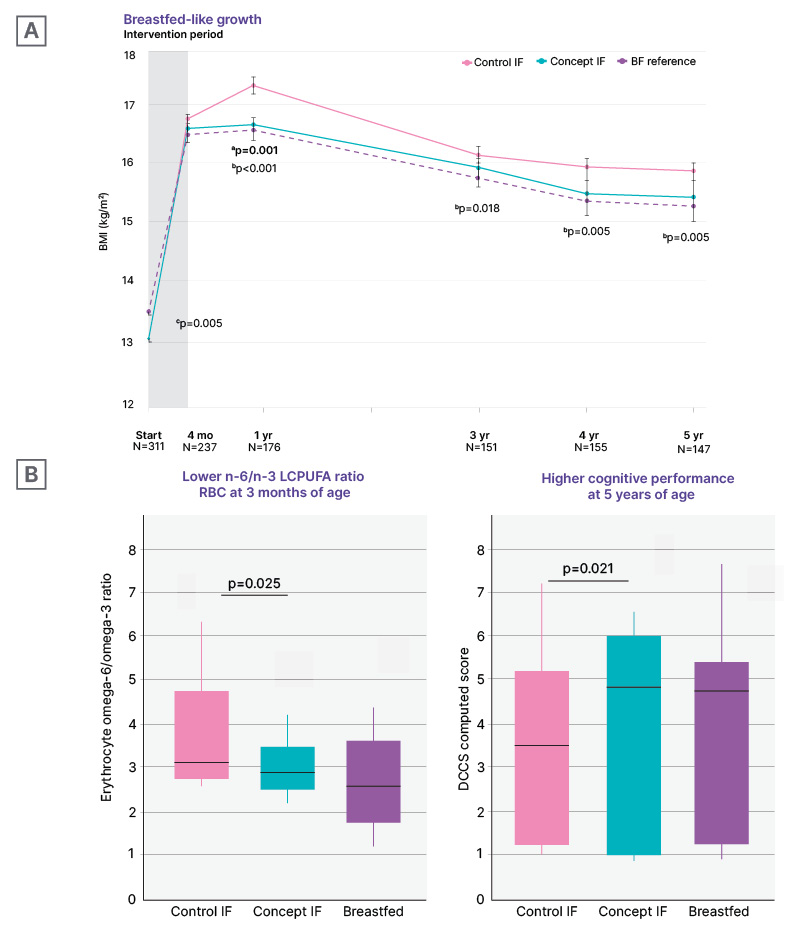
Figure 3: Mercurius follow-up: breastfed-like growth and cognitive function up to 5 years of age.
aConcept versus control.
bBF versus control.
cBF versus formula groups.
These are exploratory results.
(A) BMI development over time per study group redrafted from study data.13 Infants who received the concept formula in early life showed appropriate growth. The longer‑term follow‑up showed that BMI up to 5 years remained closer to breastfed compared to the control group. This figure represents the LS Mean (SE) BMI over time per study group in the ITT population. Groups were compared using a longitudinal mixed effects model analysis with visit, sex, age at study entry, continent, birth weight and group as covariates, and for BF group comparisons also maternal smoking, BMI, and education.
(B) Erythrocyte and fatty acid concentrations, and cognitive performance test results adapted from published data.14
BF: breastfed; DCCS: Dimensional Change Card Sort; IF: infant formula; ITT: intention to treat; LCPUFA: long-chain polyunsaturated fatty acids; LS: least squares; RBC: red blood cell; SE: standard error; yr: years.
As discussed in the presentation, children in the concept formula group showed consistently lower BMI values than the control group, with the largest differences observed at 1 year of age. BMI values up to 5 years were also described as being closer to those of the breastfed reference group.13 This pattern was interpreted as being consistent with an early-life nutritional programming effect, and was linked to preclinical work in which early exposure to the concept formula was associated with lower adiposity under a later high-fat diet challenge (Table 1).19,28

Table 1: (Pre-) Clinical evidence on short- and long-term health impact of the concept infant formula.
The symposium also addressed neurocognitive development as part of the longer-term health narrative. According to the data presented, concept formula-fed infants had a lower erythrocyte omega-6/omega-3 long-chain polyunsaturated fatty acid ratio at 13 weeks than the control group, with values described as being closer to the breastfed reference group.
This finding was discussed as being consistent with improved omega-3 bioavailability, particularly of docosahexaenoic acid, during a period of rapid brain development. The speaker linked this possibility to neurocognitive testing at 5 years of age. In that follow-up, concept formula-fed children reportedly scored higher than the control group on the Dimensional Change Card Sort (DCCS) test, with results described as closer to those of breastfed children,14 and consistent with early-life programming effects seen in preclinical and proof of concept studies (Figure 3B).15,16,19,28
Importantly, the symposium framing remained measured. These data were described as exploratory and as suggesting that early-life exposure to the concept formula may possibly influence neurocognitive outcomes through early-life nutritional programming, rather than proving a definitive causal effect.
The panel discussion reinforced why these findings are of interest to clinicians. The speakers noted that lipids are not simply energy dense; they also provide membrane components for developing cells and contribute to brain development through structural and signalling functions, making cognitive outcomes a biologically plausible area for future investigation.
Panel Perspectives
The panel broadened the discussion from the introductory presentation into a more clinical and translational perspective. Meng Mao, West China University Hospital of Sichuan University, Chengdu, China, emphasised that paediatricians observe different growth trajectories between breastfed and formula-fed infants. She suggested that early growth patterns may have implications for later BMI and metabolic disease risk.
Yvan Vandenplas, ‘KidZ Health Castle’, UZ Brussel, Belgium, argued that lipids have historically been more difficult to mimic in formula than proteins or oligosaccharides, despite being a major component of human milk. He suggested that earlier technical efforts tended to modify only isolated aspects of the lipid ‘puzzle’, for example, adjusting formula mainly for lipid content and distribution, whereas the current concept formula seeks to reproduce several key structural features of human MFGs simultaneously, in a way that is more physiologically relevant.
Jonathan Swann, University of Southampton, UK, expanded the mechanistic discussion by describing how metabolomics can provide a systems-level view of nutritional effects on infant metabolism and the microbiome. In the work discussed during the symposium, larger lipid droplets were associated with shifts in microbiome composition. These included lower abundance of taxa described as potential pathobionts, higher levels of butyrate-producing bacteria, and bile-acid profiles that moved somewhat closer to those observed in breastfed infants.8
These observations were presented as relevant because bile acids have roles beyond digestion, including signalling effects related to glucose and lipid metabolism, inflammation, immunity, and possibly cognition. The panel consequently proposed that in addition to digestion kinetics, altered lipid structure may also influence host physiology through downstream microbiome and metabolome interactions. Changes in lipid droplet structure may first reshape the microbiome, resulting in a different pattern of metabolites that may subsequently influence the infant’s physiology and development.
At the same time, several speakers highlighted important limits to current knowledge. Renes stated that the precise post-absorptive mechanisms remain unclear, and while digestion kinetics differ, the pathway linking those early differences to later health outcomes remains something of a ‘black box’.
This caution was echoed in the discussion of subgroup findings. Vandenplas noted that beneficial effects on BMI, blood pressure, and cognitive function were seen in the overall cohort. These effects appeared larger in children born to mothers who were overweight, suggesting that maternal metabolic context might influence responsiveness and highlighting the need for further study and replication.
Relevance for Practice
For general paediatricians, neonatologists, and other HCPs, the symposium message was not that breastmilk can be replaced or matched. Rather, the panel consistently positioned breastfeeding as the gold standard and framed formula innovation as an approach that aimed to bring outcomes closer to breastfed reference outcomes when breastfeeding is not possible.
A practical implication of the session was that clinicians may need to think about lipids in infant feeding not only in compositional terms, such as which fatty acids are present, but also in structural terms, including lipid droplet size, interfacial composition, digestion kinetics, and downstream bioavailability. Meng presented this as an area where HCP awareness may still be evolving.
The discussion also highlighted the importance of long-term follow-up. Several speakers highlighted as clinically relevant the possibility that a nutritional intervention in the first months of life might still be associated with measurable differences years later. At the same time, they emphasised that additional randomised trials and extended follow-up are required before firmer conclusions can be drawn.
Conclusion
The symposium presented a coherent case that the size, structure, and composition of milk lipid droplets are important determinants of how lipids are digested, absorbed, and utilised in early life. By aiming to mimic the architecture of human MFGs, the concept infant formula discussed during the session was presented as one approach towards making formula-fed infants more comparable to breastfed infants in terms of gastrointestinal handling of lipids and selected longer-term outcomes.
Within the evidence reviewed, the strongest emphasis was placed on the Mercurius study and its 5-year follow-up, which were presented as demonstrating that the concept formula was safe and well tolerated, together with exploratory signals for BMI and cognitive outcomes that more closely resembled those seen in breastfed children than infants receiving standard formula. The panel linked these findings to a broader early-life programming framework, positioning lipid droplet architecture as one potential contributor within the overall framework while noting that the underlying mechanisms are still only partly understood, and that the longer-term findings need to be confirmed in future studies.
Overall, the principal clinical message was that lipid quality in infant feeding should be considered in terms of droplet structure as well as fatty acid composition. For HCPs, the symposium suggested that mimicking breastmilk lipid structure is a promising approach that should be viewed as emerging evidence, requiring thoughtful interpretation, replication, and longer-term follow-up.