A NEW urine testing kit being trialed by the NHS can detect more than nine in ten cases of bladder cancer, a new study shows.
In a trial led by the University of Birmingham, researchers found that across nearly one thousand patients, a commercially available urine test that examines genomic information was able to detect 71 of 77 cancers.1
They hope that the new test may be able to reduce the number of patients having to undergo more invasive exploratory and diagnostic procedures, known as cystoscopies, which involve inserting a small camera into the bladder through the urethra.
Test Detects 92% of Cancers
The GALEAS bladder test had overwhelmingly positive results during a trial involving 964 patients who had been referred for urgent investigation following haematuria (blood in the urine) across seven NHS urology departments.
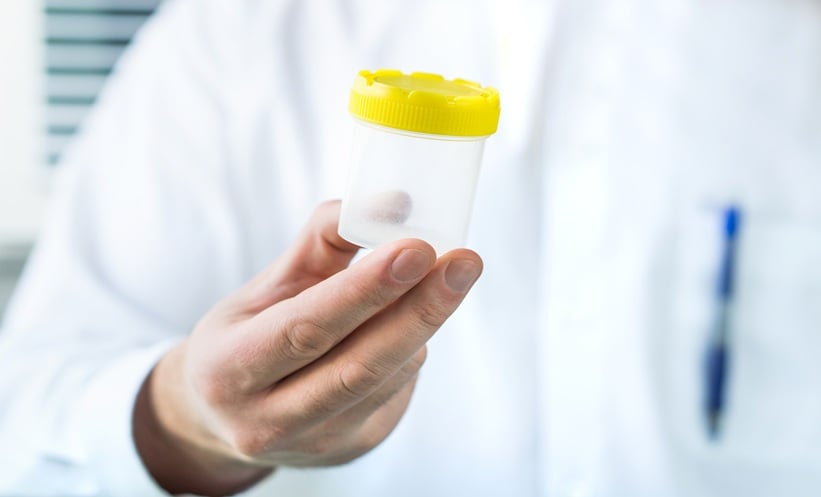
Urine samples were collected before they underwent cystoscopy and then analysed using GALEAS, which works by examining DNA to detect cancerous genetic material that has been shed into the urine.
Specifically, it looks for over 450 DNA mutations across 23 genes associated with bladder cancer.
The test successfully detected 71 of 77 bladder cancers, or 92.2%, including all 17 cases of muscle-invasive bladder cancer and 35 of 36 high-grade cancers. Meanwhile, a negative result was associated with a 99.3% probability of not having bladder cancer.
Among the 30% of patients who had non-visible haematuria, where blood in the urine cannot be seen with the naked eye, the test identified all cases of bladder cancer.
Screening for Bladder Cancer Made ‘Far Easier’
Researchers said the findings could help clinicians determine which patients require an urgent cystoscopy and which could safely have the procedure deferred. This way, the test has the potential to spare thousands from an uncomfortable procedure and help to reduce NHS waiting lists. There is also potential for the test to be carried out in a patient’s home.
At the most cautious clinical threshold, researchers estimate that using GALEAS to triage patients could result in 730 fewer urgent cystoscopies for every 1,000 patients, compared with giving every patient an urgent cystoscopy.
Professor Richard Bryan, Director of the University of Birmingham’s Bladder Cancer Research Centre and co-author of the study, said: “This prospective study shows that the very promising early performance has now been reproduced across multiple NHS centres and in a large real-world patient population.2
“These results show that molecular urine testing can be used now to help clinicians decide which patients need an urgent cystoscopy and which can safely have that procedure deferred.”
“GALEAS is a promising and less invasive test that can be easier to administer and make testing and screening for bladder cancer far easier,” he added.
The urine tests, which are easy for patients to carry out independently, are already being used within NHS pathways in England and Wales, with further sites adopting the test as its clinical use expands.
Reference
1 Silcock L et al. Real-World Multicentre Evaluation of GALEAS Bladder for Detecting Bladder Cancer in UK NHS Haematuria Clinics. European Urology Oncology. 2026.
2 University of Birmingham. Urine test identifies more than 9 in 10 bladder cancers, clinical study finds. 2026.
Featured image: terovesalainen on AdobeStock