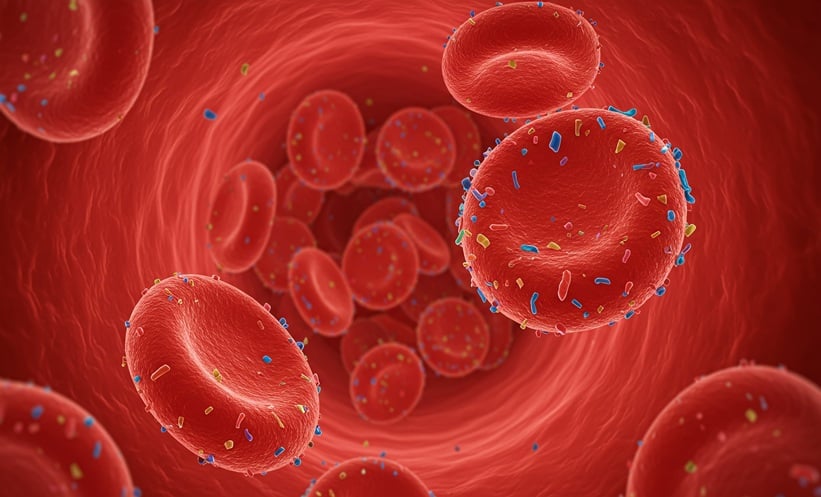
A COMMON cholesterol treatment has shown early promising results at removing synthetic chemicals from the blood.
Therapeutic apheresis, a blood filtering process used for patients with severe high cholesterol who do not respond to medication treatments, was found to decrease the level of man-made contaminants in the blood.
Reduction in PFA Levels After Treatment
Researchers in Germany tested the levels of four different per- and polyfluoroalkyl substances (PFAs), a large group of man-made compounds found in everyday items known as ‘forever chemicals’, in the blood of 14 participants before treatment.
These substances, found in items such as non-stick pans, food packaging and waterproof clothing, make their way into water and food supplies, eventually entering the blood stream.
Long-term exposure to PFSs has been linked to health issues such as thyroid problems, high cholesterol, immune system and hormonal changes, and increased cancer risk. Whilst they filter out of the body over time, unless exposure stops, they are a constant presence in the blood.
The study found that immediately after a session of double-filtration plasmapheresis, participant’s blood concentrations of the four common PFAs had fallen by up to 25%. Analysis by another laboratory showed that the levels across five PFAs had falled between 43.5% to 75.8%.
Scientists hypothesise that these substances are “co-removed” from the blood during the process of treatment, forming bonds with lipoproteins and plasma proteins as they are removed by the apheresis filters, or are retained within themselves.
More Inconsistent Results for Micro-Plastics
Researchers also tested levels of micro- and nanoplastics (MNPs) in the blood before and after treatment in a smaller sample size of four patients, finding less consistent results.
Polyethylene levels fell in all the participants, while polyvinyl chloride declined in only three. However, polypropylene did not follow the same pattern and had inconsistent results, falling in one patients, increasing in two and was undetectable in the fourth.
The inconsistency among these results could be due to a number of reasons including measurement methods, environmental contamination, or plastic components of the apheresis system.
While the study is not able to prove through this data that MNPs are removed during apheresis filtration, researchers are confident that the process does not simply “redistribute microplastic particles” as they repeatedly detected microplastics in material washed from used filters.
This, however, may be due to other factors and is unable to support a total reduction in the total burden of MNPs in the body as plastic particles, which have been shown to reside in tissue such as the brain and liver, may later re-enter the bloodstream.
Optimism in the Face of a ‘Health Crisis’
Despite the mixed results and small cohort, researchers are confident this is early evidence that blood filtration systems such as therapeutic apheresis may have the potential to be used as a novel approach to removing ‘forever chemicals’ from the bloodstream.
They stipulate that larger, controlled trials using standardised measurements are needed before apheresis could be considered a treatment for environmental pollutant exposure.
However, they are optimistic is it progress towards solving “the pervasive contamination of human populations” with these substances, something they cite as an “unprecedented environmental health crisis”.
Reference
Bornstein SR et al. Therapeutic apheresis: An effective strategy for a combined targeting of circulating lipoproteins, inflammatory markers, PFAS, and microplastics in cardiometabolic and neurodegenerative disease? Brain Health, 2026, doi:10.61373/bh026a.0024
Featured image: shadowart on AdobeStock