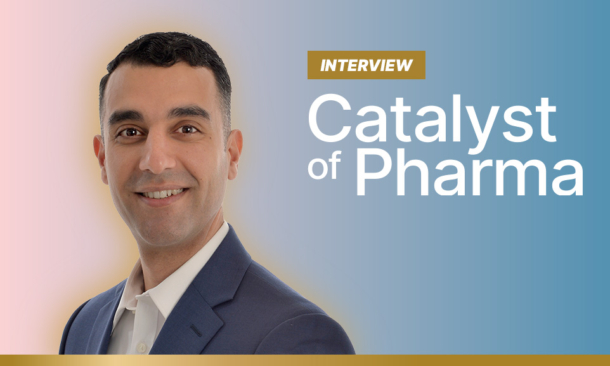
Opinion from Anthony Harnden, Chair, Medicines and Healthcare products Regulatory Agency (MHRA)
This opinion piece was written by Anthony Harnden, Chair of the Medicines and Healthcare products Regulatory Agency (MHRA) and published in collaboration with EMJ. The opinions expressed in this article belong solely to the author.
Over my career as a general practitioner, I saw many medicines that performed well in clinical trials but had a different safety and efficacy profile with respect to individual patients in my practice. This could have been down to any number of factors that were unidentified at the clinical trial phase, such as unknown comorbidities, rare side effects, and underrepresented patient cohorts. More real-world evidence collection and analysis will inform a better understanding of these factors so that we can improve patient outcomes and respond faster to emerging safety concerns.
Recent technological and scientific advances are opening up more opportunities than ever for real-world evidence to support the regulation of medicines and medical devices. The potentially transformative effects of more innovative medicines including genomically targeted medicines, and the evolution of generative AI in healthcare, requires robust and comprehensive assessment of benefits and risk in clinical practice, with close collaboration between regulators and clinicians.
The Medicines and Healthcare products Regulatory Agency (MHRA) will today launch a 5-year strategy that includes plans to streamline clinical reporting systems and use AI-driven technologies to capture higher quality real-world evidence. In parallel, we intend to use AI approaches to enhance our analytical capabilities to derive insights from data collected within the NHS. Our ambition is to significantly enhance our abilities to monitor products following authorisation.
While clinical research is fundamental to establishing the safety and effectiveness of medicines and devices, trials cannot fully reproduce the diversity and complexity of routine healthcare. Clinicians see differences in outcomes between patient groups and encounter adverse reactions and device failures that only become apparent at scale. Their experience is a critical component of the regulatory evidence base.
HCPs make invaluable contributions to safety and surveillance efforts by reporting suspected adverse drug reactions and medical device incidents through the Yellow Card scheme. From next year, we will begin to introduce a more conversational interface for Yellow Card reporting, making it simpler and quicker for users to submit more detailed information on medicines and medical devices. We will work to make Yellow Card reporting available through the digital tools most used across the health service and explore integrating it into the NHS App and major secondary care electronic health record systems, complementing existing functionality in primary care.
AI-driven technologies have the potential to significantly increase real-world evidence collection and are increasingly being used to analyse this data more efficiently. We will work with the Health Data Research Service to improve safety monitoring and explore the potential for AI to identify patterns across large datasets, detect emerging signals, and identify risks.
Clinicians are essential to the regulation of AI-driven technologies. Those closest to patients perceive risks that are difficult to identify from technical specifications or controlled evaluations. Many clinicians contributed to the National Commission into the Regulation of AI in Healthcare, whose report last month had real-world evidence at the centre. Recommendations included allowing new AI models to demonstrate real-world safety and performance before being granted full authorisation.
The medical profession will play an increasingly salient role in guiding regulators on whether these technologies perform safely, improve outcomes, and can be appropriately governed and monitored. The AI Commission and subsequent Government response recognised the importance of building trust with clinical audiences in order to support adoption.
We will pioneer a new regulatory approach that leverages predictive science to anticipate where benefit–risk may vary, generate hypotheses about possible harms, and strengthen interpretation of early or incomplete evidence.
Clinicians provide insights into emerging safety signals and patient experience that are invaluable to the regulation of medicines and medical devices. By making clinical reporting easier and using the latest technologies to analyse real-world data, we will build a system of continuous learning that keeps pace with scientific innovation and improves health outcomes for all.
The MHRA’s 2030 Strategy is published today.1
References
- The Medicines and Healthcare products Regulatory Agency (MHRA). MHRA 2030 strategy. 2026. Available at: https://www.gov.uk/government/publications/mhra-strategy-2030. Last accessed: 14 October 2026.