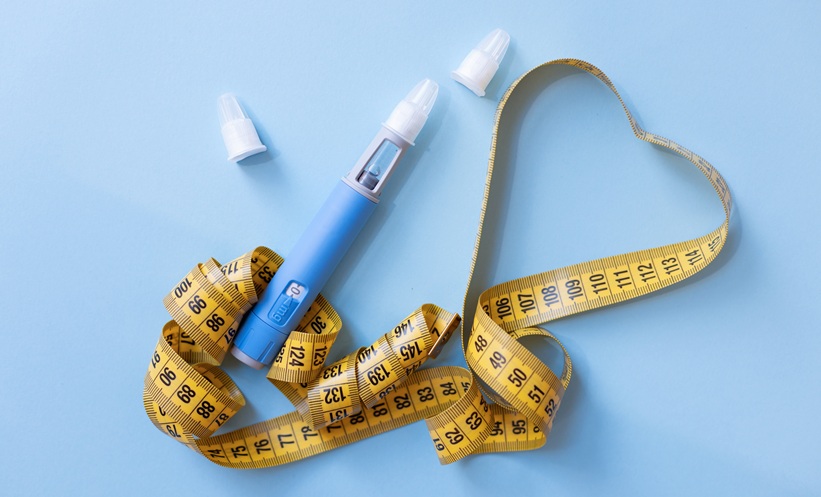
A NEW triple-action weight loss therapy could offer benefits beyond weight reduction, including improvements in markers of cardiovascular risk and inflammation, according to new clinical trial results.
Retatrutide is an investigational, once-weekly injection that, for the first time, works across three separate hormone pathways and may offer benefits beyond current weight-loss jabs on the market after a successful Phase III trial.
First to Tackle Three Hormone Receptors
An estimated 100 million people worldwide now use GLP-1-based medicines for diabetes and weight management, including popular injectable treatments such as Wegovy (semaglutide) and Mounjaro (tirzepatide).
What sets this new drug apart, however, is that unlike semaglutide, which acts on just one hormone receptor, and tirzepatide, which acts on two, retatrutide works across a record three.
It is a single molecule that activates receptors for glucagon as well as the traditional glucose-dependent insulinotropic polypeptide (GIP) and glucagon-like peptide-1 (GLP-1) – making it the first of its kind.
Developed by Eli Lilly, in a Phase III researchers assessed how this added action affects weight loss and wider health outcomes, including management of blood glucose levels, in patients with Type 2 diabetes.
Promising Trial Results
The double-blind, placebo-controlled trial, known as TRIUMPH-2, randomised 1,152 adults with Type 2 diabetes who were obese or overweight to take retatrutide at a 4 mg, 9 mg or 12 mg dose, or a placebo, for 80 weeks.
At the start of the study, participants had an average baseline weight of 106.4 kg, a mean BMI of 38.2 kg/m², as well as significantly elevated blood sugar over the past 2 to 3 months, averaging a HbA1c of 7·71%.
At 80 weeks, with all doses of retatrutide (4mg, 9mg, and 12mg), participants had experienced substantial weight loss and reductions in HbA1c.
Results showed that those taking retatrutide 4mg lost an average of 29.8 lbs (12.7%), those on 9mg saw an average weight reduction of 45.4 lbs (19.1%), and those on 12mg lost an average of 49.6 lbs (20.8%).
Among participants with a baseline BMI of 35 or higher, those taking retatrutide 12mg lost an average of 60.8 lbs (23.4%). By the end of the study, 59.5% of participants taking retatrutide 12mg no longer met the BMI criteria for obesity.
Beyond substantially reducing weight, retatrutide also helped participants gain better glycaemic control. Participants taking retatrutide 9mg and 12mg reduced their HbA1c by an average of 1.6% and 1.5%, respectively, while those taking 4 mg reduced their HbA1c by an average of 1.4%.
Notably, up to 40.0% of participants reached an HbA1c of less than 5.7%, which is considered a normal blood sugar level.
Cardiovascular Risk Markers
Furthermore, retatrutide meaningfully reduced certain cardiovascular risk factors in the participant population.
At the highest dose, average reductions were 39.5% for triglycerides, 19.6% for non-HDL cholesterol, 10.8 mmHg for systolic blood pressure, 16.9 cm for waist circumference and 58.3% for high-sensitivity C-reactive protein, a marker of inflammation.
Researchers noted that these reductions were are in risk factors rather than clinical outcomes and the drug has not yet been shown to reduce cardiovascular events
In a separate trial, which enrolled nearly 2,000 adults with severe obesity and established cardiovascular disease, cardiovascular events in retatrutide participants did not differ significantly from placebo.
A further trial dedicated to assessing cardiovascular and kidney outcomes is currently ongoing while additional results from the obstructive sleep apnea trial within TRIUMPH-2 will be presented at a future.
While retatrutide is not yet approved Lilly plans to submit a Biologics License Application (BLA) to the U.S. Food and Drug Administration in the first quarter of 2027.
However, the successful results of this Phase III clinical trial underscore its potential promise for people with obesity and Type 2 diabetes as the first triple-action hormone receptor drug.
Reference
Bellido V et al. Retatrutide in adults with obesity and type 2 diabetes (TRIUMPH-2): a double-blind, parallel-group, randomised, placebo-controlled, phase 3 trial. The Lancet, 2026