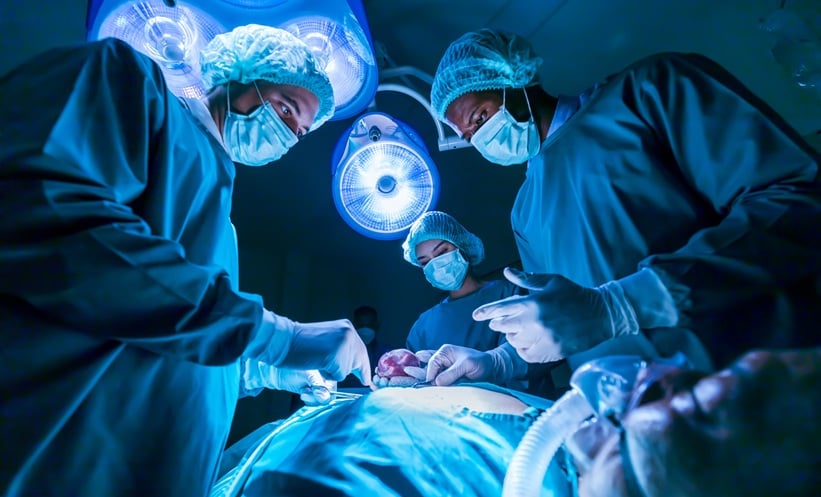
A NOVEL cell therapy approach could help reduce, and potentially eliminate, the need for lifelong immunosuppressive treatment following solid organ transplantation, according to findings from two patients treated in Madrid, Spain. ¹
Researchers at La Paz University Hospital combined solid organ transplantation with processed haematopoietic stem and immune cells from the same donor. More than 5 years later, neither recipient had experienced organ rejection, graft-versus-host disease, or serious treatment-related toxicity.
However, both patients continue to take one low-dose immunosuppressant, meaning the procedure has not yet produced drug-free transplantation.
Creating Immune Tolerance
Transplant recipients normally require lifelong immunosuppression to prevent their immune system from attacking a donated organ. Although effective, these medicines increase the risk of infection, cardiovascular disease, and cancer.
This new experimental approach sought to establish transient mixed chimerism, during which donor and recipient immune cells temporarily coexist. This may teach the recipient’s immune system to tolerate the donated organ without broadly suppressing its ability to fight infection.
Donor cells were processed to retain CD34-positive blood-forming stem cells and memory T cells, which help protect against previously encountered infections. Most naïve T cells were removed because they are more likely to attack the recipient and cause graft-versus-host disease.
Two High-Risk Recipients
The first recipient, a young male who was 15 years-old at the time of treatment, had experienced repeated rejection following previous intestinal and multivisceral transplants. His brother died after three intestinal transplants were complicated by rejection and tumours.
As an extremely high-risk patient, in 2020 he became the first person to receive a fully HLA-mismatched multivisceral transplant including a kidney from a deceased donor using the breakthrough technique.
Bone marrow was also collected from the donor during the organ retrieval process and prepared for later infusion. Following relatively mild conditioning, the recipient received the donor stem cells 88 days after his organ transplant, followed by monthly memory T-cell infusions for one year.
Now, seven years later, he remains free from rejection and is taking sirolimus as his only immunosuppressant, whilst the majority transplant patients typically take a combination of multiple immunosuppressant drugs to avoid rejection.
A year later, a second person received a transplant using the same method – a 49-year-old woman who had undergone three previous kidney transplants. In 2021, she received a fourth kidney from her brother, followed 15 days later by processed stem and memory immune cells from the same donor.
After six years, her kidney function remains stable, with no evidence of rejection. Steroids and mycophenolate have been withdrawn and she now continues only with tacrolimus monotherapy.
Laboratory tests have showed that both recipients’ immune cells responded weakly to their donors while retaining responses to viral and unrelated foreign antigens. This suggested donor-specific immune tolerance rather than general immune suppression.
Further Clinical Testing Needed
The multidisciplinary project was led by Antonio Pérez-Martínez, Head of Paediatric Haemato-Oncology, and Francisco Hernández-Oliveros, paediatric transplant surgeon, at La Paz University Hospital.
While these two early cases have shown promise, authors cautioned that the findings represent only two heterogeneous compassionate-use cases without a control group.
Consequently, they cannot establish whether the cell therapy directly caused the favourable outcomes or whether it will benefit a wider patient population.
A new, single-centre Phase I trial involving approximately 10 recipients is now evaluating the safety and tolerability of the procedure on a larger cohort of patients.²
For the complete withdrawal of immunosuppression medication post-transplant, much more clinical test is required. Nevertheless, the results of these successful operations may help pave the way towards organ transplantation with substantially reduced, and potentially no, long-term immunosuppressive treatment.
References
1 Pérez-Martínez A et al. Naive T cell-depleted hematopoietic stem cell transplantation to minimize immunosuppression after solid organ transplantation: case report. Commun Med. 2026;6:489. https://www.nature.com/articles/s43856-026-01906-x.
2 ClinicalTrials.gov. NCT06997471. https://clinicaltrials.gov/study/NCT06997471.
Featured image: Akarawut on AdobeStock