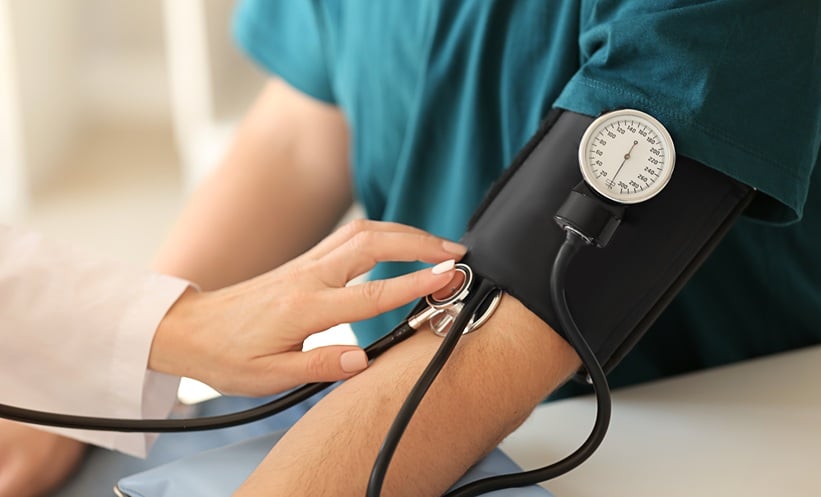
TWO-THIRDS of adults in England living with high blood pressure are unaware of their condition, according to a new study.
The research from Oxford University, which reviewed data from over 1.4 million adults, found that hypertension is significantly underdiagnosed and that only half of those who are receiving treatment for it by a doctor have their blood pressure adequately under-control.
High blood pressure is the single leading risk factor for strokes in the UK, as well as one of the most prevalent causes of heart disease and premature death. The results of the study have prompted calls for better identification and treatment for those at risk.
One Third of UK Adults Live with Hypertension
The World Health Organization (WHO) defines hypertension as a systolic blood pressure of 140 mmHg or greater, diastolic blood pressure of 90 mmHg or greater, or by the use of blood pressure-lowering medications.
Researchers analysed clinic blood pressure measurements collected by Our Future Health, the UK’s largest health research programme, from participants who enrolled between 2022 and 2025.
Using the WHO criteria, they assessed the number of participants who had high blood pressure, how many of these had received a diagnosis, were receiving treatment and, if so, whether their blood pressure was under control.
Overall, they found that 37% of study participants had hypertension. This number varied depending on age, from one-sixth (15%) of 18 to 39 year olds to three-quarters (71%) of those aged 80 years or older.
The findings also showed that hypertension was significantly more common in men than women, with nearly half of males (42%) exhibiting high blood pressure versus 29% of females after age standardisation.
Markedly, for nearly two-thirds (59%) of those who did have hypertension, it remained undetected, meaning they had never received a diagnosis and were not taking blood-pressure lowering medication.
Furthermore, of those who were already taking medication to manage their condition, only half (50%) no longer had elevated levels of blood pressure – meaning that half had been unable to control it despite medical intervention.
Current Diagnostic Approach ‘Not Fit for Purpose’
Researchers noted that despite longstanding clinical guidance and recommendations for diagnosing and treating hypertension in the UK, current estimates of hypertension awareness, treatment and control in England have not improved in recent decades.
They argue that the current NICE guidelines for diagnosis result in many undiagnosed cases. They stipulate that a person must have multiple confirmatory blood pressure readings before a diagnosis is confirmed and treatment, including the recommendation of lifestyle changes, is given
Wenyu Liu, Medical Statistician at Oxford Population Health and lead author of the study said: “While hypertension is largely a ‘silent killer’, the current approach to detecting and treating high blood pressure is not fit for purpose.
“This isn’t a problem confined to a particular group; it’s substantial across almost every demographic we examined. Even among younger adults, who currently aren’t eligible for an NHS Health Check, over 15% already had high blood pressure. This underscores the need for population-wide prevention strategies alongside targeted treatment for people at high cardiovascular risk.’”
Professor Bryan Williams, Chief Scientific and Medical Officer at the British Heart Foundation, agreed, saying in an Oxford University press release: “This study paints a concerning picture of the scale of undetected high blood pressure in the UK, and the challenges of keeping blood pressure under control in those already receiving treatment.”
He continued: “High blood pressure remains the leading modifiable risk factor for cardiovascular disease, linked to around half of heart attacks and strokes in the UK. The worrying reality is that millions of people are still living with the condition without knowing it and missing opportunities for early diagnosis and treatment.”
Professor Williams concluded by saying that better detection and treatment could help prevent thousands of deaths from heart attacks and stroke.
“But to achieve this, we will need to rethink how we identify, treat and support those at-risk so that blood pressure checks and effective treatment can benefit everyone,” he added.
Reference:
Liu W et al. Hypertension prevalence, detection, treatment and control among 1.4 million adults in England: a cross-sectional analysis from the Our Future Health study in 2022–2025. BMJ Public Health. 2026;4:e004815. https://doi.org/10.1136/bmjph-2025-004815
Featured image: Pixel-Shot on AdobeStock