IMPROVING air quality to meet the World Health Organization’s (WHO) guideline levels on harmful air pollutants could save more than nine million lives a year, according to new research.
Healthcare costs would also fall and productivity would rise, according to scientists at the University of Cambridge who used computer modelling to predict the potential health and economic benefits of reducing levels of certain particulates in the air.
The paper published today suggests that by meeting ambitious air quality guideline values set by the WHO for recommended maximum levels for several pollutants, including fine particulate matter (PM2.5) and nitrogen dioxide (NO2), could save billions in healthcare costs and see significantly lower levels of chronic illness and death
The Pollutant Problem
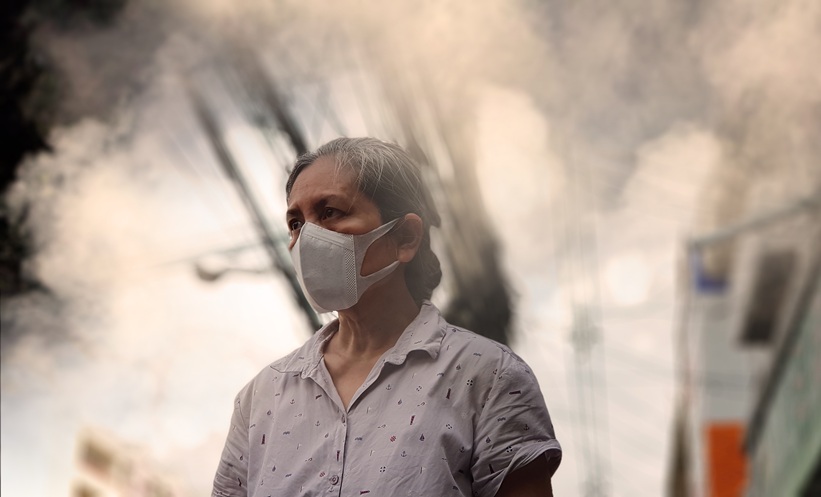
Outdoor air pollution is the biggest environmental health risk globally and has been linked to increases in a range of chronic and life-threatening conditions, including heart and lung diseases like coronary heart disease, stroke, asthma and COPD, as well as dementia.
Low- and middle-income countries (LMICs) are disproportionally affected by poor air quality and the burden it brings, extending far beyond health to a substantial economic toll from health and social care costs as well as lost productivity.
In 2021, the WHO set out to address the issue, revising its guidelines for revising its guidelines for maximum recommended levels for several different types of pollutants, including fine particulate matter (PM2.5) and nitrogen dioxide (NO2).
Originating from a number of common sources, like vehicle emissions, industrial processes, construction dust, powerplants, wood burning stoves and fireplaces, PM2.5 is particulate matter with a diameter of 2.5 microns or less and can be inhaled deep into the lungs.
Nitrogen dioxide NO2 is also key waste product and pollutant derived from burning fossil fuels in everyday processes like using gas and stove heaters, from vehicle exhausts and industrial emissions.
Low- and middle-income countries often face higher levels of air pollution in line with rapid with large-scale urbanisation and industrialisation, economic development, and increasing use of cars and motor vehicles.
Populations in these countries therefore face substantially higher levels of disease and premature death caused by pollution, as well as lost productivity due to illness and high economic burden from healthcare costs.
According to the World Health Organization Ambient Air Quality Overview, roughly 89% of all premature deaths caused by outdoor air pollution occur LMICs.
Saving Lives and Cost
In this latest report, researchers combined detailed data from air pollution, population size and health with published evidence on the links between pollution, mortality and disease.
Computer modelling then drew estimates of how rates of death and new cases of illness may change if pollutant levels were reduced to the recommended levels set out by the WHO.
Overall, models suggested that meeting the WHO’s guideline levels for PM2.5 could prevent or postpone an estimated 9.4 million deaths in a single while reaching its NO2 guidelines could prevent or postpone around 1.1 million deaths.
Even by meeting the less stringent interim targets could lead to significant health benefits and more than 7 million fewer deaths, overall.
The benefits were shown to extend beyond reducing deaths but also to slashing the levels of some serious illnesses.
Meeting PM2.5 guidelines could lead to 7.3 million fewer new cases of coronary heart disease, 2.3 million fewer strokes, 2.8 million fewer cases of COPD and 1.1 million fewer cases of dementia annually.
Countries Have a ‘Critical Opportunity’ to Improve
Dr Annalan Navaratnam, Clinical Research Fellow at IMS Epidemiology, University of Cambridge, said: “Tackling air pollution is likely to have a huge impact on improving quality of life and reducing the number of early deaths.
“For the first time, we’ve been able to model the potential benefits of the WHO’s clean air guidelines across countries with the highest levels of outdoor air pollution, both in terms of the millions of lives that could be saved every year and the potential economic and societal benefits,” she added.
Reducing PM2.5 pollution to WHO guideline levels could bring significant financial benefits, with fewer illnesses easing healthcare costs and reducing time lost from work.
The researchers estimated annual savings in direct medical costs of US$11.8bn for coronary heart disease, US$5.9bn for stroke and US$8.6bn for dementia.
Preventing illness and disability could also help people remain in work. Estimated annual productivity gains reached US$17.9bn for stroke, US$18.1bn for COPD and US$5.3bn for coronary heart disease.
Dr Haneen Khreis, also from IMS Epidemiology, Cambridge, added: “Meeting the WHO’s air quality guideline values will not be straightforward, but low- and middle-income countries have a critical opportunity to shape healthier futures as their populations grow and their cities expand.
He added: “Decisions about transport, urban planning and energy can make a real difference to the air people breathe and the diseases they experience. Economic development is essential for these countries, but it need not come at the expense of public health.”