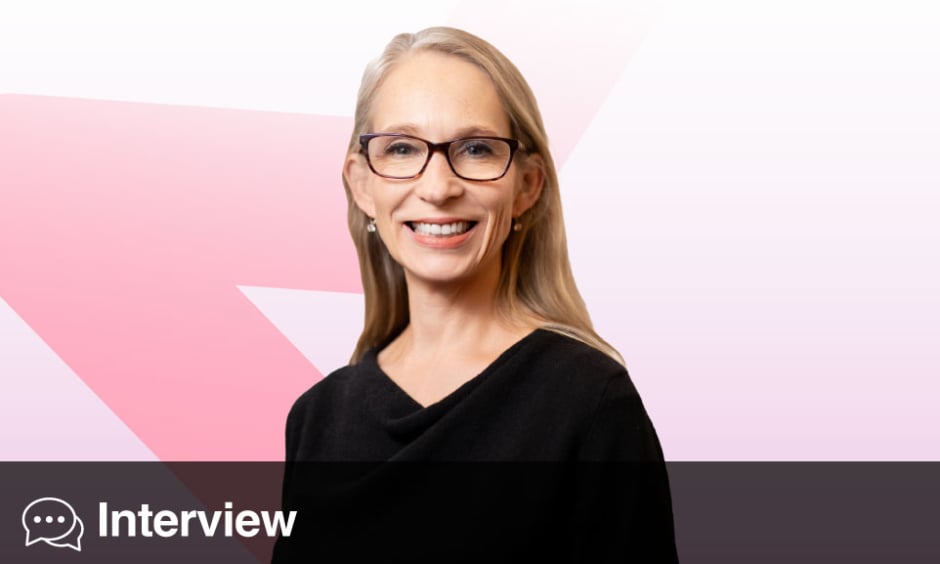
Nancy Reau | Professor of Internal Medicine; Richard B. Capps Chair of Hepatology; Associate Director of Solid Organ Transplantation; and Section Chief of Hepatology, Rush University Medical Center, Chicago, Illinois, USA
Citation: EMJ Hepatol. 2026;14[1]:110-112. https://doi.org/10.33590/emjhepatol/Z027B90W

You have built a career spanning hepatology, gastroenterology, and internal medicine. What originally drew you to liver disease as a specialty, and what continues to motivate your work today?
I studied neuroscience in college and initially planned to pursue neurology. However, once I started to work with patients, I really found my passion for hepatology. I still remember my time as a fellow, when pegylated interferon was emerging as a ‘miracle’ drug for hepatitis C. The fact that science was delivering curable options to patients with chronic illness, coupled with the lifesaving opportunities liver transplant offered to those with end-stage disease, cemented my career in hepatology. Yet, it was really my mentors who kept me engaged in academic medicine and focused on the future. When we hear ‘mentor’, we envision a student looking up to a teacher, yet the individuals who shaped my career path when I was a student continued to be my best resource to bounce off ideas and to help me work through difficult clinical and academic issues. Motivating the next generation to love hepatology and to think critically is really what motivates me to come to work every day. It is also important to define the next generation. This is not just our medical students, residents, and fellows, but also our clinical staff, advanced practice providers, and admins. Patient care requires a village. I love my hepatology family. Making the care pathway accessible, equitable, and enjoyable is what healthcare should also strive for.
Your work has focused extensively on viral hepatitis, drug development, and liver transplantation. How have your research interests evolved over the course of your career?
Viral hepatitis has always been my passion. The virus of the year has shifted. When I started my academic career, there was drug development in hepatitis B; however, hepatitis C really stole the limelight. It wasn’t just that oral curative options were being developed; diagnostics were also exploding. I witnessed a disease that drove liver transplantation become an infection that was easily diagnosed and cured. We have now pivoted back to hepatitis B, where the cure has been elusive, but the therapeutic pipeline is really exciting. Hepatitis D also has several options that can mitigate disease progression. Still, I am a clinician more than a scientist. I like to be involved when drug development can help change the prognosis of the patient in front of me.
Your work has also examined the impact of COVID-19 on liver function. What have you learned about how SARS-CoV-2 affects the liver, particularly in patients with pre-existing liver disease?
When the pandemic hit, we all examined the impact of COVID-19 on the patients we were caring for. As a hepatologist, this included patients with liver disease who were infected and patients without liver disease who developed hepatic complications from the infection. People with advanced liver disease are immunocompromised. The liver is an integral part of the immune response, and thus, if liver function is poor, an infection (including COVID-19) is going to be harder to recover from. Liver complications from SARS-CoV-2 infection remain uncommon; however, patients with advanced liver disease were more likely to have a worse outcome.
Your recent work has explored topics such as sustained virologic response in hepatitis C treatment and the cost-effectiveness of universal childhood screening. How do these findings contribute to improving long-term management and prevention of hepatitis C?
Simple rules are always the easiest to follow. Risk-based screening (irrespective of what you’re looking for) falls short. When everyone needs to be screened at time point x, screening occurs. Think of colorectal cancer screening. We all know we need a colonoscopy at the age of 45 (or 50) years. This isn’t because we do things that increase our risk of colorectal cancer, it’s because that is the time to identify high-risk polyps before they become cancer. Childhood screening removes the stigma of high-risk behaviours and captures an important group of chronically infected individuals who are at risk of transmission. We looked at the cost-effectiveness of universal childhood screening to help show that this was financially smart, moved screening to a time when it was not stigmatised by high-risk behaviours, and the infection could be cured before engaging in activities that would lead to transmission.
With increasing interest in optimising marginal organs and expanding donor pools, including hepatitis-positive organs and those donated after circulatory death, what innovations or research directions do you think will most improve access to liver transplantation?
Both innovations will improve access. Donors who died from circulatory death represent a large pool, with many donated organs still going unused. We are already starting to see increased organ utilisation with peri-transplant strategies. At the same time, organs from donors with hepatitis B and C can further expand options. I think it’s important to reassure people that these organs perform as well as traditional organs. Hepatitis C is curable, and hepatitis B is easily controlled and may be curable in the future. Although donation after circulatory death organs have the ability to expand the donor pool more substantially, organs infected with viral hepatitis are a safe and predictable option.
You serve on the governing board of the American Association for the Study of Liver Diseases (AASLD) and previously chaired the Hepatology Committee of the World Gastroenterology Organisation (WGO). How important are professional organisations in shaping clinical practice, research priorities, and global policy around liver disease?
Our societies are the mouthpiece of the membership. Like elected officials, we represent those who supported us during the journey that led us to our position. As such, we have a significant impact on priorities related to outreach and clinical practice. We help dictate policy, often with a bigger megaphone, because of our position. That said, we reflect our membership, and we are real people. Do not hesitate to send your feedback to your governing board.
As Associate Director of Solid Organ Transplantation and Section Chief of Hepatology at Rush University Medical Centre, Chicago, Illinois, USA, how do you balance clinical work, research, and leadership responsibilities?
Work-life balance is always important and reflects your stage of life. Time management is imperative and delegating it to someone you trust allows you to concentrate your efforts elsewhere. I am always available if someone needs me; however, the individuals that support me are amazing, whether it is our research staff, my administrative assistant, or the amazing nurses and advanced practice providers who help support our patients. Academic achievement takes a village, and when we succeed, the entire village should celebrate.
As you prepare to become President of the AASLD in 2029, what priorities do you hope to focus on for the field, and what advice would you give to early-career clinicians or researchers interested in hepatology?
Presidency is like a relay race; some of my priorities will be carried forward from the presidents who preceded me. I do hope to focus on mentoring and education. It is important to recruit the next generation of academic hepatologists who will love the field as much as I have. Part of this message is to recognise the incredible legacy that was laid as a foundation. It is important to never forget where we started and how we got here, but it is equally important to be flexible and adapt to new technology and priorities. My message to an early-career clinician is to embrace your passion and find a good mentor and sponsor. Don’t get discouraged by the pace as long as you’re working toward your goal. Also, it’s important to see the crossroads in your career. Sometimes what you thought you should do and what you want to do are different, and that’s ok. We are not on an express highway without exits; you can pause, reflect, and choose a new direction.