Key Summary:
- The AI model achieved an AUC of 0.903 for liver cancer detection.
- Diagnostic sensitivity and specificity reached 80.0% and 81.8%.
- Combining ctDNA methylation with clinical data could support earlier identification of liver cancer.
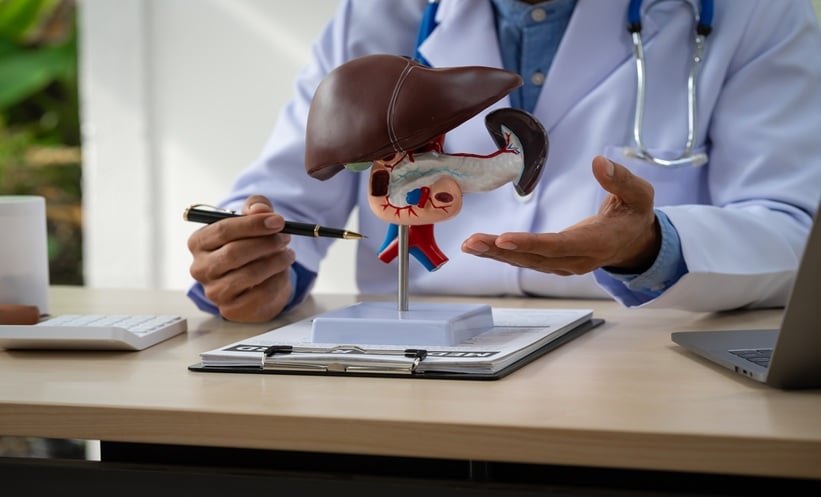
A MACHINE learning model integrating circulating tumour DNA (ctDNA) methylation markers with clinical characteristics has demonstrated promising accuracy in distinguishing hepatocellular carcinoma (HCC) from non-malignant liver nodules in patients with hepatitis B virus (HBV) infection, according to new research.
The study, involving 586 patients, found that a CatBoost-based model achieved an area under the receiver operating characteristic curve (AUC) of 0.903 in internal validation. The findings suggest that combining molecular biomarkers with routinely available clinical information could support more accurate assessment of suspicious liver nodules.
Patients with chronic HBV infection face an increased risk of developing HCC, making accurate evaluation of intrahepatic nodules particularly important. However, distinguishing malignant from non-malignant nodules can be challenging, highlighting the need for additional diagnostic tools.
Researchers developed and internally validated an interpretable machine learning model combining ctDNA methylation measurements with clinical and laboratory indicators.
The retrospective analysis included 586 patients with HBV infection and intrahepatic nodules, of whom 217 had an adjudicated HCC diagnosis. The cohort was divided into a training group of 411 patients and an internal validation group of 175.
Ten machine learning algorithms were evaluated using nested cross-validation, with model selection and classification thresholds determined using training data.
Following feature selection using Boruta and least absolute shrinkage and selection operator (LASSO) methods, researchers retained 11 predictors.
These included age, cirrhosis, maximum intrahepatic nodule diameter, alpha-fetoprotein (AFP), AFP-L3%, des-gamma-carboxy prothrombin (DCP), albumin-bilirubin (ALBI) grade, aspartate aminotransferase (AST), neutrophil-to-lymphocyte ratio (NLR), and two ctDNA methylation markers, HIST1H3G/ACTB and OTX1/ACTB.
Among the algorithms evaluated, CatBoost demonstrated the highest observed diagnostic performance in the internal validation cohort, achieving an AUC of 0.903.
The model achieved 80.0% sensitivity, 81.8% specificity, and 81.1% overall accuracy. Positive predictive value was 72.2%, while negative predictive value reached 87.4%, suggesting potential utility in identifying patients less likely to have HCC.
The researchers also used SHapley Additive exPlanations (SHAP) analysis to assess how individual predictors contributed to model predictions, providing greater transparency into the factors influencing diagnostic classification.
The findings suggest that integrating ctDNA methylation markers with clinical characteristics could provide additional diagnostic information when evaluating intrahepatic nodules in patients with HBV infection.
Unlike models relying exclusively on conventional laboratory or imaging indicators, the integrated approach incorporates molecular information alongside established clinical risk factors, potentially supporting more individualised assessment of HCC likelihood.
However, the researchers acknowledged important methodological limitations, including the use of historically selected predictors and reuse of the internal validation set, which may affect the robustness of the reported performance estimates.
External validation in independent patient populations will therefore be essential before the model can be considered for routine clinical use.
The researchers concluded that the interpretable CatBoost model demonstrated promising diagnostic performance and could serve as an auxiliary tool for assessing HCC risk following detection of intrahepatic nodules in patients with HBV infection.
Reference
Yu Y et al. Development and validation of an interpretable machine learning model integrating ctDNA methylation and clinical features for diagnosing hepatocellular carcinoma in HBV-infected patients with intrahepatic nodules. BMC Gastroenterol (2026). https://doi.org/10.1186/s12876-026-05429-6
Adobe Stock
Each article is made available under the terms of the Creative Commons Attribution-Non Commercial 4.0 License.