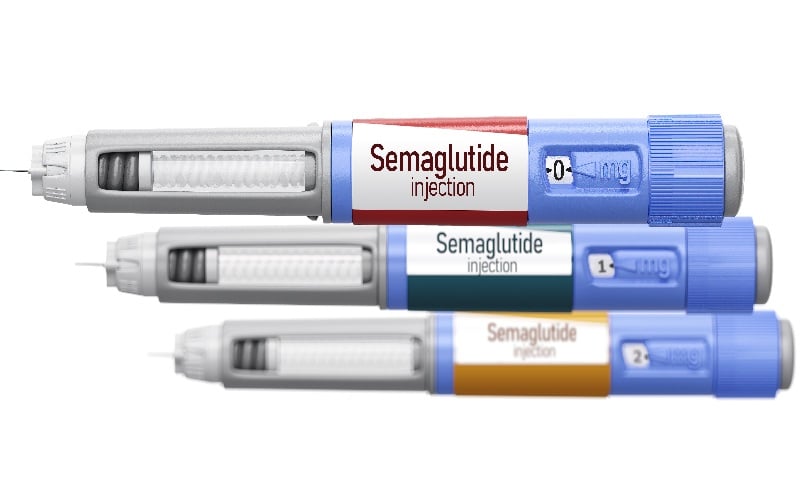
A PHASE 2 TRIAL of zalfermin plus semaglutide in metabolic dysfunction-associated steatohepatitis (MASH) with clinically significant fibrosis did not meet its primary endpoint, although semaglutide alone showed a nominally significant benefit versus placebo
MASH is a progressive liver disease marked by fat accumulation, liver cell injury and inflammation that can lead to cirrhosis, hepatocellular carcinoma and increased mortality as fibrosis advances.
Semaglutide Stood Out Among Treatment Arms
The phase 2, dose-ranging, double-blind study enrolled 698 adults across 187 clinical trial sites in 22 countries. Participants had biopsy-confirmed MASH with fibrosis stages F2 to compensated cirrhosis (F4c) and were randomly assigned to receive zalfermin plus semaglutide at three dose combinations, zalfermin 30 mg alone, semaglutide 2.4 mg alone, cagrilintide plus semaglutide, or placebo.
At week 52, 24% of participants receiving zalfermin 30 mg plus semaglutide 2.4 mg achieved the primary endpoint, compared with 16% in the placebo group, a difference that was not statistically significant (p=0.19).
By contrast, 30% of participants treated with semaglutide 2.4 mg alone met the primary endpoint compared with 16% receiving placebo, representing a nominally significant difference (p=0.024). Neither zalfermin 30 mg alone nor the lower-dose zalfermin–semaglutide combinations differed substantially from placebo.
Safety Profile was Largely Consistent Across Groups
Adverse events were predominantly mild to moderate and non-serious, with gastrointestinal events reported most frequently across treatment groups. Serious adverse events occurred in 7% of participants receiving zalfermin 30 mg plus semaglutide, 13% receiving zalfermin 30mg alone, 10% receiving semaglutide alone and 5% receiving placebo.
Five deaths occurred during the trial. One, involving heart failure in the zalfermin 30 mg group, was considered possibly related to the study drug.
Results Inform Future MASH Research
The findings suggested that adding zalfermin to semaglutide did not improve fibrosis outcomes beyond placebo in this study population. However, the signal observed with semaglutide alone suggested the drug could warrant further clinical assessment as a potential disease-modifying therapy for patients with compensated cirrhosis (F4c). The results also highlighted the ongoing challenge of identifying effective treatments for patients with advanced MASH and clinically significant fibrosis.
Reference
Loomba R et al. Efficacy and safety of zalfermin co-administered with semaglutide in participants with fibrosis and cirrhosis due to metabolic dysfunction-associated steatohepatitis: a phase 2, dose-ranging, double-blind, randomised controlled trial. Lancet Gastroenterol Hepatol. 2026;DOI:10.1016/S2468-1253(26)00123-8.
Featured image: Corona Borealis on Adobe Stock