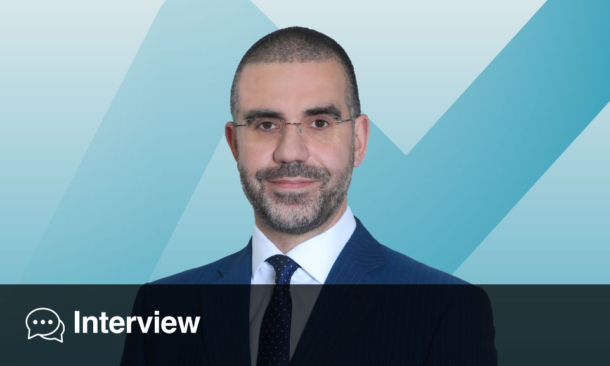
Abdulaziz Alsaudi | Strategy Director, Dr. Sulaiman Al Habib Medical Services Group Company, Riyadh, Saudi Arabia
Citation: EMJ Innov. 2026; https://doi.org/10.33590/emjinnov/576N3FR7

Dr. Sulaiman Al Habib Medical Group (HMG) is recognised for its commitment to innovation, quality improvement, and pioneering healthcare programmes. What do you believe differentiates HMG’s approach to innovation?
The starting point here is to understand HMG itself. Over the past 30 years, HMG has grown from a single medical complex in Riyadh, Saudi Arabia, into one of the most trusted integrated healthcare systems in the region, and it has a growing presence across Saudi Arabia and the United Arab Emirates. Today, our group comprises over 28,000 employees across 25 facilities, serving around 10 million patients annually. Our vision is to be the most trusted healthcare provider for medical excellence and patient experience globally. Our mission is to develop and operate a state-of-the-art medical facility and provide innovative healthcare services that create value for people. Therefore, innovation is embedded directly in our mission statement. What also differentiates HMG is that we’re not just a simple hospital operator. We have built an integrated healthcare ecosystem around the patient, spanning digital and technology solutions, medical technology and equipment, diagnostics, revenue cycle management, and home healthcare, as well as medical centres, pharmacies, and our educational capabilities.
Innovation has always been in HMG’s DNA. Over the years, we have consistently been early adopters of technologies that can transform healthcare delivery. This includes developing our own hospital information system and electronic medical record, VIDA, alongside a wider digital ecosystem and patient app that gives patients real-time access to their health information and services. We have also pioneered advanced telemedicine capabilities across areas such as stroke, intensive care, cardiology, EEG, and radiology, while being early adopters of AI across several clinical specialties. Beyond digital health, we continue to invest in advanced clinical technologies, including nuclear medicine, advanced imaging, and surgical technologies, ensuring our clinicians and patients have access to leading capabilities and standards of care.
Our strategy calls for HMG to redefine regional healthcare by becoming the most intelligent and digitally advanced system. This is also reflected in our values of innovate, simplify, and always improve. For us, innovation is not about adopting technology because it’s new; it’s about asking a much simpler question: does it make healthcare better for our patients? That is the principle behind us establishing our HMG Innovation Growth Hub (HIGH).
How was HMG Innovation Growth Hub (HIGH) established, and how has it evolved within the wider innovation ecosystem?
As HMG grew, innovation was coming from everywhere. It was coming from clinicians, departments, different startups, universities, and even investors and international partners. The opportunity here was significant, but we needed a structured way to move from ideas to impact. That’s why we established HIGH as part of our strategic innovation engine. HIGH creates an end-to-end pathway where we identify innovations internally as well as globally. They are screened against HMG’s needs and strategy, and we bring the strongest opportunities into a multidisciplinary evaluation. We validate them in a real-life healthcare setting and environment, and where they demonstrate value, we then support their deployment at scale. For us, governance is critical. Our newly established innovation accelerator committee brings together clinical, operational, technical, and commercial perspectives. Innovation cannot be assessed by an innovation team alone, but rather through a multidisciplinary approach from various subject matter experts with representation across our group. We also focus heavily on culture by conducting roadshows, innovation challenges, and direct engagement with our employees. Having more than 28,000 people across the group, some of the best ideas and some of the most powerful and important answers are already within our organisation. Ultimately, HIGH connects heavily with our internal capabilities, as well as with our global ecosystem of innovators, universities, investors, research institutions, and other government partners.
This also aligns closely with Saudi Arabia’s Vision 2030 and the wider transformation of the healthcare sector. We want to contribute to building the Kingdom’s innovation ecosystem by creating opportunities for Saudi innovators and entrepreneurs to engage with a large healthcare system, validate promising solutions in real-world settings and, where they demonstrate value, create a pathway towards adoption and scale.
How does a promising technology progress from initial engagement with an innovator through to pilot and, where appropriate, wider adoption?
Being technologically impressive does not automatically mean that something is clinically valuable. We always start with the problem and ask ourselves, what meaningful problem are we solving? What need does the technology address? Is it relevant to HMG, and does it align with our overall strategy? Then we assess the evidence and the regulatory maturity of a company or situation. Patient safety is always at the centre of our assessment. We also look at cybersecurity, workflow integration, economics, and scalability. Crucially, we involve the clinicians and operational teams who would ultimately use the technology. If the solution progresses, the validation process is proportionate to the technology itself. This could involve a demonstration or feasibility assessment, or, where appropriate, a proof of concept, pilot, or clinical study to validate the solution.
We also define success before we start. If the evidence is positive, then the real challenge begins: implementation and scale of the solution. We’ve reviewed over 350 companies through HIGH over the last 2 years, and therefore we need to be disciplined about what we work on and how we progress these solutions. Ultimately, our objective is not to maximise the number of pilots; it’s to maximise the number of innovations that ultimately create sustainable value.
The last thing to look at is scalability. After all of this is addressed, is it scalable across our ecosystem? Our values are very relevant here. We want to think big and act fast, but we place equal emphasis on safety, accountability, excellence, and trust. I often describe our role as separating what’s interesting from what’s important. There are many interesting technologies out there, but our responsibility here is to identify those that can become important to our patients and to our clinicians.
AI has already been implemented across a range of clinical areas within the organisation. What have these experiences taught you about ensuring that technology supports clinicians and improves outcomes for patients?
Our biggest lesson is that AI works best when it augments clinical expertise rather than attempting to replace it. AI is already being applied across a number of clinical use cases in imaging, including breast cancer screening and cardiac imaging. HMG’s wider virtual care ecosystem also includes telestroke as part of our integrated care model. What these experiences have taught us is that the algorithm itself is only part of the successful adoption. AI needs to fit naturally into the clinical workflow, provide information at the right time, and ultimately help clinicians make better and faster decisions. Clinical oversight, trust, data governance, and patient safety remain fundamental. However, what’s particularly exciting for HMG is that we are also developing in-house digital and AI-enabled solutions to address workflows and patient experience touchpoints across the organisation. Technology and Digital Solutions arms, Flow Medical and Cloud Solutions, combine HMG’s healthcare experience and rich data with AI models and applications to improve patient experience and overall workflows. This means we can think about AI across the entire patient journey, from access to scheduling, clinical encounters, and decision support throughout the care journey, as well as opportunities to optimise back-office and operational processes. Our philosophy is simple: technology is not about replacing care; it’s about making care better, faster, and safer.
Can you share an example of an innovation that has fundamentally changed the way a clinical team delivers care, and what impact this has had on patients?
One example is our established telestroke pathway, which has been used across HMG for many years. It provides an integrated pathway from when the patient arrives, through screening, multidisciplinary review, and clinical decision support, connecting our hospitals so neurologists and radiologists can access and review patient information. We also have a feature where clinicians can use AI to support the identification of where the stroke is and what type of stroke it is. Through this telemedicine connective pathway, a physician who is at home can advise on a case within minutes. The team that’s on the ground can also share images and updates on the case instantly. This has reduced the time it takes to treat cases and enhanced the experience for our physicians and patients. Ultimately, as we expanded that solution across our group, we’ve been managing our stroke cases much better, with better patient outcomes overall.
Once an innovation is introduced into clinical practice, how is evidence generated and its real-world impact assessed?
We define success before we start, depending on the innovation. That may mean clinical outcomes, diagnostic accuracy, waiting time, productivity, patient experience, or even population health management, as well as clinician acceptance or economics. Clinical studies tell us whether something can work, but we also need to understand whether it works with our patients, our clinicians, our workflow, and our overall infrastructure. This is where HMG’s scale becomes an advantage. Serving around 10 million patients annually across an integrated healthcare network gives us an important environment for generating real-world evidence driven by concrete data and advanced statistical insights. But evaluation should not end when a pilot ends; if we adopt a solution, we need to continue monitoring its performance and impact. Ultimately, we want HIGH not simply to be a gateway for innovation, but to help generate the evidence required to make better decisions about what deserves to scale.
What role do academic partnerships, research, and clinical trials play in ensuring innovations are evidence-based and capable of improving care?
These partnerships are fundamental because healthcare innovation has to remain evidence-based. HIGH can identify promising technology and connect with the right clinicians, but appropriate validation pathways depend on the technology. It might require demonstration or a pilot, or even a research study or clinical trial. Therefore, academic and research partnerships strengthen that capability by bringing additional scientific expertise and research infrastructure. HMG is also investing directly in the future of healthcare and the healthcare workforce through the HMG College for Knowledge, which develops the next generation of healthcare professionals through competency-based education, and the HMG Academy, which provides professional development across clinical and administrative pathways through postgraduate training, fellowships, scholarships and continuous medical education. Our group now has 45 university and hospital partnerships within the region and globally. By connecting academics, innovators, healthcare providers, regulators, and the industry more closely, strong ideas can move responsibly from research into real-world clinical impact.
What advice would you give healthcare leaders looking to create an environment where innovation can move from aspiration to measurable impact?
I focus on five things here. First, start with the problem, not the technology. Create governance without creating unnecessary bureaucracy. Involve clinicians early, define what success means before beginning a pilot, and plan for scale from day one. Too many healthcare systems have what I would call a “pilot graveyard”, meaning technologies that demonstrated something interesting but never really became part of routine care. Finally, make innovation part of the culture rather than the responsibility of a department. Sustainable innovation happens when your teams see improvement as part of their everyday responsibility rather than as a separate or a standalone project.
Looking ahead, what healthcare challenges do you believe will require the greatest innovation focus over the next decade?
Healthcare is facing a fundamental capacity challenge globally. We have an ageing population, a rising incidence of chronic diseases, workforce constraints, burnout, rising costs, and increasing expectations from patients. We can’t address all of that simply by building more capacity in a traditional way. We need to redesign how healthcare is being delivered. AI will be valuable, particularly in screening, diagnostics, decision support, automation, and personalised care. Yet prevention and early detection will become increasingly important, too. More care will be beyond the hospital in outpatient, virtual, and home environments. For HMG, this connects directly with our strategy, which is strengthening our core, expanding our reach, and broadening our services while working towards becoming the most intelligent and digitally advanced healthcare system in the region. For HIGH, the ambition is therefore not simply to find the newest technology, but to build the ecosystem that allows it to be effectively evaluated, adopted, and scaled. With the right innovations, we can move from idea to evidence to scale, and ultimately towards meaningful impact for our patients