Key Summary:
- AI scoring provided prognostic information in HER2-positive breast cancer.
- Scores reclassified 11.6% of node-positive tumours.
- Spatial metrics added information beyond lymphocyte density.
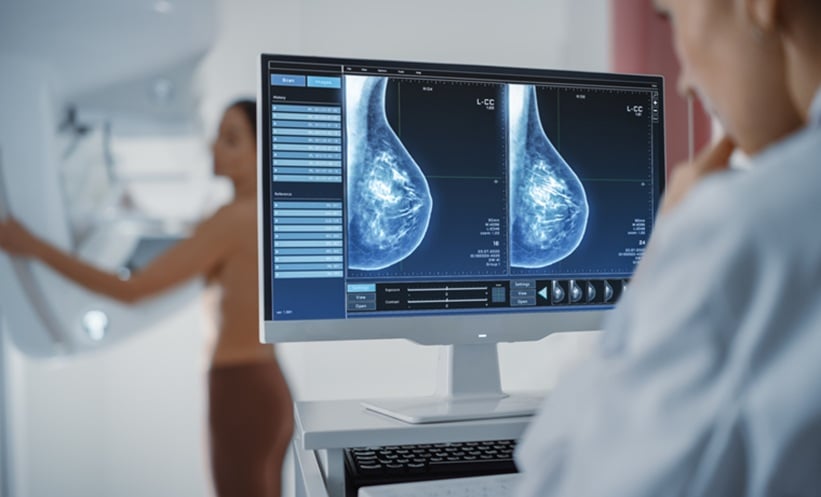
AI-BASED tumour-infiltrating lymphocyte scoring provided prognostic information in early-stage HER2-positive breast cancer and could help refine treatment-benefit stratification, according to a secondary analysis of the phase 3 APHINITY trial.
Researchers assessed 4,262 haematoxylin and eosin-stained tumour images from the trial, comparing manual assessment with automated digital and artificial intelligence (AI)-based approaches. The analysis also examined two AI-derived spatial measures, AI-TIL and immune hotspot scores.
Manual scoring demonstrated high reproducibility between pathologists, with an intraclass correlation coefficient of 0.84 (95% CI: 0.79–0.88). However, agreement between manual and automated approaches was more modest, indicating that different assessment platforms could classify tumours differently.
Higher tumour-infiltrating lymphocyte (TIL) levels were associated with improved invasive disease-free survival across all assessment methods, including the AI-derived spatial measures. Hazard ratios ranged from 0.41–0.93 across approaches.
AI-based assessment also reclassified 120 of 1,035 node-positive tumours, equivalent to 11.6%, from immune-low according to manual scoring to immune-high. These patients showed greater separation in 5-year invasive disease-free survival between the pertuzumab and placebo groups than patients classified as immune-low by both methods.
Among patients with higher TIL levels, pertuzumab was associated with improved invasive disease-free survival across all measurement approaches, with hazard ratios ranging from 0.36–0.48. The greatest 6-year absolute improvement was observed among patients with node-positive disease whose tumours had the highest manual sTIL score of at least 70.0%, with a mean absolute improvement of 12.1 percentage points.
The analysis indicated that AI-based spatial assessment could provide information beyond TIL density. In nested prognostic and predictive models, AI immune hotspot scores consistently added information when combined with any TIL measurement, with all P values below 0.010.
The findings suggested that standardised manual sTIL assessment remained reproducible, while digital and AI-based approaches offered consistent prognostic stratification despite only modest correlation between platforms.
The researchers noted that AI-based spatial metrics could support more scalable immune assessment. However, independent validation is needed before these approaches can be used routinely, alongside further investigation into their clinical utility for contemporary HER2-directed therapies.
González LE et al.; APHINITY Steering Committee and Investigators and the International Immuno-Oncology Biomarker Working Group. Manual, digital, and AI tumour-infiltrating lymphocyte scoring: a secondary analysis of the APHINITY randomised trial. Lancet Oncol. 2026;27(9):1168-80.
Featured Image: Gorodenkoff on Adobe Stock
Each article is made available under the terms of the Creative Commons Attribution-Non Commercial 4.0 License.