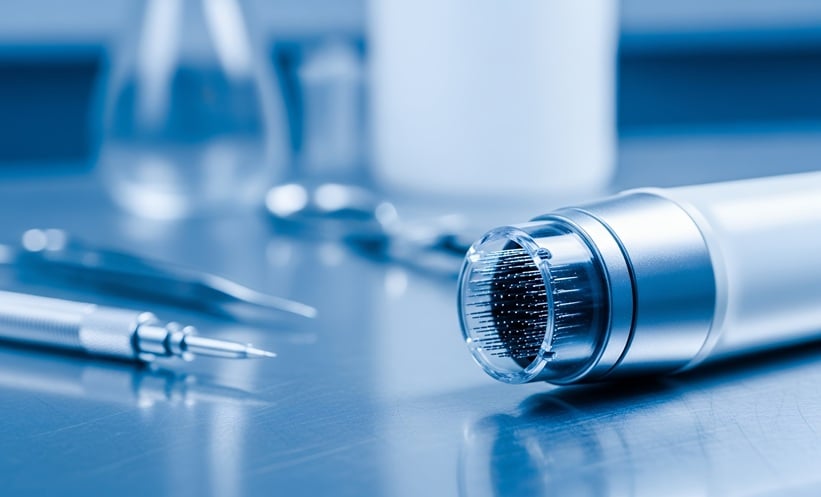
A NEW microneedle sensor has demonstrated the ability to monitor drug clearance in real time while detecting early kidney and liver dysfunction in preclinical models, pointing to a minimally invasive route for precision medicine monitoring.
Why the Microneedle Sensor Matters for Monitoring
Wearable biosensors could transform therapeutic drug monitoring, but many devices struggle with low sensitivity and damage during tissue insertion. Researchers therefore developed a microneedle sensor designed to improve signal quality and durability while sampling interstitial fluid continuously. The platform aims to support drug dosing decisions and earlier recognition of organ dysfunction through real-time measurements.
Microneedle Sensor Methods and Preclinical Results
The study evaluated a resilient nanostructured bioelectrode microneedle sensor fabricated using a bilayer process with a micrometer-thick gold adhesion layer and controlled dealloying to reduce stress. Compared with a nanodendrite bioelectrode, the device maintained better sensor response after tissue insertion. The microneedle sensor remained corrosion resistant, stable over a wide potential window, and abrasion immune in megapascal-stiff tissues. In freely moving rat models, the sensor extended in vivo biosensor lifetime for pharmacokinetics monitoring to 6 days. Using a blood interstitial fluid equilibrium framework, investigators accurately derived blood-equivalent pharmacokinetic parameters. In hepatic experiments, the device identified delayed clearance of irinotecan in liver-damaged models. In renal experiments, recordings correlated with blood antibiotic pharmacokinetics across chronic kidney disease severities. The platform also detected renal impairment earlier than conventional biomarker thresholds through drug clearance quantification and captured recovery during therapeutic intervention.
Clinical Potential and Next Development Steps
These findings suggest that the microneedle sensor could enable longitudinal monitoring of low-concentration analytes without repeated blood sampling. Clinically, this may help optimise dosing for narrow therapeutic index medicines and provide earlier warning of declining renal or hepatic function. Further studies in humans are needed to confirm safety, calibration stability, long-term wearability, and performance across diverse patient groups and medication classes.
Reference
Zhu J et al. Resilient nanostructured bioanalytic microneedle longitudinally monitors preclinical renal and hepatic drug clearance and dysfunction. Sci Transl Med. 2026;18:eadr5493.
Featured image: Zahra on Adobe Stock
- Author: