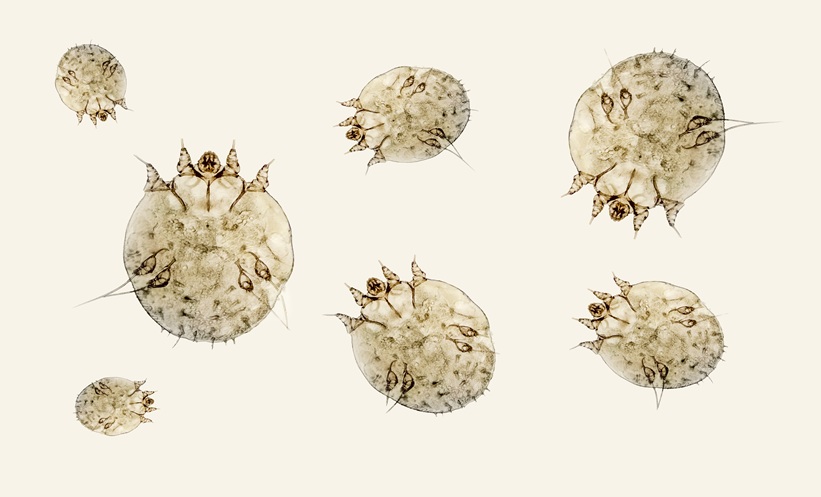
HIGHER-DOSE oral ivermectin fails to beat standard dosing with 5% permethrin cream for curing adults with severe scabies today. A blinded randomized trial evaluating 132 adults across 33 dermatology centers demonstrated that escalating oral ivermectin to 400 µg per kilogram of body weight offers no therapeutic advantage over the conventional 200 µg per kilogram regimen.
Evaluating Severe Scabies Treatment Regimens
Severe scabies, encompassing both profuse and crusted manifestations of Sarcoptes scabiei var. hominis infestation, carries substantial morbidity and mortality risks, including bacteremia, electrolyte disturbances, and fatal sepsis. Because patients harbor thousands of mites, standard single-agent therapies frequently fail, and institutions face high transmission risks.
Researchers enrolled adults aged 18 years or older with parasitologically or dermoscopically confirmed profuse or crusted scabies. Participants had a median age of 67 years, nearly 60% required hospitalization, and 42% had neurologic or cognitive impairment. Investigators randomized patients equally to receive oral ivermectin with food at either 400 µg per kilogram or 200 µg per kilogram on days 0, 7, and 14. Both groups applied head-to-toe 5% permethrin cream overnight on days 0 and 7 alongside daily emollient cream.
Efficacy of Standard Versus High-Dose Oral Ivermectin
The primary endpoint required complete absence of mites, eggs, and feces on days 18 and 21, plus full clearance of active skin lesions on day 28. In the main analysis, cure occurred in 75% of patients receiving high-dose oral ivermectin compared with 82% of those receiving the standard dose, yielding an odds ratio of 0.64 with no statistically significant difference.
Sensitivity analyses and post hoc evaluations stratified by scabies subtype, symptom duration, and immunosuppressive therapy confirmed these findings. Investigators noted that because Sarcoptes scabiei mites ingest intercellular lymph rather than blood, increasing systemic plasma concentrations through higher oral dosing may not enhance antiparasitic lethality within hyperkeratotic skin.
Clinical Safety and Practical Implications
Safety outcomes remained comparable across both dosing arms. Serious adverse events occurred in three patients in the high-dose cohort and five in the standard-dose cohort, while treatment-related cutaneous reactions affected 14 patients in each group. Daily emollient application likely helped minimize irritant dermatitis in this older, fragile population.
For clinicians managing severe scabies, these findings validate maintaining the standard 200 µg per kilogram oral ivermectin schedule on days 0, 7, and 14 paired with two full-body applications of 5% permethrin cream and daily skin hydration.
Reference
Bernigaud C et al. Combined Oral Ivermectin and 5% Permethrin Cream to Treat Severe Scabies. N Engl J Med. 2026;394(18):1814-1823.